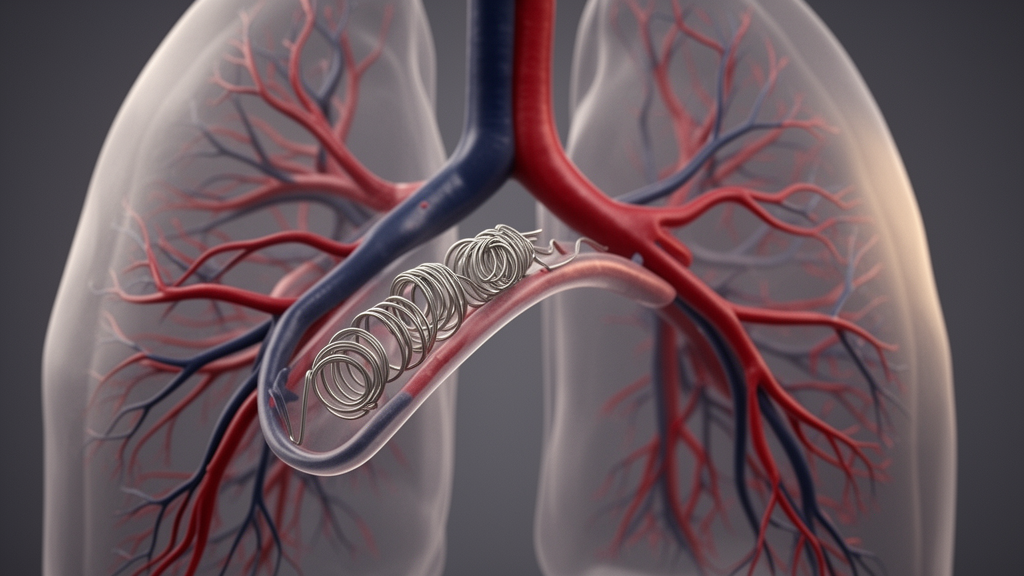
A retrospective cohort study evaluating transcatheter embolisation for pulmonary arteriovenous malformations has identified feeding artery diameter and complex vascular architecture as independent predictors of post-procedural recanalisation. Across a tertiary referral centre cohort, interventional radiology researchers found that each additional millimetre of feeding artery diameter increased the odds of vascular reopening, while lesions displaying complex structural anatomy faced a fourfold increase in recanalisation risk on multivariable analysis. Although endovascular occlusion remains the primary therapeutic intervention for these pulmonary vascular anomalies, the recurrence of blood flow through previously treated lesions represents a persistent clinical challenge. The observational findings indicate that inherent anatomical and morphological characteristics exert a far stronger influence on long-term vessel occlusion durability than the specific category of embolic device deployed during catheterisation.
In their clinical overview, the investigators describe pulmonary arteriovenous malformations as rare vascular abnormalities characterized by direct structural connections between pulmonary arteries and veins. Over recent decades, minimally invasive percutaneous transcatheter embolisation has largely supplanted open surgical resection, establishing itself as the recognized gold-standard therapeutic intervention for affected individuals. However, the durability of this endovascular approach is frequently compromised by post-procedural recanalisation, wherein blood flow re-establishes through the previously treated lesion. Such recurrences perpetuate abnormal right-to-left shunting, frequently necessitating repeat catheter-directed interventions and exposing patients to cumulative procedural risks, while reported recanalisation rates across published medical literature continue to exhibit substantial variability across diverse clinical populations.
Explaining the rationale behind the investigation, the authors noted that multiple patient and lesion factors have historically been postulated to affect recanalisation risk, including patient age, sex, hereditary haemorrhagic telangiectasia, anatomical complexity, feeding artery diameter, venous sac dimensions, and embolic device choice. Nevertheless, much of the existing evidence derives from relatively small and heterogeneous cohorts, leaving findings fragmented and inconsistent across published reports. The team highlighted a recent meta-analysis led by Shahin and colleagues, which demonstrated that although embolisation utilizing vascular plugs achieved significantly higher immediate technical success rates compared to alternative materials, post-procedure recanalisation rates showed no statistically significant difference between different embolic agents. This discrepancy strongly suggested that underlying anatomical architecture rather than device selection may serve as the primary determinant governing whether a malformation remains permanently occluded over extended surveillance periods.
To evaluate these lesion-level morphological determinants systematically, the researchers conducted a retrospective observational investigation at a tertiary referral centre, analysing records of patients undergoing transcatheter embolisation between 2008 and 2021. Candidate cases were identified through the medical institution’s electronic patient record system. Inclusion criteria required individuals to have radiologically confirmed pulmonary arteriovenous malformations, to have undergone definitive percutaneous transcatheter embolisation, and to have completed at least one post-procedural follow-up cross-sectional imaging assessment. Patients presenting with incomplete clinical data or missing radiographic imaging were excluded from the study cohort.
The data collection protocol systematically gathered demographic details, clinical variables, and angiographic measurements from electronic records, cataloguing feeding artery diameter, draining vein dimensions, and linear venous sac diameters. Procedural records were reviewed to document embolisation modalities, including metallic coils, Amplatzer vascular plugs, microvascular plugs, and hybrid combinations of these devices. Follow-up assessment relied on computed tomography pulmonary angiography to assess structural morphology and detect recanalisation. The primary study outcome was strictly defined as a reduction of less than seventy percent in linear venous sac diameter compared with pre-embolisation baseline measurements. The authors noted that while this threshold represents a pragmatic criterion derived from prior literature to reflect persistent or recurrent shunting, it remains an unstandardized metric susceptible to inter-study measurement variability. Imaging measurements were performed independently by investigators Chai Jin Lim and Yousef Shahin, with any interpretive discrepancies resolved by mutual consensus.
Across the multi-year study period, forty patients underwent endovascular procedures addressing a cumulative total of 109 pulmonary arteriovenous malformations. Follow-up cross-sectional imaging meeting quality criteria was available for eighty-six of these malformations, representing an ascertainment rate of 78.9 percent across the clinical cohort. The cohort was tracked over a median follow-up duration of twelve months. Within this monitored group of eighty-six malformations, post-procedural recanalisation was documented in twenty-seven lesions, establishing an overall lesion-level recanalisation rate of 31.4 percent. Among the twenty-seven recanalised lesions, fourteen had been embolised with metallic coils, seven with Amplatzer vascular plugs, and six with microvascular plugs, providing a substantive clinical distribution across different endovascular platforms.
All analytical computations were performed using Stata version 18, with continuous variables summarized as mean values with standard deviations or medians with interquartile ranges, and categorical variables expressed as counts and percentages. To evaluate potential predictors of vessel reopening, the researchers conducted univariate logistic regression across demographic factors, anatomical measurements, vascular complexity, and embolic agents. Candidate variables demonstrating a significance level below p equals 0.10 on univariate screening alongside biological plausibility were considered for multivariable modeling. However, venous sac diameter was deliberately excluded from multivariable regression due to collinearity with feeding artery size. To account for the inclusion of multiple malformations per patient, the regression model incorporated cluster-robust standard errors, maintaining a formal statistical significance threshold set at p less than 0.05.
On initial univariate logistic regression analysis, several patient and morphological characteristics demonstrated statistically significant associations with post-embolisation recanalisation. Lesions in male patients showed an elevated likelihood of reopening compared to female patients, while larger feeding artery diameter yielded an odds ratio of 1.410 with a p-value of 0.008. Greater venous sac diameter and complex vascular morphology, the latter generating an odds ratio of 5.464 with a p-value of 0.002, were also significantly associated with recanalisation on unadjusted analysis. In contrast, patient age was not significantly associated with procedural outcome. Furthermore, although 79 percent of the patient cohort had hereditary haemorrhagic telangiectasia, the presence of this systemic condition demonstrated no significant association with recanalisation risk, likely reflecting cohort homogeneity and sample size constraints that limited statistical discrimination between clinical subgroups.
When candidate predictors were incorporated into the multivariable logistic regression model, structural lesion characteristics emerged as the sole independent determinants of endovascular failure. Complex malformation architecture retained robust significance, conferring a fourfold increase in recanalisation risk with an adjusted odds ratio of 4.00, a ninety-five percent confidence interval of 1.27 to 12.66, and a p-value of 0.018. Feeding artery calibre also maintained independent predictive value, with an adjusted odds ratio of 1.29 per millimetre increase in vessel diameter, a ninety-five percent confidence interval of 1.01 to 1.65, and a p-value of 0.044. Conversely, male sex failed to retain significance in the adjusted multivariable model. The authors emphasized that the univariable sex signal must be interpreted with caution, as evaluating patient-level traits across multiple lesions duplicates baseline variables and represents an exploratory, hypothesis-generating finding rather than established causation.
Evaluating the performance of distinct endovascular materials, the analysis revealed numerical trends across device categories that nonetheless failed to reach statistical significance. Lesions managed with coil-only embolisation exhibited a non-significant trend toward higher recanalisation rates, producing an odds ratio of 1.926 with a p-value of 0.166. In comparison, vascular occlusion using plugs showed lower odds of recanalisation, with Amplatzer vascular plugs yielding an odds ratio of 0.782 with a p-value of 0.654, and microvascular plugs achieving an odds ratio of 0.342 with a p-value of 0.078. Contextualizing these observations within prior literature, the authors noted that coils, particularly when deployed proximally, may permit recanalisation through residual flow channels forming between coil loops, as described by Trerotola and colleagues. Conversely, vascular plugs provide single-device flow-occlusive mechanisms that promote immediate thrombosis, though the study’s modest sample size yielded wide confidence intervals that precluded definitive statistical confirmation of plug superiority.
The physical mechanisms linking larger vessel calibre and complex morphology to endovascular failure were further elaborated through established interventional radiology literature. In alignment with earlier investigations by Pollak and Lee, larger feeding arteries transmit higher blood flow volumes and generate technical hurdles in achieving dense embolic packing, complete sealing, and stable coil anchorage, predisposing treated vessels to flow-related reopening. Similarly, enlarged venous sacs reflect longstanding high-flow hemodynamics that predispose to incomplete thrombosis and reopening via microchannels or collateral recruitment. Complex lesions, characterized by multiple feeding arteries or draining veins, present technical challenges during catheterisation, where tiny, tortuous vessels can easily escape occlusion. This vulnerability was highlighted by a reported illustrative case of a 57-year-old female patient with hereditary haemorrhagic telangiectasia whose right middle lobe malformation recanalised five years after coil embolisation, showing persistent contrast flow through the feeding artery, sac, and draining vein before achieving successful occlusion with an Amplatzer vascular plug.
In their discussion of limitations, the authors outlined several methodological factors that frame the interpretation of these findings. The retrospective observational design restricts causal inference and introduces potential selection bias. Furthermore, follow-up imaging was unavailable for 21.1 percent of embolised lesions due to missed appointments or technically inadequate examinations, which may lead to underestimation of recanalisation rates. With a median observation period of twelve months, the dataset primarily reflects early to intermediate recanalisation, underrepresenting late recanalisation occurring beyond one to two years post-procedure. Although cluster-robust standard errors accounted for within-patient correlation, lesion-level analysis could not fully eliminate non-independence from duplicated patient variables, and the small sample size precluded patient-level sensitivity analyses. Combined with single-centre practice patterns and reliance on an unstandardized seventy percent diameter reduction threshold, the authors concluded that larger prospective multicentre studies are needed to validate these anatomical risk factors, optimize procedural strategies, and establish structured post-procedure surveillance intervals for high-risk patients.
Subject of Research: Predictors of pulmonary arteriovenous malformation recanalisation following transcatheter embolisation
Article Title: Anatomical and morphological predictors of pulmonary arteriovenous malformation recanalisation following embolisation: a retrospective cohort study
Article References: Lim, C. J., Barotchi, A., & Shahin, Y. (2026). Anatomical and morphological predictors of pulmonary arteriovenous malformation recanalisation following embolisation: a retrospective cohort study. CVIR Endovascular, 9(1), Article 94. https://doi.org/10.1186/s42155-026-00747-y
Image Credits: AI Generated
DOI: 10.1186/s42155-026-00747-y
Keywords: pulmonary arteriovenous malformations, embolisation, recanalisation, interventional radiology, vascular plugs, coil embolisation, computed tomography pulmonary angiography, hereditary haemorrhagic telangiectasia, Anatomical, morphological, predictors, pulmonary
News Source: Ophelia Keating. (November 10, 2026). Vessel Diameter and Complex Anatomy Predict Pulmonary Malformation Reopening After Embolisation. Scienmag.