In a groundbreaking study recently published in Nature Communications, researchers have unveiled intricate molecular mechanisms by which vascular smooth muscle cell (VSMC) state trajectories influence the risk of coronary artery disease (CAD). The investigation, led by Li, Kundu, Cheng, and colleagues, provides unprecedented insights into how dynamic changes in VSMC phenotypes mediate coronary pathology, potentially revolutionizing therapeutic strategies targeting cardiovascular disease.
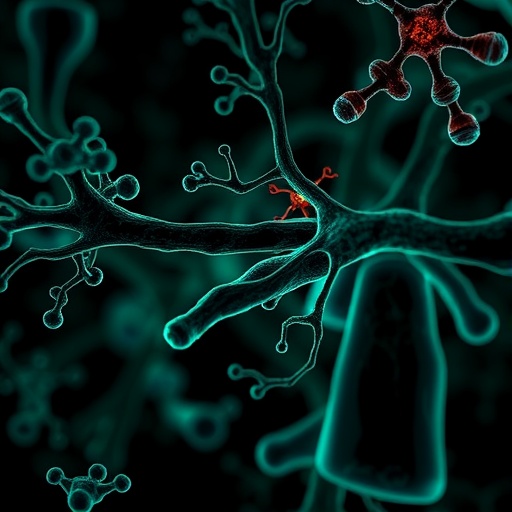
The vascular smooth muscle cells residing in the arterial walls play a pivotal role in maintaining vascular integrity and function. Traditionally viewed as passive structural components, these cells have now been recognized as dynamic entities capable of adopting diverse phenotypic states in response to environmental cues. This phenotypic plasticity enables VSMCs to modulate vessel tone, repair endothelial damage, and participate in inflammatory responses, all of which are critical processes in the pathophysiology of atherosclerosis.
Through the application of advanced single-cell transcriptomics and lineage tracing methodologies, the study dissected the cellular trajectories of VSMCs within coronary arteries. The researchers identified distinct transitional states that VSMCs undergo during disease progression, revealing that specific cell state transitions correlate strongly with increased coronary disease susceptibility. These findings highlight the temporospatial complexity underlying VSMC behavior and its direct impact on plaque development and vascular remodeling.
The study employed state-of-the-art computational modeling to map VSMC state transitions, integrating high-dimensional gene expression data to construct trajectory landscapes. This approach allowed for the precise delineation of molecular programs guiding VSMC phenotypic shifts — from contractile to synthetic states and beyond. Notably, the team discovered that aberrant transitions toward pro-inflammatory phenotypes exacerbate vascular inflammation and plaque instability, elevating the risk of adverse cardiac events.
One of the most striking revelations of the research is how VSMC trajectory alterations intersect with known genetic risk factors for coronary disease. By overlaying genetic risk loci onto trajectory maps, the authors demonstrated that certain loci modulate key regulatory nodes within the VSMC state continuum. This integrative analysis bridges the gap between genomic predisposition and cellular function, suggesting that genetic variants exert their pathogenic influence by skewing VSMC phenotypic evolution.
Mechanistically, the study sheds light on the molecular regulators orchestrating VSMC fate decisions. Transcription factors such as KLF4 and myocardin were observed to act as master switches governing the balance between contractile and synthetic states. Moreover, epigenetic modifications including histone acetylation patterns were implicated in stabilizing detrimental phenotypes, offering novel targets for epigenome-modulating interventions designed to restore vascular homeostasis.
Importantly, the researchers employed in vivo models of coronary artery disease to validate their single-cell findings. Using lineage tracing in murine atherosclerosis models, they confirmed the existence of the identified VSMC states and their association with lesion severity. These experimental validations underpin the translational relevance of their discoveries, emphasizing the potential of targeting VSMC trajectories as a therapeutic avenue.
In exploring potential clinical applications, the study suggests that intervention strategies aimed at modulating VSMC phenotype transitions could alleviate pathogenic remodeling. Pharmacologic agents capable of reinforcing the contractile phenotype or inhibiting pro-inflammatory switches may attenuate plaque progression and enhance plaque stability. Such approaches hold promise in complementing existing lipid-lowering and anti-inflammatory therapies that currently dominate CAD management.
The findings also challenge existing paradigms regarding the origin of vascular lesions. The observation that VSMC state trajectories directly influence plaque composition and behavior implies that beyond endothelial dysfunction and lipid accumulation, VSMC plasticity plays a deterministic role in lesion pathology. This adds a novel dimension to our understanding of CAD pathogenesis, highlighting the need for integrated cellular and molecular perspectives.
Further interrogation of signaling pathways revealed the involvement of transforming growth factor-beta (TGF-β) and Notch signaling in regulating VSMC plasticity. These pathways, known for their roles in vascular development and repair, appear to be hijacked during disease to promote maladaptive VSMC phenotypes. Targeting these signaling cascades may therefore represent a strategic point of therapeutic intervention to recalibrate VSMC functions.
The study’s comprehensive approach—combining single-cell analytics, genetic association data, epigenetic assessment, and in vivo validation—sets a new standard for cardiovascular research. It underscores the utility of multi-modal investigations in elucidating complex biological phenomena and translating basic science into clinical insight. Such integrative frameworks are essential for tackling multifactorial diseases like coronary artery disease.
In a broader context, this research reinforces the concept of cellular heterogeneity and plasticity as fundamental determinants of disease biology. The dynamic nature of VSMCs exemplifies how cell state trajectories can dictate tissue-level outcomes, offering parallels to other pathologies where cellular identity flux governs disease progression. Understanding these cellular highways may unlock novel diagnostic and therapeutic pathways across medicine.
Moving forward, the implications of this study are manifold. Drug discovery efforts may pivot toward molecules that preserve or restore beneficial VSMC states, while diagnostic tools could leverage biomarkers reflective of VSMC trajectory imbalances. Personalized medicine approaches integrating patient-specific VSMC phenotyping may optimize cardiovascular risk stratification and treatment response monitoring.
The work by Li and colleagues thus opens a promising avenue in the war against coronary artery disease by illuminating vascular smooth muscle cells—not just as passive bystanders—but as active players whose phenotypic journeys shape disease destiny. This paradigm shift widens the therapeutic horizon and invigorates the quest for innovative interventions targeting the cellular architects of cardiovascular health and disease.
In summary, the elucidation of VSMC state trajectories and their molecular drivers offers a transformative understanding of coronary artery disease mechanisms. This research not only advances fundamental cardiovascular biology but also sets the stage for pioneering clinical interventions aimed at mitigating the global burden of coronary vascular disease through precision targeting of vascular cell plasticity.
Subject of Research:
Vascular smooth muscle cell state trajectories and their molecular mechanisms mediating coronary artery disease risk.
Article Title:
Vascular smooth muscle cell state trajectories mediate molecular mechanisms of coronary disease risk.
Article References:
Li, D.Y., Kundu, S., Cheng, P. et al. Vascular smooth muscle cell state trajectories mediate molecular mechanisms of coronary disease risk. Nat Commun (2026). https://doi.org/10.1038/s41467-026-70530-z
Image Credits:
AI Generated
Tags: coronary artery disease risk factorsendothelial repair and VSMC interactioninflammatory response in vascular pathologylineage tracing of vascular cellsmolecular mechanisms of atherosclerosisplaque development and VSMC dynamicssingle-cell transcriptomics in cardiovascular researchtemporospatial cellular behavior in vascular healththerapeutic targets for cardiovascular diseasevascular remodeling in coronary diseasevascular smooth muscle cell phenotypic plasticityVSMC state transitions in coronary artery disease