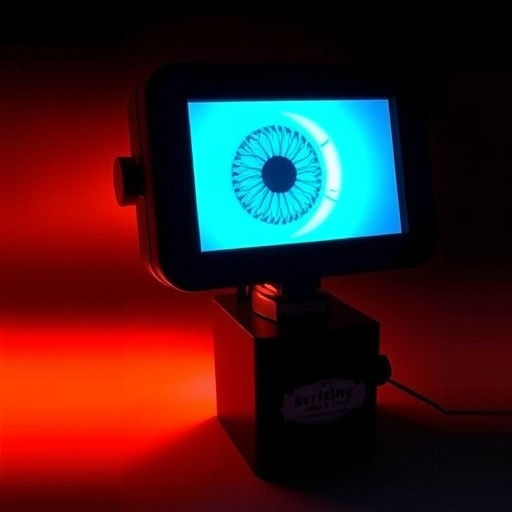
In a groundbreaking new study, researchers have validated a portable tool designed for conjunctival ultraviolet autofluorescence imaging, a technique that could revolutionize how eye health is monitored and treated. The team, led by Dr. P. Bahra, alongside colleagues Dr. L. Damnjanovic and Dr. K. Faen, aims to introduce a more accessible and efficient method for assessing UV damage to the eye.
Conjunctival ultraviolet autofluorescence imaging is increasingly recognized for its potential in detecting early changes associated with ultraviolet (UV) exposure. This is particularly crucial, as UV radiation is a known risk factor for various ocular conditions, including pterygium and conjunctival lesions. The innovative tool developed by the research team not only captures high-resolution images but also provides essential data that can help clinicians make informed decisions.
The development of a portable imaging device signifies a shift toward more adaptable technologies that can be used outside of traditional clinical settings. This approach allows for immediate assessments, particularly in rural or underserved communities where access to specialized eye care may be limited. The practicality of this tool could enhance preventative care measures by allowing more frequent screenings and earlier interventions.
During the validation process, the researchers rigorously analyzed the device’s effectiveness by comparing its results with those of established imaging techniques. The results were impressive, indicating that the portable tool could achieve results comparable to current standard methodologies. This breakthrough has the potential to democratize eye care, giving more patients the chance for early detection of UV-related ocular issues.
CRUCIAL TO THIS VALIDATION was ensuring that the imaging tool faithfully detects the hallmark signs of UV damage in the conjunctiva. By using fluorescent markers that react to UV exposure, the device enables a non-invasive diagnostic process that can provide immediate insights into a patient’s eye health. Accurate imaging not only enhances understanding but also enables personalized treatment strategies tailored to individual patients.
The implications of this research extend beyond improved imaging; they touch on broader public health concerns regarding UV exposure. With rising awareness about the effects of UV radiation, especially due to climate change and the depletion of the ozone layer, understanding how to mitigate these risks is more critical than ever. The tool offers a proactive measure that could lead to better public health outcomes.
Additionally, the study highlights the importance of interdisciplinary collaboration in medical innovations. By bringing together expertise from biomedical engineering, ophthalmology, and public health, the team has created a tool that addresses a specific need in the healthcare system. This model of collaboration could serve as a viable template for future research endeavors aimed at addressing other pressing health challenges.
The research community is already buzzing with excitement about the potential applications of this technology. Offering a window into the eye’s health, especially in vulnerable populations, the tool could facilitate research into the long-term effects of UV exposure. This could enrich our understanding of ocular health and help tailor public health initiatives aimed at reducing UV-related eye diseases.
The validation study, appearing in the renowned journal Annals of Biomedical Engineering, has resonated well within both the academic community and healthcare professionals. It emphasizes the necessity of continuing to innovate in the realm of medical technology—especially tools that can provide immediate benefits to patients and communities alike. Wider adoption of such devices could foster a shift towards preventative ophthalmologic care.
As discussions surrounding the importance of preventative healthcare grow, this tool showcases how technological advancements can indeed focus on early detection and intervention, potentially averting severe health problems down the line. Moreover, it paves the way for future research into the effectiveness of similar technologies in diagnosing and managing other health conditions influenced by environmental factors.
The potential for this tool to influence global health is immense. With many developing nations lacking sophisticated medical imaging, the portability and simplicity of this solution present an opportunity to improve healthcare access. As research continues, the team hopes to share their findings widely in order to encourage the adoption of similar technologies worldwide.
Ultimately, the successful validation of this imaging tool could represent a significant step toward improving global ocular health. By prioritizing innovative technologies that bridge gaps in healthcare access and treatment, the research team is setting a precedent for future advancements in the medical field.
As the research progresses, there are plans to conduct large-scale studies to determine the long-term efficacy of the tool across various populations. Such initiatives will be essential for ensuring that the technology is optimized for diverse patient groups and that it meets the needs of practitioners and patients alike. Excitement is palpable surrounding the future potential of this portable imaging tool, and the research team remains committed to advancing the field of ophthalmology through innovation.
In conclusion, this pioneering study could lead to transformative changes in how eye health is monitored and treated, particularly emphasizing the need for accessibility and early detection in preventative care.
Subject of Research: Portable Tool for Conjunctival Ultraviolet Autofluorescence Imaging
Article Title: Validation of a Portable Tool for Conjunctival Ultraviolet Autofluorescence Imaging
Article References:
Bahra, P., Damnjanovic, L., Faen, K. et al. Validation of a Portable Tool for Conjunctival Ultraviolet Autofluorescence Imaging. Ann Biomed Eng (2026). https://doi.org/10.1007/s10439-026-03992-3
Image Credits: AI Generated
DOI: https://doi.org/10.1007/s10439-026-03992-3
Keywords: Conjunctival imaging, ultraviolet autofluorescence, portable medical technology, ocular health, preventative care.
Tags: accessible eye health monitoringconjunctival ultraviolet autofluorescenceearly intervention in eye healthhigh-resolution eye imaginginnovative eye health technologyocular condition detection methodsportable eye imaging toolportable medical imaging devicespreventative eye care strategiesrural eye care solutionsUV damage assessment in eyesUV exposure risk factors