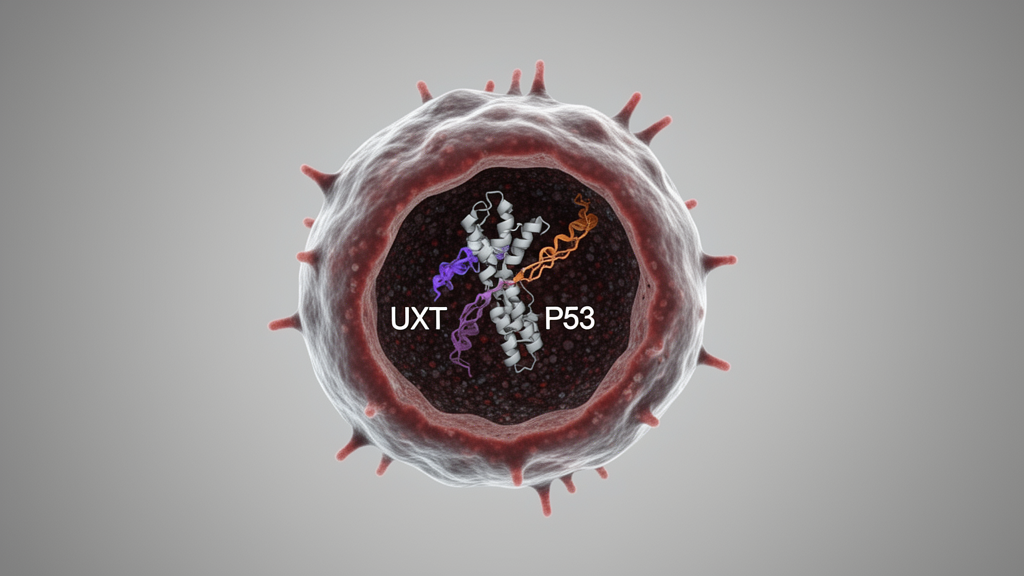
A study published in Cell Division in June 2025 identifies the ubiquitously expressed transcript (UXT) protein as a significant driver of melanoma progression. The research demonstrates that UXT enhances the proliferation, migration, and invasion of melanoma cells by modulating the P53 signaling pathway. Melanoma remains a highly malignant skin cancer with substantial morbidity and mortality, and current treatments have shown limited efficacy in substantially improving clinical outcomes. This study investigates the specific role of UXT in melanoma, focusing on its effects on cell proliferation, apoptosis, and invasion, alongside its underlying molecular mechanisms. The findings suggest that UXT could serve as a potential therapeutic target for melanoma, offering new avenues for developing novel treatment options.
These included Western blotting, quantitative RT-PCR, immunohistochemistry, CCK-8 assays, colony formation, flow cytometry, wound healing, and invasion assays. The study began by examining UXT expression levels in human normal melanocyte cell lines and four melanoma cell lines: A375, SK-MEL-28, SK-MEL-5, and M14. The results indicated that UXT is aberrantly upregulated in melanoma cell lines compared to normal melanocytes. This upregulation was confirmed through both mRNA and protein expression analyses, highlighting the potential oncogenic role of UXT in melanoma biology.
To further validate these findings in a clinical context, the researchers conducted immunohistochemical staining on tissue samples from 20 melanoma patients and 18 patients with normal nevi. The immunoreactivity intensity distribution index (IRIDI) was calculated to evaluate differences in UXT expression between the two groups. The average IRIDI score was 2.5 for normal nevi and 5.9 for melanoma, with a statistically significant difference. This indicates that UXT expression is significantly higher in melanoma tissues compared to the control group. These observations support the hypothesis that UXT plays a crucial role in the development and progression of melanoma in human patients.
In vitro experiments demonstrated that silencing UXT inhibited melanoma cell proliferation, migration, and invasion, while also inducing apoptosis. Conversely, overexpression of UXT promoted melanoma cell proliferation, migration, invasion, and facilitated cell cycle progression. The study used specific short hairpin RNAs (shRNA) to effectively silence UXT expression in A375 and SK-MEL-28 cell lines. Following UXT knockdown, a significant reduction in the proliferation of both cell lines was observed using the Cell Counting Kit-8 (CCK-8) assay. Colony formation assays also showed a notable decrease in the number of colonies formed by A375 and SK-MEL-28 cells with low UXT expression, further indicating that UXT contributes to the proliferation of melanoma cells.
The apoptotic response of melanoma cells after UXT knockdown was examined using flow cytometric analysis and Western blot analysis. The results revealed a significant increase in the percentage of apoptosis in A375 and SK-MEL-28 cells following UXT silencing. Western blot analysis confirmed that the knockdown of UXT gene expression activated the apoptosis of melanoma cells, as evidenced by increased levels of Caspase-3 and cleaved Caspase-3. These findings indicate that UXT plays a crucial role in inhibiting cell apoptosis in melanoma. Additionally, wound healing and transwell assays revealed that the removal of UXT significantly impaired the migratory and invasive capacities of both A375 and SK-MEL-28 cells, suggesting that UXT is integral to the aggressive behavior of melanoma.
In vivo experiments yielded consistent results, showing that UXT knockdown suppressed tumor growth, while UXT overexpression promoted tumor development. The researchers established xenograft tumor models using subcutaneously transplanted melanoma cells in mice. In these models, UXT knockdown substantially weakened the growth of subcutaneously transplanted melanoma, while UXT overexpression significantly promoted tumor growth. These findings underscore the critical role of UXT in regulating various cellular processes that contribute to the malignant phenotype of melanoma. The in vivo data corroborate the in vitro findings, reinforcing the potential of UXT as a therapeutic target.
To reveal the mechanism by which UXT affects the biological functions of melanoma cells, RNA sequencing was performed on A375 melanoma cells transfected with null-loaded virus and UXT knockout sequence viruses. Enrichment analysis for differential expression genes in the A375 cell line suggested that UXT might be involved in the P53 signaling pathway, cell cycle, and PI3K-Akt signaling pathway. Gene set enrichment analysis (GSEA) also confirmed that UXT knockdown significantly affected P53 and cell cycle pathways. Western blot assays were used to assess total expression of Bax, Bcl2, P21, and P53 in A375 cells. Compared to control cells, Bax, P21, and P53 increased significantly in UXT knockdown cells, while Bcl2 decreased significantly. This revealed that UXT negatively regulated the P53 signaling pathway and inhibited the expression of P53.
The study further investigated whether UXT overexpression in melanoma has effects opposite to UXT knockdown. A375 cells, which exhibit the lowest relative UXT expression, were selected for overexpression experiments. Based on the RNA-seq findings showing activation of the p53 pathway upon UXT knockdown, and previous research indicating the interaction between UXT and MDMX, the researchers introduced an MDM2/MDMX inhibitor, NSC-207,895, following UXT overexpression. The results showed that MDM2 expression was significantly upregulated upon UXT overexpression, but this upregulation was reversed when NSC-207,895 was introduced. UXT overexpression promoted A375 cell proliferation, while the use of the p53 pathway activator partially reversed this proliferation effect. Wound healing and transwell assays demonstrated that UXT overexpression enhanced cell migration and invasion, while specific activation of the p53 pathway mitigated these effects.
Flow cytometry analysis revealed a marked decrease in G0/G1 phase cells and an increase in S phase cells following UXT overexpression. Conversely, activation of the p53 pathway led to an increase in G0/G1 phase cells and a decrease in S phase cells, suggesting that UXT overexpression promotes cell cycle progression at the G1 phase via the p53 pathway. These findings highlight the role of the p53 pathway in regulating UXT-mediated changes in melanoma cell migration, invasion, and cell cycle progression. In vivo experiments confirmed that UXT overexpression significantly promoted the growth of subcutaneously transplanted melanoma, consistent with the in vitro results. These findings further support the close relationship between UXT regulation of the malignant phenotype of melanoma and the p53 pathway.
The study also examined the in vivo effects of UXT on melanoma through the P53 pathways. A xenograft tumor model of human melanoma cell line A375 was established, with cells transfected with shUXT or OeUXT plasmids with or without pretreatment with NSC-207,895. UXT knockdown reduced tumor size and weight, while UXT overexpression promoted melanoma growth. Activation of the P53 pathway partially blocked melanoma growth induced by UXT overexpression. Immunohistochemistry analysis showed that UXT downregulation inhibited Ki67 expression, a standard proliferation marker, while promoting p53 and TUNEL expression, a common apoptosis marker. Conversely, UXT overexpression exhibited the opposite effects, which could be partially reversed by activating the p53 pathway. These results reveal an important role for UXT in the regulation of melanoma growth in vivo.
The discussion highlights that melanoma is one of the deadliest cancers, with a high and rising incidence, and patients with advanced melanoma often have a poor overall survival rate. While early-stage melanoma can be effectively treated with surgery, treatment options for advanced stages were once limited and less effective. Recent advances in BRAF/MEK inhibitor-targeted therapies and immunotherapy have made significant progress in improving outcomes, but current therapies have shown limited improvement in clinical outcomes. The study found that UXT was significantly increased in melanoma cells and tissues compared to normal melanocytes and skin tissues. Upregulation of UXT contributes to melanoma cell proliferation, anti-apoptosis, migration, and invasion, suggesting that UXT may play a role in promoting tumor progression by inhibiting the P53 signaling pathway.
UXT is a member of a family of prefolding protein-like proteins, reported to act as an oncogene in many cancers. It is involved in the regulation of tumor malignancy by regulating cell death and participating in the regulation of cellular metabolism through various pathways. Previous studies have shown that UXT plays an active role in the development of breast cancer, hepatocellular carcinoma, colorectal cancer, and other tumors. However, UXT may also play a tumor-suppressing role in prostate cancer, where it is down-regulated in tissues, and its overexpression inhibits prostate cancer cell proliferation. This may be related to the tissue specificity of UXT and the different types of tumors and tumor microenvironments. The current study provides compelling evidence for the role of UXT in the development and progression of melanoma, with knockdown of UXT inhibiting melanoma cell proliferation, migration, invasion, and promoting apoptosis.
The study acknowledges several limitations. First, the PIG1 cells used as a model for normal human melanocytes have inherent limitations, and incorporating primary melanocytes would enhance the relevance of the study. Second, the mechanistic aspects of the study remain preliminary and warrant further investigation. The study employed A375 melanoma cells, which harbor wild-type p53, to investigate the mechanisms of UXT-mediated melanoma progression. However, the analysis did not extend to SK-MEL-28 cells with mutant p53 or other wild-type p53 melanoma cell lines. Future studies incorporating both wild-type and mutant p53 melanoma models will be critical for gaining a more comprehensive understanding of UXT’s role across diverse genetic contexts. Nevertheless, the findings provide a potential target for clinical treatment of melanoma.
In conclusion, the study indicates that UXT overexpression is a frequently observed phenomenon in melanoma cell lines and patient samples. Through both in vitro and in vivo experiments, the researchers found that low UXT expression can inhibit melanoma cell proliferation, migration, and invasion, while promoting apoptosis. Conversely, high UXT expression enhances melanoma cell proliferation, migration, invasion, and contributes to cell cycle arrest. These results support the conclusion that elevated UXT expression fosters a malignant phenotype in melanoma. The findings suggest that the p53 pathway is involved in UXT-induced melanoma progression, underscoring the potential of UXT as a novel therapeutic target for melanoma treatment. The elucidation of UXT’s mechanisms offers promising avenues for the development of targeted therapies aimed at improving clinical outcomes for melanoma patients.
Subject of Research: UXT enhances melanoma proliferation, migration, and invasion through modulation of the P53 signaling pathway
Article Title: UXT enhances melanoma proliferation, migration, and invasion through modulation of the P53 signaling pathway
Article References: Xiong, K., Wang, C., Hu, B., Zhang, J., & Qi, M. (2025). UXT enhances melanoma proliferation, migration, and invasion through modulation of the P53 signaling pathway. Cell Division, 20(1), Article 13. https://doi.org/10.1186/s13008-025-00151-3
Image Credits: AI Generated
DOI: 10.1186/s13008-025-00151-3
Keywords: enhances, melanoma, proliferation, migration, invasion, modulation, signaling, pathway, scientific research
News Source: Nathaniel Bowman. (November 9, 2026). UXT Promotes Melanoma Progression by Suppressing P53 Pathway. Scienmag.