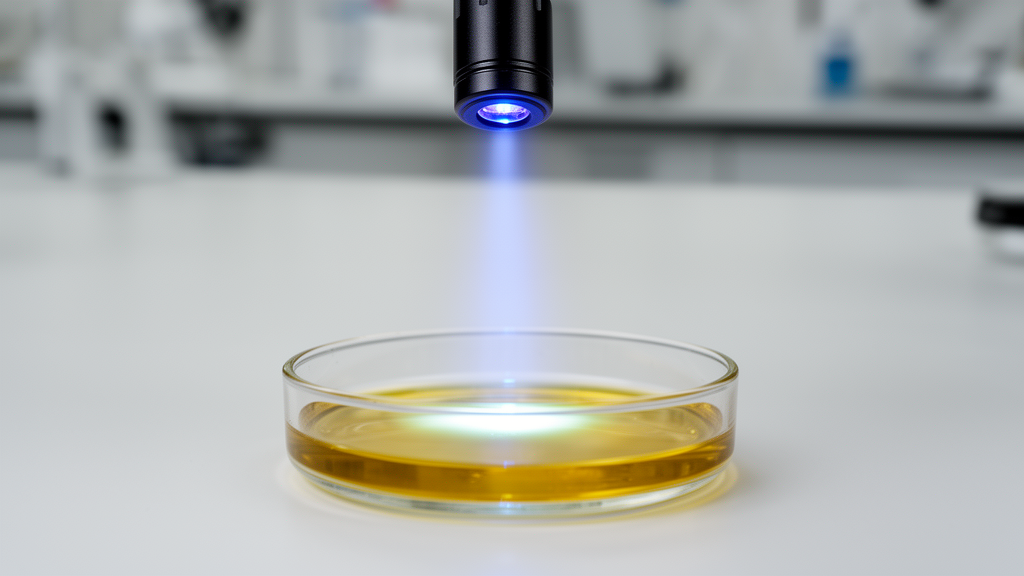
Published in the journal Bioresources and Bioprocessing, the study reveals that a 120-minute exposure to 254 nm UV light transforms the chemical profile of the oil, making it more potent against resistant bacteria and human skin cancer cells. The findings suggest a green, non-thermal method to improve the bioavailability and therapeutic efficacy of plant-derived oils, which are often limited by variable chemical composition and poor absorption.
The study, led by Samy Selim and colleagues, focused on overcoming the clinical limitations of crude neem oil, derived from the seeds of Azadirachta indica. While neem oil is recognized for its natural antimicrobial and anticancer activities, its translation into medical applications has been hindered by suboptimal bioavailability. The research team hypothesized that UV irradiation could induce photochemical modifications, such as oxidation and isomerization, to create a more reactive and effective formulation. They aimed to characterize these chemical changes and evaluate their impact on microbial pathogens and A431 skin cancer cells.
To investigate these effects, the researchers analyzed both crude and UV-irradiated neem oil using Fourier transform infrared (FTIR) spectroscopy and gas chromatography–mass spectrometry (GC–MS). The FTIR analysis revealed distinct spectral changes in the UV-treated oil, including the emergence of bands indicative of α,β-unsaturated carbonyls and conjugated dienes. A notable band at 960 cm⁻¹ confirmed the cis-to-trans isomerization of double bonds, a process that alters the physical properties of the oil. These photochemical transformations suggest that the UV light induces oxidation and structural rearrangements that increase the oil’s polarity and membrane penetrability.
GC–MS profiling provided a detailed view of the phytochemical reconfiguration. In crude oil, the predominant component was oleyl oleate, a wax ester comprising 55.80% of the area. After UV irradiation, this concentration dropped dramatically to 14.31%, accompanied by a concurrent increase in free oleic acid from 10.70% to 17.93%. The treatment also led to the formation of trans-13-octadecenoic acid, which was absent in the crude sample. Furthermore, the UV-irradiated oil contained novel compounds tentatively identified as isochiapin B, a sesquiterpene lactone, and a steroid derivative. These newly formed bioactive molecules are known to act as Michael acceptors, capable of covalently modifying cellular thiols, which may underpin the enhanced biological activities observed in the study.
The antimicrobial testing demonstrated that UV-irradiated neem oil produced significantly larger inhibition zones than the crude oil against all tested strains, including Methicillin-resistant Staphylococcus aureus (MRSA) and Candida albicans. The most pronounced increases were observed against Escherichia coli and C. albicans, where the inhibition zones expanded from 25 mm to 29 mm. Notably, the activity of UV-neem oil against MRSA was statistically comparable to that of gentamicin, a standard antibiotic control. These results correlate with the chemical modifications identified by spectroscopy, suggesting that the UV-induced formation of electrophilic species facilitates the disruption of microbial membranes and enzymes.
Quantitative analysis of the minimum inhibitory concentration (MIC) and minimum bactericidal concentration (MBC) further highlighted the potency of the modified oil. UV irradiation reduced the MIC for MRSA from 125 µg/mL to 15.62 µg/mL, an eightfold improvement. Similarly, the MBC for MRSA decreased from 250 µg/mL to 31.25 µg/mL. The MBC/MIC ratios for the UV-treated oil were consistently 2, confirming a bactericidal mode of action, whereas the crude oil exhibited ratios ranging from 2 to 8, indicating occasional bacteriostatic behavior. This shift toward a purely bactericidal profile is mechanistically explained by the increased concentration of free fatty acids and trans isomers, which enhance the oil’s ability to penetrate and disrupt microbial cell membranes.
In addition to its enhanced antimicrobial properties, UV-neem oil showed superior biofilm inhibition at sub-MBC concentrations. Biofilms are structured communities of microorganisms that are notoriously difficult to treat with conventional antibiotics. At 25% of the MBC, UV-neem oil achieved inhibition rates of 91.4% against MRSA and 86.0% against E. coli, compared to significantly lower rates for the crude oil. The researchers suggest that the UV-induced compounds, such as isochiapin B and the steroid derivative, act as quorum sensing inhibitors, disrupting cell-to-cell communication and biofilm maturation without necessarily killing planktonic cells. This ability to inhibit biofilm formation at sub-lethal concentrations is a highly desirable property for treating chronic implant-associated infections.
The study also evaluated the anticancer activity of the oils against A431 human epidermoid carcinoma cells, a model for cutaneous squamous cell carcinoma. Using the MTT assay, the researchers found that UV-neem oil exhibited a lower IC₅₀ value of 154.35 µg/mL compared to 179.34 µg/mL for the crude oil. This indicates that the UV-treated oil is more potent in inhibiting cancer cell proliferation. Importantly, both oils showed relatively low cytotoxicity toward primary human epidermal keratinocytes, with IC₅₀ values exceeding 300 µg/mL. This favorable therapeutic window suggests that UV irradiation enhances the selective anticancer efficacy of neem oil while preserving its biocompatibility toward normal skin cells.
Flow cytometry analysis revealed that UV-neem oil induced a more pronounced S-phase arrest than the crude oil. While the crude oil reduced S-phase cells to 13.08%, the UV-treated oil reduced this fraction to 9.45%. S-phase arrest is consistent with the inhibition of DNA replication, a critical step in cell division. The researchers propose that the UV-generated sesquiterpene lactones and alkyl phenols inhibit cyclin A/CDK2 activity, thereby blocking cell cycle progression. This mechanism contributes to the antiproliferative effects observed in the A431 cell line, providing a molecular basis for the enhanced anticancer activity of the modified oil.
Gene expression analysis via quantitative real-time PCR (qRT-PCR) provided insights into the apoptotic pathway. UV-neem oil significantly downregulated the anti-apoptotic gene Bcl-2 to 0.53-fold and upregulated the pro-apoptotic gene Bax by 5.26-fold. Additionally, the expression of caspase-3, an executioner caspase, was upregulated by 7.65-fold. The Bax/Bcl-2 ratio increased from 1.0 in the control to 9.9 in the UV-neem oil-treated cells, indicating a strong shift toward apoptosis. These transcriptional changes suggest that the UV-induced electrophilic species activate the intrinsic apoptotic pathway, leading to programmed cell death in the cancer cells.
Despite these promising findings, the authors acknowledge several limitations. The pro-apoptotic activity was inferred primarily from gene expression analysis, and definitive confirmation requires protein-level validation, such as Western blotting for cleaved caspase-3. The identification of UV-induced compounds, including isochiapin B, was based on GC–MS library matching and is considered tentative until confirmed by NMR spectroscopy. Furthermore, the study evaluated a single UV-C treatment condition and one source of neem oil, and no in vivo efficacy or comprehensive toxicological assessments were performed. Future studies should validate the molecular mechanisms and evaluate the safety and translational potential of UV-treated neem oil in animal models.
The study positions UV-irradiated neem oil as a promising natural therapeutic candidate for dermal infections and non-melanoma skin cancer. By addressing key limitations of crude neem oil, such as high wax ester content and poor bioavailability, this green photochemical approach offers a scalable and solvent-free method to upgrade plant oils for biomedical applications. The research highlights the potential of physical modification techniques to enhance the efficacy of natural products, providing a new direction for the development of sustainable therapeutic formulations.
Subject of Research: Mechanistic investigation of UV-irradiated neem oil against microbial biofilms and A431 skin cancer cells via Bax/Bcl2/caspase-3 modulation
Article Title: Mechanistic investigation of UV-irradiated neem oil against microbial biofilms and A431 skin cancer cells via Bax/Bcl2/caspase-3 modulation
Article References: Selim, S., Al-Rajhi, A. M. H., Alsalamah, S. A., Almehayawi, M. S., Alruhaili, M. H., Gattan, H. S., Kashmiry, A. A., Kiki, M. J., Ashy, R. A., & Alshareef, S. A. (2026). Mechanistic investigation of UV-irradiated neem oil against microbial biofilms and A431 skin cancer cells via Bax/Bcl2/caspase-3 modulation. Bioresources and Bioprocessing, 13(1), Article 136. https://doi.org/10.1186/s40643-026-01111-7
Image Credits: AI Generated
DOI: 10.1186/s40643-026-01111-7
Keywords: Mechanistic, investigation, UV-irradiated, neem, against, microbial, biofilms, A431, skin, cancer, cells, Bcl2
News Source: Gregory Coleman. (November 8, 2026). UV Light Boosts Neem Oil’s Antimicrobial and Anticancer Potency. Scienmag.