


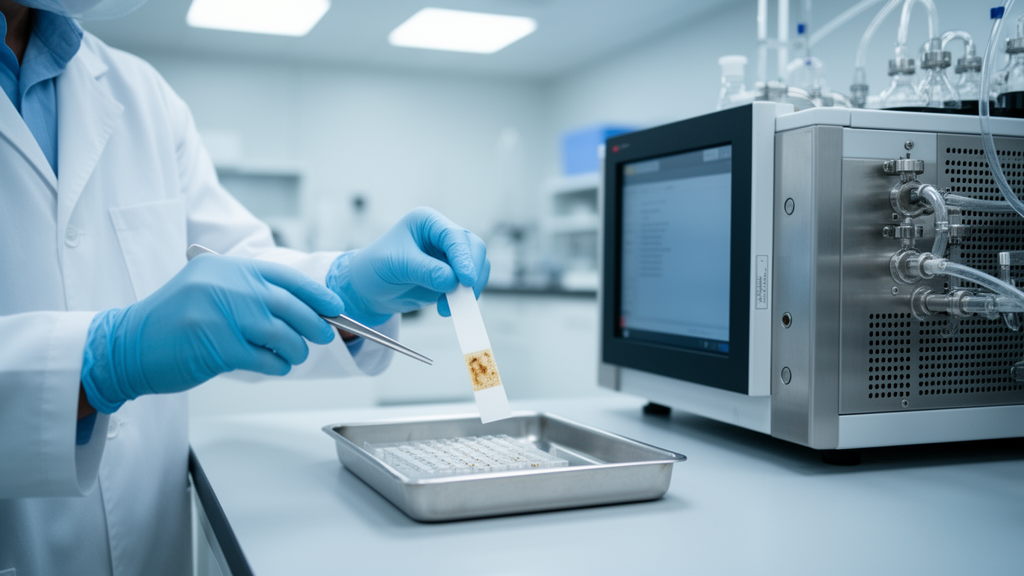
Used drug-checking test strips and syringe plungers, normally discarded after a single use, can be repurposed as samples for laboratory drug analysis, according to a study published in Harm Reduction Journal on 20 October 2026.
The motivation is practical. Monitoring street drugs is difficult because obtaining samples of illegal substances for laboratory analysis is a major challenge. The authors note that liquid chromatography-tandem mass spectrometry (LC-MS/MS) can detect drug residues on legal materials, such as drug checking test strips, that have come into contact with drug substances. Their study set out to assess the feasibility of incorporating used test strips and used syringe plungers into routine laboratory drug checking.
The method was developed and tested systematically. The researchers prepared seized drug samples quantitatively and applied them to test strips, syringes, and syringe plungers, then compared qualitative and quantitative recoveries. Three factors that affect the recovery of 21 drugs from the test strips were assessed: the extraction solvent, the test strip type, and analyte stability during storage.
The analytical performance was substantial. The developed LC-MS/MS method successfully quantified most of the analytes down to a concentration of 0.5 ng/mL, a level that enabled the detection of clinically relevant amounts of drugs, including high-potency drugs such as carfentanil and medetomidine.
Extraction conditions mattered, but in manageable ways. Methanol worked best to extract the drugs from the used materials. The type of strip did not impact recovery, and all 21 targeted drugs could be recovered with extraction efficiencies ranging from 12 to 87 percent after four weeks of storage of the strips at room temperature. That range indicates that recovery varies considerably by compound, but that no targeted drug was lost entirely under the tested storage conditions.
To test whether the approach would work outside the laboratory, the applicability of the extraction methods was further assessed using authentic samples from Ohio and Massachusetts. The study reports that extracting drug residues from used test strips and syringe plungers was feasible and robust to solvent, brand, and storage challenges.
According to the authors, the approach offers several operational advantages. Use of these samples reduces the burden of collecting unregulated solid drug samples, enhances staff safety, and provides a seamless integration of laboratory-based techniques into monitoring protocols. Because test strips are legal materials that already contact drug substances during drug checking, laboratories can obtain residue data without handling bulk illicit samples directly.
The findings come with the scope of a methods-validation study. The recovery experiments used quantitatively prepared seized drug samples applied to strips, syringes, and plungers under controlled conditions, with authentic samples from two states used to assess applicability. Extraction efficiencies of 12 to 87 percent mean that quantitative results from residues would require careful interpretation of compound-specific recovery, and the four-week room-temperature storage window defines the stability evidence reported so far.
Drug checking programs already generate used test strips in the course of their work; the new results indicate that these discarded items, together with used syringe plungers, can carry enough residual drug material for sensitive LC-MS/MS analysis, including detection of high-potency synthetic opioids and sedatives at clinically relevant levels.
The article was published as open access research in Harm Reduction Journal, with the accepted manuscript shared early to provide faster access to peer-reviewed research, citable under a permanent DOI and subject to further edits before the final Version of Record.
Subject of Research: Quantitative LC-MS/MS analysis of residual drugs recovered from used drug-checking test strips and syringe plungers
Article Title: Drug trash to treasure: quantitative mass spectrometric analysis of residual drugs from used lateral flow immunoassay test strips and syringe plungers
Article References: Fernando, H., Whitehead, H., Black, N. J., West, E. D., Znamierowski, E., Edelmann, A., Green, T. C., & Lieberman, M. (2026). Drug trash to treasure: quantitative mass spectrometric analysis of residual drugs from used lateral flow immunoassay test strips and syringe plungers. Harm Reduction Journal. https://doi.org/10.1186/s12954-026-01537-4
Image Credits: AI Generated
DOI: 10.1186/s12954-026-01537-4
Keywords: drug checking, LC-MS/MS, test strips, syringe plungers, harm reduction, carfentanil, medetomidine, extraction efficiency, illicit drug monitoring, mass spectrometry, residual drug analysis, Drug
News Source: Glenn Wilkins. (October 28, 2026). Used drug-checking test strips yield residual drug data via LC-MS/MS. Scienmag.



