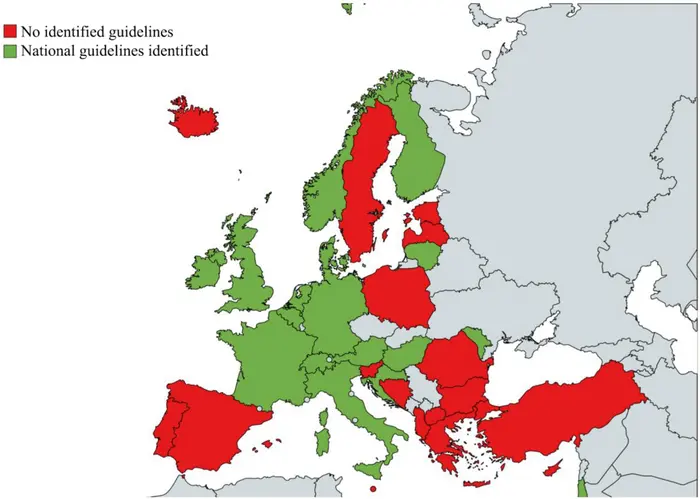
Only half of 34 surveyed European countries have national guidelines on how to provide clinical care and treatment to children who have experienced sexual abuse. This finding was revealed in a study led by researchers at Barnafrid, a national knowledge centre in the field of violence and other abuse against children, at Linköping University in Sweden. The consequences for the affected children can be severe, according to the researchers.
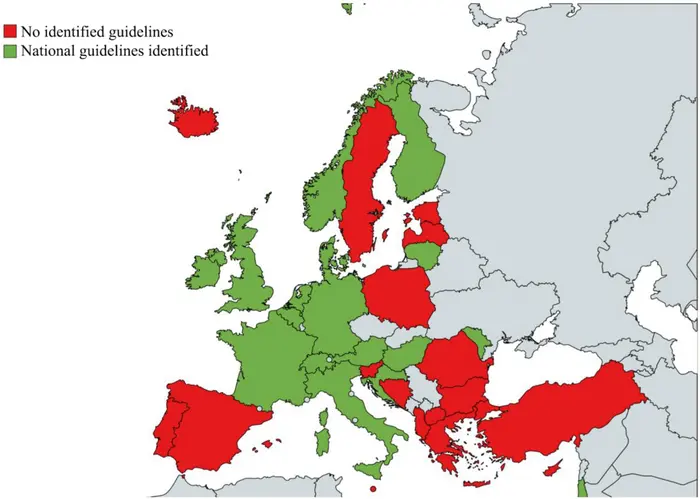
Credit: The authors of the scientific article (or the corresponding author, Gabriel Otterman)
Only half of 34 surveyed European countries have national guidelines on how to provide clinical care and treatment to children who have experienced sexual abuse. This finding was revealed in a study led by researchers at Barnafrid, a national knowledge centre in the field of violence and other abuse against children, at Linköping University in Sweden. The consequences for the affected children can be severe, according to the researchers.
“Our findings suggest that children in Europe may not receive equal care. From a child rights perspective, this is unacceptable. We know that sexual abuse increases the risk of poorer physical and mental health in childhood, and later in life,” says Dr. Gabriel Otterman, a senior consultant paediatrician in Uppsala and adjunct associate professor at Barnafrid, Linköping University.
National clinical practice guidelines encompass numerous medical fields. This ensures that the care provided is scientifically verified and that everyone is treated equally.
But many countries lack guidelines for the care of children who have been subjected to sexual abuse. This is reported in a survey of 34 European countries conducted by Gabriel Otterman in collaboration with a network of international researchers. In their search for national documents, researchers explored international scientific databases, the websites of health authorities and engaged with experts from across the European Region.
Their findings are presented in an article in The Lancet Regional Health Europe. Only half of the countries were found to have something resembling national guidelines in this area. In Sweden, Poland, Spain, and Turkey, for example, such guidelines were not identified. However, the existing guidelines are also severely lacking in quality.
To measure quality, the researchers used guidelines for the clinical management of child sexual abuse issued by the WHO as a benchmark. Gabriel Otterman refers to these scientifically robust guidelines as the “gold standard”. Upon comparison, it turns out that the various national guidelines are often outdated and fail to incorporate the latest scientific insights.
The researchers identified significant gaps primarily in the domains of risk assessment, mental health care and opportunities for children to be heard. Overall, they found many aspects in need of improvement. Among the guidelines reviewed, Moldova’s national guidelines received the highest quality rating, while one of the documents from the UK was deemed the least adequate.
To address these shortcomings, the researchers recommend that countries convene an international panel of clinicians and researchers, which should also include people who themselves have experienced sexual abuse in childhood.
Together, they would develop, oversee, and periodically update common European guidelines. This collaborative approach could offer guidelines that are better suited to European contexts than those from the WHO. The countries could then make their own adjustments as needed and be responsible for follow-up. Nations can then tailor these to their specific needs and ensure diligent implementation and monitoring.
With his considerable experience in providing care for children who have suffered sexual abuse, Gabriel Otterman underscores the critical need of establishing shared guidelines.
“I see this need every day. If you have national evidence-based guidelines, then you have something to live up to and you can compare regions and countries,” says Gabriel Otterman.
The research was funded by the International Centre for Missing and Exploited Children and the research network is funded by the European Cooperation in Science and Technology (COST).
Journal
The Lancet Regional Health – Europe
DOI
10.1016/j.lanepe.2024.100868
Method of Research
Survey
Subject of Research
Not applicable
Article Title
Clinical care of childhood sexual abuse: a systematic review and critical appraisal of guidelines from European countries
Article Publication Date
22-Feb-2024
COI Statement
None declared.