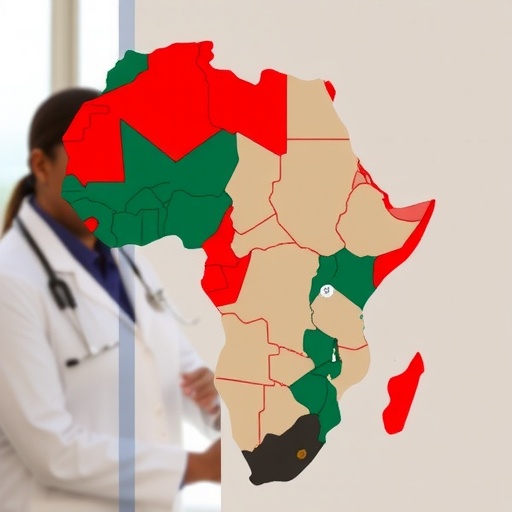
In recent years, the battle against substandard and falsified medicines has emerged as one of the most pressing public health challenges across the African continent. While the detrimental impact of poor-quality medicines has long been acknowledged, a groundbreaking study published in Nature Communications in 2026 by Zeng, Mariwah, Mshana, and colleagues brings to light an urgent, yet underexplored, avenue for tackling this crisis: fostering collaborative research networks across African nations. This new scientific discourse underscores the pivotal role that multinational partnerships and integrated efforts must play in revolutionizing the quality assurance of essential medicines on the continent.
The persistence of counterfeit and subpar pharmaceuticals in African markets does more than undermine patient trust—it actively threatens lives, exacerbates disease burdens, and fuels antimicrobial resistance. Despite commendable strides by individual countries in establishing regulatory frameworks, enforcement mechanisms remain patchy and insufficient when viewed through the prism of a continental public health perspective. Zeng and collaborators articulate a compelling argument that no single country, regardless of the robustness of its healthcare system, can combat this scourge alone. Multi-layered, interdisciplinary research collaborations embedded within Africa’s unique socio-economic and epidemiological fabric are crucial.
Technically, the challenge stems from the high complexity and heterogeneity of medicine quality problems encountered—a mosaic ranging from inadequate active pharmaceutical ingredients (APIs), poor manufacturing processes, improper storage conditions, to systemic vulnerabilities in regulatory practices. The study elaborates on how scientific research addressing these factors demands harmonized methodologies encompassing analytical chemistry, epidemiology, health systems research, and social sciences. This approach ensures comprehensive data generation, which in turn informs better-targeted interventions.
One of the monumental obstacles has been the scarcity of standardized surveillance systems for medicine quality, which hampers the ability to detect and respond to emerging threats promptly. The research presents emerging technologies like portable spectrometry devices and high-throughput liquid chromatography mass spectrometry (LC-MS) platforms as promising tools that, when shared collaboratively, can dramatically enhance detection accuracy and speed across countries. Importantly, the study advocates for capacity-building initiatives centered on training regional experts in these advanced methodologies, diminishing reliance on external laboratories.
Another technical highlight in the research is the emphasis on data integration and sharing platforms designed specifically for African research institutions. Fragmented data repositories and inconsistent reporting formats have historically stifled efforts to identify trends and generate actionable intelligence. By adopting interoperable digital frameworks and cloud-based data aggregation systems, collaborative networks can facilitate real-time information exchange, thus empowering regulators and policymakers with rapid insights.
At the policy level, the authors dissect regional inconsistencies that have hindered collective action—from varying regulatory authority mandates to differing national priorities and resource allocations. Through multidisciplinary workshops and formalized consortia, the study envisions creating unified governance structures that align incentives, standardize protocols, and promote transparency. Such frameworks could pave the way for joint inspections, mutual recognition agreements, and pooled procurement mechanisms, all integral to diminishing the penetration of falsified medicines.
From a scientific perspective, the paper delves into the biochemical ramifications of substandard medicines on therapeutic efficacy. It details how insufficient or unstable APIs in medications contribute to incomplete pathogen eradication—an insidious driver of antimicrobial resistance (AMR). The authors contend that collaborative research can illuminate region-specific resistance patterns linked directly to medicine quality issues, thus informing tailored stewardship programs.
Significantly, the study underscores the socio-economic impact of poor medicine quality, stressing that beyond health outcomes, economic productivity, household expenditures, and national healthcare budgets suffer. This comprehensive viewpoint advocates for research that transcends traditional biomedical silos, incorporating economic modeling and behavioral science to unravel the full scope of medicine quality repercussions.
In line with the above, community engagement and social determinants of health emerge as critical domains wherein joint research efforts can yield dividends. The paper elaborates on how vulnerabilities such as informal markets, supply chain disruptions, and public awareness gaps contribute to the proliferation of inferior medicines. Collaborative projects focusing on communication strategies, supply chain analytics, and consumer behavior can thus drive potent interventions.
Technical complexity aside, one of the innovative proposals from Zeng and colleagues includes the development of open-access repositories of chemical fingerprints of authentic African pharmaceuticals. Taking advantage of advances in chemoinformatics, this resource could serve as a benchmark for detecting counterfeit products swiftly and accurately. This digital repository would be best managed through pan-African partnerships ensuring inclusivity and sustainability.
Furthermore, the research highlights the importance of longitudinal studies and randomized controlled trials to evaluate the impact of proposed interventions collectively designed by African researchers. Historically, reliance on external actors has limited the scope and sustainability of trials addressing medicine quality. Establishing continental networks would not only amplify research capabilities but also empower local institutions to set research agendas grounded in African realities.
Another transformative facet the study tackles lies in fostering collaborations between academia, industry, and regulatory agencies within Africa. By forging strong trilateral partnerships, innovation pipelines for novel quality assurance technologies and robust regulatory practices can be accelerated. This integration would foster an ecosystem where scientific discoveries rapidly translate into policy and practice.
Importantly, the study cautions against sidelining ethical considerations in collaborative frameworks. Given the sensitivity surrounding medicine quality and public trust, the authors advocate for transparent, equitable partnerships that prioritize community involvement and respect local knowledge systems. Ethical oversight bodies and inclusive governance will be paramount in safeguarding these principles.
Looking to the future, Zeng et al. envision a harmonized scientific infrastructure acting as the backbone for an agile response to medicine quality threats. Such a structure would harmonize regulatory standards akin to the African Medicines Agency’s mandate but enriched by real-time data sharing, joint research outputs, and shared technological assets. They suggest that achieving this will require significant initial investment, sustained political will, and committed leadership across sectors.
Crucially, the paper calls for international donors and global health bodies to recalibrate funding mechanisms to support African-led collaborative research initiatives, shifting from project-based support to long-term capacity development. This paradigm shift ensures continuity and scalability of research outcomes that address continent-wide priorities effectively and sustainably.
In conclusion, the study by Zeng, Mariwah, Mshana, and colleagues is a clarion call for a paradigm shift in how Africa addresses medicine quality. Their compelling evidence-based arguments advocate for an innovative, concerted research collaboration across national boundaries that leverages cutting-edge technology, data sharing, stakeholder engagement, and policy integration. This integrated approach promises to dramatically enhance medicine quality surveillance, control, and improvement, ultimately safeguarding public health and tackling the global menace of substandard and falsified medicines from within the continent itself.
Subject of Research:
The urgent need for collaborative research initiatives across African nations to improve the quality of medicines and combat substandard and falsified pharmaceutical products.
Article Title:
The urgent need for African research collaboration on medicine quality
Article References:
Zeng, F., Mariwah, S., Mshana, G. et al. The urgent need for African research collaboration on medicine quality. Nat Commun (2026). https://doi.org/10.1038/s41467-025-67430-z
Image Credits:
AI Generated
Tags: African collaboration on medicine qualityantimicrobial resistance in Africacollaborative research networks in Africacombating counterfeit pharmaceuticalsimproving patient trust in medicinesinterdisciplinary research in public healthmultinational partnerships in healthcarepublic health challenges in Africaquality assurance of essential medicinesregulatory frameworks for medicine qualitysocio-economic factors in healthcaresubstandard and falsified medicines in Africa