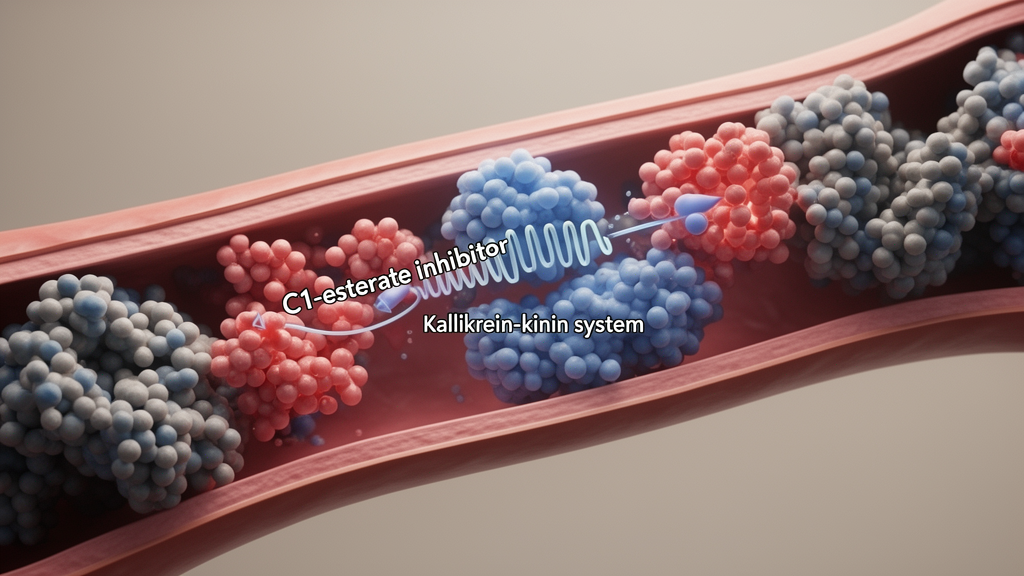
The World Allergy Organization has released its updated 2025 clinical guidelines for hereditary angioedema, establishing a refined, endotype-oriented framework designed to modernize the diagnostic and therapeutic management of recurrent swelling disorders across international healthcare systems. Under this updated framework, clinical presentations are organized into bradykinin-mediated, vascular endothelial growth factor-mediated, mast cell-mediated, and idiopathic endotypes. Because bradykinin acts as the principal driving mediator in hereditary angioedema, accurately distinguishing these mechanistic pathways from histamine-driven allergic reactions is critical for preventing misdiagnosis, mitigating substantial disease-related morbidity, and preventing potentially fatal upper respiratory complications.
Early clinical recognition remains paramount because prolonged diagnostic delays expose patients to recurrent emergency visits, unnecessary surgical interventions, and the persistent threat of asphyxiation resulting from laryngeal edema. To accelerate identification in clinical practice, the guidelines emphasize the HA4E2 diagnostic mnemonic, which encapsulates pivotal warning signs: a hereditary pattern or family history of swelling, recurrent angioedema episodes, severe abdominal pain or visceral edema, the conspicuous absence of concomitant urticaria, the complete absence of therapeutic response to standard antihistamines, early symptom onset typically during childhood or adolescence, and symptom exacerbation associated with endogenous or exogenous estrogen exposure.
Distinguishing hereditary angioedema from other recurrent swelling conditions relies on specific clinical presentations and characteristic treatment-response patterns outlined within the international recommendations. Hereditary angioedema with C1 inhibitor deficiency typically presents in childhood or adolescence with autosomal dominant inheritance, non-pruritic swelling often provoked by physical trauma, and excellent responsiveness to bradykinin-targeted interventions rather than antihistamines or systemic corticosteroids. In contrast, hereditary angioedema with normal C1 inhibitor levels frequently demonstrates a later onset in adulthood, variable clinical phenotypes, prominent associations with estrogenic fluctuations, and frequent involvement of the tongue and localized hematoma formation. Acquired angioedema with C1 inhibitor deficiency occurs primarily in older adults over forty years of age, lacks a family history, exhibits more frequent and severe attacks, and typically arises secondary to underlying lymphoproliferative malignancies or systemic autoimmune disorders. Conversely, mast cell-mediated angioedema can arise spontaneously at any age, commonly manifests with prominent urticaria, intense pruritus, eyelid or lip involvement, and shorter attack durations, typically improving following administration of antihistamines, epinephrine, or corticosteroids.
The 2025 classification structure formalizes hereditary angioedema into two overarching categories: cases exhibiting quantitative or functional C1 inhibitor deficiency and cases presenting with normal C1 inhibitor biology. Conversely, hereditary angioedema with normal C1 inhibitor represents an expanding and genetically heterogeneous category linked to specific pathogenic mutations that alter contact system regulation, accelerate bradykinin generation, or disrupt vascular endothelial barrier integrity. Established genetic variants currently encompass mutations within factor twelve, plasminogen, angiopoietin-one, kininogen-one, myoferlin, heparan sulfate-3-O-sulfotransferase six, carboxypeptidase N, and DAB2-interacting protein. Notably, mutations in angiopoietin-one impair its normal inhibitory influence on vascular permeability driven by both bradykinin and vascular endothelial growth factor signaling.
Laboratory evaluation forms the cornerstone of diagnostic confirmation, requiring structured biochemical testing to determine complement pathway activity, C1 inhibitor protein abundance, and functional enzyme competence. An accurate, standardized C1 inhibitor functional assay provides the most direct diagnostic confirmation for suspected C1 inhibitor deficiency, where clearly reduced functional activity below fifty percent in a compatible clinical setting establishes the disease. Quantitative measurements of antigenic C1 inhibitor protein further delineate subtypes, identifying antigenic levels below fifty percent in approximately eighty-five percent of deficient patients, representing quantitative synthesis failure formerly termed type one disease. Because preanalytical variables, sample transport conditions, and assay variability can alter complement measurements, ambiguous findings mandate repeat confirmatory testing.
Evaluating patients who present with typical angioedema manifestations but completely normal C1 inhibitor parameters requires a rigorous differential algorithm to prevent inappropriate diagnostic labeling. In suspected acquired C1 inhibitor deficiency, testing reveals reduced antigenic and functional C1 inhibitor alongside decreased C4, accompanied by decreased C1q levels in seventy-five percent of cases and circulating anti-C1 inhibitor autoantibodies in fifty percent. When clinical suspicion suggests hereditary angioedema with normal C1 inhibitor, targeted genetic screening panels evaluate established pathogenic variants, although failure to detect an established mutation does not rule out the diagnosis. Frontline clinicians must also exclude angiotensin-converting enzyme inhibitor-induced angioedema and systematically evaluate potential mast cell-driven mechanisms before establishing atypical hereditary diagnoses. The guidelines explicitly specify that simple treatment failure with antihistamines alone is insufficient to confirm normal C1 inhibitor hereditary disease.
Therapeutic management requires a proactive, tiered strategy combining immediate on-demand acute attack intervention, tailored short-term procedure prophylaxis, and individualized long-term disease control. For acute episodes, international consensus dictates that every confirmed patient must maintain uninterrupted access to at least two doses of approved, effective on-demand therapy. Acute treatments should be administered as early as possible during attack evolution, and patients should be trained in self-administration outside medical facilities. Second-line acute treatment includes subcutaneous ecallantide, reserved for situations where first-line medications are unavailable or contraindicated due to its documented risk of severe systemic anaphylaxis requiring trained clinical supervision. Third-line interventions remain strictly restricted to solvent-detergent-treated plasma or fresh frozen plasma administered intravenously only when specific targeted therapies are inaccessible. Attacks involving the larynx or upper airway demand emergent administration alongside immediate hospital transfer.
Short-term prophylaxis represents an essential preventive protocol indicated prior to scheduled surgical, diagnostic, or dental procedures that involve mechanical trauma or instrumentation of the upper aerodigestive tract. The preferred first-line pharmacological option for short-term procedural prophylaxis is intravenous C1 inhibitor concentrate administered shortly before the planned intervention. When first-line concentrate preparations are unavailable, contraindicated, or poorly tolerated, second-line alternatives include intravenous solvent-detergent-treated plasma, fresh frozen plasma, or a temporary course of oral attenuated androgens. The guideline emphasizes that pre-procedural prophylaxis significantly diminishes attack incidence but does not provide an absolute guarantee against breakthrough swelling.
Long-term prophylaxis recommendations have shifted away from rigid attack frequency thresholds toward a comprehensive assessment of total disease burden, anatomical attack localization, and patient-reported impairment. Second-line maintenance therapies include intravenous C1 inhibitor concentrate infusions, oral attenuated androgens, and oral antifibrinolytics such as tranexamic acid, which are primarily reserved for clinical environments where modern first-line agents remain inaccessible or unsuitable. Even when patients achieve robust symptom suppression through continuous long-term prophylactic regimens, the guidelines mandate that reliable on-demand rescue medications must always be maintained to treat sudden breakthrough attacks.
The ultimate objective of modern hereditary angioedema care is the achievement of complete disease control through a structured treat-to-target clinical paradigm. Rather than merely recording reductions in monthly attack rates, treat-to-target protocols evaluate comprehensive outcomes, including attack severity, unpredictability, functional disability, emergency department reliance, treatment-related burdens, and health-related quality of life. Clinicians and patients must regularly reassess disease control using validated patient-reported outcome measures, adjusting therapeutic dosages or switching pharmacological classes whenever target control remains unfulfilled. The World Allergy Organization emphasizes that resolving these geographical inequities through enhanced clinical education, regional diagnostic support, affordable drug distribution, and patient empowerment is an indispensable component of clinical implementation, ensuring that scientific advances translate into equitable, life-saving standards of care for all affected individuals worldwide.
Subject of Research: Clinical guidelines and endotype classification for hereditary angioedema
Article Title: Executive Summary of the 2025 World Allergy Organization Guidelines for Hereditary Angioedema
Article References: Giavina-Bianchi, P., Vazquez, D. O., Josviack, D., Kaplan, A. P., Martinez, P. A. S., Fantini, C. A., Bernstein, J. A., Martin, B. L., Ansotegui, I. J., Craig, T. J., & Morais-Almeida, M. (2026). Executive Summary of the 2025 World Allergy Organization Guidelines for Hereditary Angioedema. World Allergy Organization Journal, 19(11), Article 101481. https://doi.org/10.1016/j.waojou.2026.101481
Image Credits: AI Generated
DOI: 10.1016/j.waojou.2026.101481
Keywords: hereditary angioedema, World Allergy Organization, C1 inhibitor deficiency, bradykinin, endotype classification, on-demand treatment, short-term prophylaxis, long-term prophylaxis, treat-to-target, lanadelumab, berotralstat, sebetralstat, icatibant, SERPING1, erythema marginatum, garadacimab, donidalorsen
News Source: Ophelia Keating. (November 23, 2026). Updated World Allergy Organization Guidelines Establish Endotype Framework for Hereditary Angioedema. Scienmag.