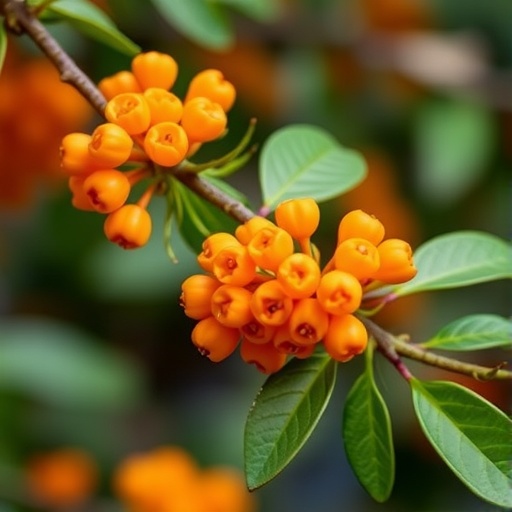
A groundbreaking study has emerged highlighting the previously uncharted territory of the class III peroxidase gene family in sea buckthorn, a plant scientifically known as Hippophae rhamnoides subsp. sinensis Rousi. This extensive exploration, led by a team of dedicated researchers including Zhao, J., Li, K., and Zhao, M., dives deep into the intricate roles these peroxidases play in the biosynthesis of lignin, a vital component in the plant structure and an essential substance for a myriad of industrial applications. This invaluable research opens up new avenues for understanding plant resilience and could lead to innovative applications in agriculture and biotechnology.
Class III peroxidases, a significant subgroup of the peroxidase enzyme family, have long been acknowledged for their diverse roles in plant physiology. They are particularly noted for their involvement in various metabolic processes, including the biosynthesis of lignin and secondary metabolites. Lignin itself is a complex organic polymer that provides structural support to vascular plants, crucial for water transport and mechanical strength. The intricate relationship between peroxidases and lignin biosynthesis is foundational in both plant biology and the fields of environmental sustainability and bioengineering.
The research team embarked on a meticulous journey, employing advanced genomic techniques to identify and characterize the members of this gene family specifically within sea buckthorn. Utilizing next-generation sequencing technologies and bioinformatics analyses, they successfully mapped out the class III peroxidase gene sequences. This groundbreaking technique allowed the researchers to delve into the genetic makeup and expression patterns of these enzymes, providing comprehensive insights into their functional diversity and significance in plant physiology.
One of the most compelling aspects of this study is the researchers’ emphasis on the potential role of these peroxidases in enhancing lignin biosynthesis. Through examining the gene expression data, the team was able to establish a correlation between the activity of class III peroxidases and the accumulation of lignin in the sea buckthorn plant. This correlation not only underscores the importance of these enzymes in plant structure and growth but also raises intriguing possibilities regarding their manipulation for improved biomass production and stress resistance in other crops.
Furthermore, the implications of better understanding the class III peroxidase gene family reach far beyond just sea buckthorn. As the global demand for sustainable materials rises, optimizing lignin production in plants could pave the way for innovative biomass sources for energy and material industries. Enhanced lignin biosynthesis could result in agricultural plants that are more adaptable to climate change, pests, and disease—a crucial factor as we look to secure food resources for a growing population.
The team also explored how environmental factors influence the expression patterns of class III peroxidase genes. By subjecting sea buckthorn to various abiotic stresses such as drought and salinity, the researchers documented shifts in gene expression levels and their activity. These findings illuminate how peroxidases can serve as molecular indicators of plant health and their ability to withstand unfavorable environmental conditions. Understanding these adaptive mechanisms is vital for developing resilient crop varieties that can thrive under climate variability.
The findings from this research resonate profoundly in today’s context of environmental change and the urgent need for sustainable agricultural practices. By focusing on genetic resources and molecular mechanisms governing plant resilience, researchers are addressing not only agricultural productivity but also the ecological balance necessary to support biodiversity. Enhancing the understanding of the molecular strategies plants utilize to cope with stress can lead to revolutionary approaches in crop improvement programs.
Moreover, the study urges a reevaluation of the current methods employed in lignin extraction and utilization in various industries. With a clearer understanding of the genetic basis behind lignin biosynthesis, industries may adapt their techniques to manage lignin levels in biomass, making extraction processes more efficient and environmentally friendly. The relevance of lignin extends from biofuels to paper production, and rethinking these processes could yield significant economic and ecological benefits.
In conclusion, the identification and characterization of the class III peroxidase gene family in sea buckthorn herald a new chapter in plant molecular biology and agricultural innovation. The correlation established between peroxidases and lignin biosynthesis opens avenues for future research aimed at bioengineering crops with improved biomass traits. As the pressures from climate change escalate, understanding the genetic and molecular bases of plant resilience through studies like this one is key to developing sustainable agricultural systems that ensure food security.
In the quest for a deeper understanding of plant physiology and resilience, this research not only enriches our knowledge of sea buckthorn but also provides a blueprint for exploring similar pathways in other economically important crops. The implications of this study extend across various scientific domains, emphasizing the interconnectedness of genomics, botany, and sustainable development. As researchers continue to unravel the complexities of plant life, the insights gained from such foundational studies will undoubtedly lead to innovative solutions to some of the most pressing challenges of our time.
In summary, the research on the class III peroxidase gene family signifies an important advancement in our efforts to harness plant mechanisms for a sustainable future. The potential applications stemming from this study can lead to new crops that not only fulfill human needs but also contribute positively to the environment, marking a significant stride towards holistic approaches to agriculture and resource management.
Subject of Research: Identification and characterization of the class III peroxidase gene family in sea buckthorn.
Article Title: Identification and characterization of the class III peroxidase gene family in sea buckthorn (Hippophae rhamnoides subsp. sinensis Rousi) and its potential role in lignin biosynthesis.
Article References: Zhao, J., Li, K., Zhao, M. et al. Identification and characterization of the class III peroxidase gene family in sea buckthorn (Hippophae rhamnoides subsp. sinensis Rousi) and its potential role in lignin biosynthesis. BMC Genomics 27, 77 (2026). https://doi.org/10.1186/s12864-025-12295-1
Image Credits: AI Generated
DOI: https://doi.org/10.1186/s12864-025-12295-1
Keywords: class III peroxidases, lignin biosynthesis, sea buckthorn, genetic mapping, plant resilience, sustainable agriculture, molecular biology.
Tags: agricultural biotechnology applicationsbioengineering innovationsclass III peroxidases functionsenvironmental sustainability in agricultureenzyme family roles in metabolismgenomic analysis of peroxidasesHippophae rhamnoides researchlignin biosynthesis in plantslignin’s industrial applicationsplant resilience mechanismssea buckthorn peroxidase genesstructural support in vascular plants