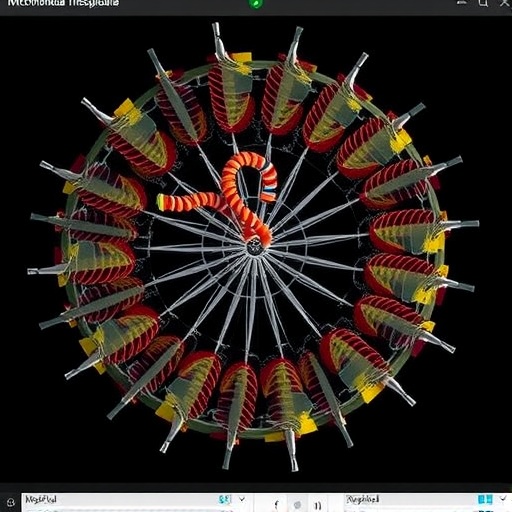
In a groundbreaking study, researchers have unveiled the complete mitochondrial genome of Maclura tricuspidata, a plant species common to East Asia, known for its unique ecological and medicinal properties. This comprehensive genomic analysis, led by a team of scientists including Zhang, Wang, and Zhao, has not only broadened our understanding of this species but also underscored the importance of mitochondrial genomes in plant evolutionary studies and biotechnology applications.
Mitochondria, the cellular powerhouses, play a crucial role in energy metabolism and have evolved distinct genomic architectures across the plant kingdom. The mitochondrial genome of Maclura tricuspidata was meticulously sequenced and assembled, revealing a unique structure and organization that adds to the pool of known plant mitochondrial genomes. This study highlights the vast diversity of mitochondrial genomes and their implications in phylogenetic analyses, offering insights into the evolutionary history of angiosperms.
Utilizing advanced sequencing technologies, the researchers managed to construct a complete mitochondrial genome sequence of Maclura tricuspidata. This process involved the careful extraction and purification of mitochondrial DNA followed by cutting-edge sequencing. The resulting genomic data was analyzed using sophisticated bioinformatics tools, leading to the identification of genes responsible for critical metabolic functions and cellular respiration pathways.
The findings shed light on the peculiarities of the mitochondrial genome in Maclura tricuspidata, which appears to have retained several ancestral traits that are often lost in more evolutionarily derived species. Notably, the genome exhibits a high level of intron retention and gene rearrangement, which suggests a complex evolutionary trajectory influenced by various environmental factors. This complexity not only reveals evolutionary pathways but also raises questions about the adaptive strategies of this species in its native habitat.
Comparative analysis with mitochondrial genomes from related species provides further context to the findings. Differences in gene content and organization can be linked to the ecological niches these plants occupy. Such comparative studies are invaluable as they allow scientists to explore how mitochondrial adaptations might contribute to the survival and reproductive success of species in varying environments. Through this lens, the study of Maclura tricuspidata becomes a microcosm of broader evolutionary processes at play.
Moreover, the research has implications for conservation biology. Understanding the complete mitochondrial genomes of such species aids in developing strategies for biodiversity preservation, particularly in the face of climate change and habitat destruction. The data generated could be instrumental in breeding programs aimed at enhancing the adaptability of Maclura tricuspidata and related species. Consequently, this work opens avenues for future research on genetic resources that could be leveraged for improving resilience in crops.
Additionally, the medicinal properties attributed to Maclura tricuspidata have historically piqued the interest of pharmacologists and ethnobotanists. Analysis of the mitochondrial genome could lead to a better understanding of the biosynthetic pathways for unique compounds present in the plant. The elucidation of these pathways is crucial for harnessing the therapeutic potential of Maclura tricuspidata and could spur the development of novel pharmaceuticals derived from plant compounds.
Furthermore, this study contributes to the growing database of genomic information within the field of plant sciences. As genomic sequencing becomes more accessible and affordable, more species are likely to be sequenced, providing a wealth of data for comparative analyses. Such data are pivotal for understanding plant evolution, enhancing agricultural practices, and discovering new genomic traits that could benefit future generations.
In the grander scheme of plant genomic research, the study of Maclura tricuspidata’s mitochondrial genome stands as a testament to the intricate relationship between a plant’s genetic makeup and its environment. The synthesis of this data not only enriches the current scientific literature but also acts as a catalyst for further exploration. As the scientific community continues to unveil the complexities of plant genomes, it fosters a deeper appreciation for the stories they tell about evolutionary history and ecological adaptation.
The implications of this research extend beyond academic interest. With the increasing demand for sustainable agricultural practices and natural remedies, investigations into the mitochondrial genomes of such plants can guide the development of more resilient crops and innovative therapeutic strategies. Using ancient genomic information to inform modern practices can lead to breakthroughs in agricultural sustainability and healthcare advancements.
The researchers’ comprehensive approach to sequencing and analyzing Maclura tricuspidata lays the groundwork for future studies focused on mitochondrial genetics in other plant species. As comparative genomic analyses evolve, the intersection of genomics, ecology, and evolutionary biology will provide exciting new insights into how plant species thrive under different environmental conditions.
Ultimately, this scholarly endeavor underscores the importance of detailed genomic studies in understanding the biological underpinnings of biodiversity. By exploring the complete mitochondrial genome of Maclura tricuspidata, Zhang and colleagues challenge researchers to broaden their horizons regarding plant genetics and adaptation while emphasizing the necessity of multidisciplinary approaches to tackle contemporary ecological issues.
In conclusion, the complete mitochondrial genome of Maclura tricuspidata not only represents a significant contribution to the field of genomics but also serves as a reminder of the intricate ties between genetic information, ecological adaptation, and evolutionary biology. As we move toward a more informed understanding of plant genetics, studies such as these will be pivotal in guiding the conversations around conservation, agriculture, and medicinal research for years to come.
Subject of Research: Mitochondrial genome of Maclura tricuspidata
Article Title: Assembly and comparative analysis of the complete mitochondrial genome of the Maclura tricuspidata.
Article References:
Zhang, S., Wang, X., Zhao, X. et al. Assembly and comparative analysis of the complete mitochondrial genome of the Maclura tricuspidata.
BMC Genomics (2026). https://doi.org/10.1186/s12864-025-12491-z
Image Credits: AI Generated
DOI: 10.1186/s12864-025-12491-z
Keywords: Mitochondrial genome, Maclura tricuspidata, comparative analysis, evolution, phylogenetics, conservation, agricultural biotechnology, medicinal properties.
Tags: advanced sequencing technologiesangiosperm phylogenetic analysesbioinformatics in genomicsEast Asian plant speciesecological and medicinal propertiesenergy metabolism in plantsgenomic diversity in plantsMaclura tricuspidata mitochondrial genomemitochondrial DNA extraction methodsmitochondrial genome sequencingplant biotechnology applicationsplant evolutionary studies