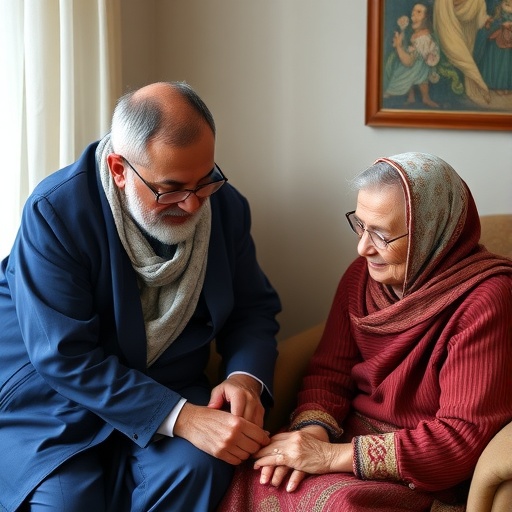
As populations across the globe experience unprecedented aging trends, the imperative for robust long-term care infrastructures becomes ever more pressing. One recent rigorous investigation into this domain casts a spotlight on Iran’s evolving needs and systemic deficiencies in delivering sustainable, quality care for the elderly. Drawing upon a qualitative content analysis, this study intricately unpacks the multi-layered challenges and latent gaps hampering effective long-term care services within the Iranian context, providing a timely and much-needed roadmap for policymakers and healthcare providers alike.
The study begins by elucidating the demographic trajectory of Iran, where a notable swell in the elderly population is reshaping social and healthcare frameworks. Long-term care, defined as ongoing assistance with daily living and medical needs for chronically ill or disabled older adults, encounters unique socio-cultural and infrastructural challenges in Iran’s healthcare ecosystem. Despite gradual healthcare advancements, critical shortcomings remain in addressing this vulnerable population’s nuanced needs, revealing systemic fragmentation and resource deficits.
Central to the analysis is the observation that Iran’s long-term care system is marked by stark variations in availability and quality across urban and rural divides. Urban centers, while better equipped with medical and nursing facilities, still struggle with workforce shortages and insufficient geriatric specialization. Conversely, rural and remote regions confront even harsher limitations, including minimal institutional support and inadequate caregiver training, exacerbating disparities that compromise equitable elder care access nationwide.
The researchers employed qualitative content analysis to delve beneath the surface, conducting extensive interviews and focus groups with healthcare professionals, caregivers, elderly individuals, and policymakers. This methodological rigor enabled a rich triangulation of perspectives, revealing that cultural expectations around familial duty often result in informal care settings that lack formal training or regulatory oversight. These informal arrangements, while culturally resonant, frequently lead to caregiver burnout and suboptimal health outcomes for care recipients.
A critical finding of the study is the fragmentation and lack of coordination among Iran’s healthcare, social, and welfare sectors responsible for long-term care. The siloed nature of service provision inhibits the establishment of comprehensive, integrated care pathways. Although some pilot reforms have been introduced, the absence of a national strategic framework tailored to the complexities of aging populations impedes scalability and consistency in service delivery throughout the country.
The authors highlight the urgent need for a multifaceted policy response encompassing legal, financial, and educational interventions. Enhancing caregiving workforce capacity through targeted training in geriatrics, promoting multidisciplinary collaboration, and instituting regulatory standards for both formal and informal care providers emerge as foundational priorities. They argue that without systemic reforms, the mounting elder care demands risk overwhelming Iran’s healthcare infrastructure, with far-reaching socioeconomic repercussions.
Financial constraints pose another formidable barrier, with current funding mechanisms insufficiently aligned to sustain and expand long-term care services. The study recommends innovative financing models, including public-private partnerships and insurance schemes tailored to elder care needs. Addressing affordability and equitable access would reduce out-of-pocket burdens on families, a critical factor in enabling continuous and quality care.
Furthermore, the research underscores the role of technology and telehealth as untapped opportunities for bridging care gaps, particularly in underserved areas. Integrating digital health solutions can supplement direct caregiving and monitoring, enhance communication between providers and families, and facilitate timely interventions that prevent hospitalizations. However, successful implementation requires infrastructural investment and capacity building at multiple levels.
Community engagement and awareness-raising campaigns are also pivotal in reshaping societal attitudes toward aging and caregiving roles. The study reveals that stigma and misconceptions surrounding elder care hinder timely utilization of available services. Education initiatives that normalize professional care and emphasize preventive health and wellness in aging are essential to fostering a supportive environment for both caregivers and the elderly.
From a policy perspective, advocating for aligning Iran’s long-term care framework with international best practices, adapted to local contexts, is a recurrent theme. The study situates its findings within global aging discourse, highlighting convergent challenges such as workforce shortages, integration issues, and sustainable financing. Drawing lessons from countries that have successfully navigated these obstacles provides a valuable blueprint for Iranian policymakers.
The interplay between demographic trends, cultural norms, and institutional capacity frames the complexity of advancing long-term care solutions. The study’s qualitative depth offers granular insights into stakeholder experiences, revealing systemic inertia but also strong individual and collective will to improve care conditions. Harnessing this momentum requires coordinated governance structures that prioritize the elderly within national development agendas.
Importantly, the research signals the need for enhanced data collection and monitoring systems to inform evidence-based decision making. Current limitations in data availability hinder accurate assessment of care demands and outcomes, complicating policy formulation and resource allocation. Establishing robust information systems would facilitate dynamic tracking and evaluation of long-term care interventions’ efficacy.
The study also casts light on the psychological and emotional dimensions of caregiving, often overshadowed by clinical concerns. Recognizing caregiver strain and providing mental health support mechanisms is fundamental to sustaining long-term care ecosystems. These psychosocial components must be integrated into program design to promote caregiver resilience and overall service quality.
Moreover, Iran’s unique socio-political environment, with its blend of traditional values and rapid modernization, creates a delicate balance for reform initiatives. The research stresses that culturally sensitive strategies, inclusive of family dynamics and religious considerations, are necessary to achieve community buy-in and lasting impact. Flexibility and adaptability in policy design will enable the system to evolve responsively alongside demographic and societal shifts.
In conclusion, this groundbreaking qualitative investigation charts a comprehensive analysis of Iran’s long-term care landscape, revealing a confluence of demographic pressures, systemic inefficiencies, and emerging opportunities for reform. The findings serve as a clarion call for decisive, integrative action that prioritizes elder dignity and well-being. As Iran stands at the crossroads of aging care transformation, the insights offered form a critical foundation for shaping a sustainable and compassionate future for its aging citizens.
Subject of Research: Long-term care gaps and requirements in Iran’s healthcare system
Article Title: Insights into the gaps and requirements of long-term care in Iran: a qualitative content analysis approach
Article References:
Ghasemyani, S., Mobasseri, K., Jafari, M. et al. Insights into the gaps and requirements of long-term care in Iran: a qualitative content analysis approach. BMC Geriatr (2026). https://doi.org/10.1186/s12877-026-07188-1
Image Credits: AI Generated
Tags: aging population challenges Iranchronic illness management elderly Irancultural factors in Iranian elder caregeriatric care workforce shortages Iranhealthcare infrastructure for elderly Iranlong-term care needs in Iranpolicy roadmap for elder care Iranqualitative study on elderly care Iransocial and healthcare frameworks aging Iransustainable elderly care solutions Iransystemic deficiencies in Iranian healthcareurban-rural disparities in elder care Iran