


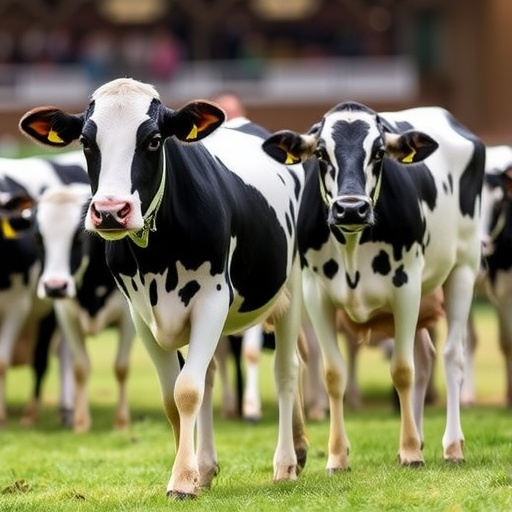
In a groundbreaking study, researchers have unveiled the intricate genetic factors that regulate milk fat percentage in Chinese Holstein cows, a major breed in the dairy industry. The findings are based on a comprehensive genome-wide analysis, providing valuable insights into enhancing milk production through genetic selection. This research, conducted by Gong, C., Zhang, Y., Yang, C., et al., paves the way for a better understanding of the genetic architecture underlying milk traits, which are crucial for dairy farmers seeking to optimize production efficiency.
The quest for understanding milk fat percentage has long been a priority in dairy genomics, as it plays a key role in both the nutritional value of milk and its market price. Traditionally, dairy farmers have relied on phenotypic assessments, but the advent of genomic technologies has revolutionized this field. By identifying regulatory variants associated with milk fat traits, scientists hope to establish molecular markers that can be used for selection purposes, thereby accelerating the breeding process for desired traits in dairy cattle.
Milk fat is a complex trait influenced by numerous factors, including genetics, environment, and management practices. The research team took an unbiased approach, examining the entire genome of Chinese Holsteins. Through advanced technologies such as next-generation sequencing, they were able to identify numerous single nucleotide polymorphisms (SNPs) that have a significant impact on the milk fat percentage. This comprehensive genetic mapping not only sheds light on the complexity of genetic regulation in dairy cows but also provides essential information for breeders aiming for high-quality milk production.
The significance of this research extends beyond academic interest; it is directly applicable to the dairy industry. With milk being a staple in various diets around the globe, enhancing the fat content could lead to improved dairy products such as cheese and butter, which are highly valued for their flavor and texture. As consumers become more health-conscious, understanding the regulation of milk fat percentage could also cater to market demands for healthier dairy options, proving crucial for the industry’s future.
Furthermore, the researchers explored the correlation between identified regulatory variants and metabolic pathways related to lipid metabolism in cows. This aspect of the research highlights the complexity of metabolic regulations governing milk production. By delving into the biochemical processes that contribute to milk fat biosynthesis, scientists can better understand the genetic underpinnings associated with high and low milk fat percentages in dairy cows. This knowledge is essential for manipulating these biological pathways through genetic engineering techniques or selective breeding methods.
Moreover, the findings of this study coincide with the increasing emphasis on sustainable farming practices. With the global rise in demand for dairy products, enhancing milk production without compromising animal welfare remains a top priority for the dairy sector. By utilizing genetic insights to improve breeding strategies, farmers can produce cows that not only yield higher fat content but also maintain their health and overall wellbeing, supporting a sustainable model for dairy production.
The potential implications of this research are profound. With the ability to pinpoint specific genetic markers linked to milk fat percentage, breeders can implement marker-assisted selection strategies, significantly reducing the time required to develop superior breeding lines. Additionally, the genetic resources established through this study could aid in conservation efforts for genetic diversity within cattle populations, which is crucial for maintaining robust livestock in changing environmental conditions.
As the dairy industry faces challenges such as climate change, consumer preferences, and evolving regulations, integrative strategies that blend traditional breeding practices with cutting-edge genetic technologies will become increasingly important. The insights generated from this research not only equip breeders with the tools necessary to enhance milk traits but also serve as a beacon of innovation for future studies focusing on other economically valuable traits in livestock.
Furthermore, the study’s rigorous methodological approach sets a precedent for future genome-wide association studies (GWAS) within agricultural genomics. The combination of large sample sizes, advanced statistical analyses, and sophisticated bioinformatics tools demonstrates how collaborations across disciplines can push the boundaries of agricultural research. Engaging with interdisciplinary teams comprising geneticists, animal scientists, and data analysts will be crucial for translating findings into practical breeding applications.
In conclusion, the identification of regulatory genetic variants that influence milk fat percentage in Chinese Holstein cows represents a robust advancement in dairy genomics. This research not only elucidates the genetic mechanisms underpinning milk traits but also offers a roadmap for improving dairy production efficiency through scientific innovation. As the dairy landscape evolves, ongoing research and application of these findings will be pivotal in addressing the needs of producers and consumers alike, fostering a sustainable future for the global dairy industry.
The collaborative effort among researchers indicates a hopeful future for genomic science in agriculture. Continuous advancements in molecular biology, along with evolving analytical technologies, promise to reveal even more about the genetics of milk production. As these tools become more accessible, the potential for precision agriculture—and its consequential benefits—will only expand, aiding farmers in their quest to meet growing demands sustainably.
As we look to the future, the dialogue between genomics and practical farming applications will remain vital. By harnessing this genetic knowledge, we can cultivate resilient dairy breeds that meet market demands while also promoting animal welfare and environmental sustainability. This marks just the beginning of an exciting journey in dairy research that will undoubtedly yield significant benefits for producers and consumers alike.
Through the intersections of science, agriculture, and technology, we are embarking on an era defined by precision and innovation in dairy production. The work of Gong, C., Zhang, Y., Yang, C., et al. lays down essential groundwork for this journey, reminding us that the complexities of genetics can be harnessed for the greater good of the industry and society as a whole.
Subject of Research: Genetic regulation of milk fat percentage in Chinese Holstein cows.
Article Title: Genome-wide identifications of regulatory variants influencing milk fat percentage in Chinese Holstein cow.
Article References:
Gong, C., Zhang, Y., Yang, C. et al. Genome-wide identifications of regulatory variants influencing milk fat percentage in Chinese Holstein cow.
BMC Genomics (2025). https://doi.org/10.1186/s12864-025-12449-1
Image Credits: AI Generated
DOI:
Keywords: Milk fat percentage, Chinese Holstein cows, genome-wide association study, genetic regulation, breeding, dairy production.
Tags: enhancing milk fat traitsenvironmental factors in milk productiongenetic factors milk fat Holstein cowsgenetic selection milk productiongenome-wide analysis dairy genomicsgenomic technologies in dairy farmingmarket price milk fatmolecular markers dairy cattle breedingnutritional value of milkoptimizing dairy production efficiencyphenotypic assessments milk qualityregulatory variants milk traits



