In moments of acute stress, individuals frequently gravitate toward behaviors such as alcohol consumption, seeking solace or relief. A groundbreaking study conducted by researchers at Texas A&M University has now illuminated a precise neural mechanism that intricately links the experience of stress to addiction-related behaviors. Their findings reveal how alcohol disrupts the brain’s intrinsic stress-response network, thereby impairing adaptive decision-making and promoting the persistence of harmful habits.
This pioneering research, spearheaded by Dr. Jun Wang, a professor in the Department of Neuroscience and Experimental Therapeutics at Texas A&M, breaks new ground in our understanding of the neural substrates that connect emotional stress with habitual actions. Published in the prestigious journal eLife, the study uncovers a direct neural pathway through which stress signals influence brain areas responsible for habit formation and decision-making. This insight provides a novel framework for comprehending why stressful experiences so potently drive individuals toward potentially damaging routines such as excessive drinking.
Central to this discovery is the identification of a communicative axis between two key limbic regions—the central amygdala (CeA) and the bed nucleus of the stria terminalis (BNST)—and the dorsal striatum, a brain region deeply implicated in controlling actions and habits. The CeA and BNST have long been recognized as pivotal centers mediating emotional responses to threat, anxiety, and overwhelm. Until now, the exact mechanism by which stress-related neurochemical signals from these areas could affect the dorsal striatum remained elusive.
The research team elucidates that these stress centers release corticotropin-releasing factor (CRF), a neuropeptide central to orchestrating physiological and behavioral responses to stress. CRF operates as the brain’s principal chemical distress signal, modulating the nervous system’s reaction to challenging stimuli. Through sophisticated neuroanatomical tracing and electrophysiological analyses, the scientists demonstrated that CRF-responsive neurons in the dorsal striatum receive direct synaptic inputs from the CeA and BNST, establishing an unbroken conduit for stress signaling.
Within the dorsal striatum reside cholinergic interneurons (CINs), a specialized class of neurons that function analogously to traffic controllers within the brain’s circuitry. These interneurons regulate the balance between behavioral flexibility and the ingraining of habitual responses, notably by modulating the release of acetylcholine, a neurotransmitter essential for learning and executive function. Engaging these cells appropriately allows the brain to adapt strategies and override default patterns when circumstances demand it.
Experimentally, the application of CRF to CINs elicited heightened neuronal excitability and an augmented release of acetylcholine. This finding underscores a physiological role of stress signaling that, contrary to popular perception, initially promotes cognitive flexibility and adaptive decision-making. The stress response, by activating these interneurons, encourages a moment of cognitive pause, enabling individuals to reassess their actions in response to environmental demands.
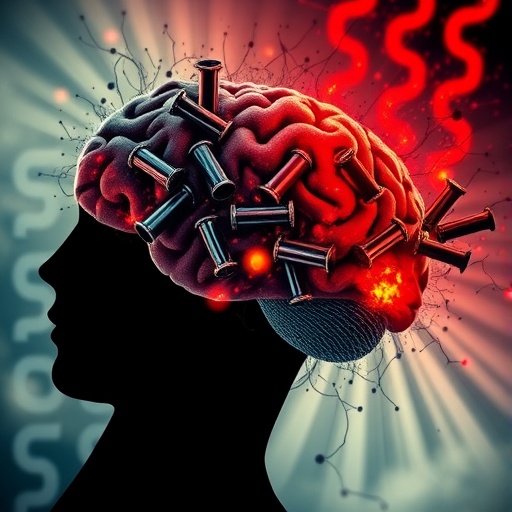
However, this beneficial circuit is vulnerable to disruption by alcohol. The investigators found that alcohol exposure, particularly during early withdrawal phases, significantly diminishes the capacity of CRF to activate cholinergic interneurons. Furthermore, alcohol directly suppresses the basal activity of these CINs, thereby attenuating acetylcholine release. This neural dampening effectively “cuts the line of communication” between stress centers and decision-making nodes, severely compromising the brain’s ability to adaptively respond to stress.
This mechanistic interference offers a compelling biological explanation for the potent association between stress and alcohol relapse observed clinically. When the brain’s natural adaptive stress response is impaired by alcohol, individuals are more susceptible to revert to automatic, compulsive behaviors during stress, perpetuating cycles of addiction. Crucially, the vulnerability appears heightened during withdrawal, a phase when adaptive stress responses are already compromised, underlying the notorious difficulty of sustained recovery.
The insights from this study yield profound implications for the conceptualization of addiction as a disorder marked by rigid, maladaptive behavioral patterns. The disruption of cholinergic interneuron activity sabotages behavioral flexibility, tipping the neural balance toward compulsive habit formation. This perspective reframes addiction not simply as a failure of restraint but as a neurophysiological state in which the capacity to modify actions in response to changing demands is fundamentally impaired.
Beyond advancing theoretical understanding, the research charts promising new avenues for therapeutic intervention. By pinpointing the exact neurons and receptors implicated in the stress-addiction nexus, novel pharmacological strategies can be envisioned. For instance, treatments aimed at enhancing the activity of cholinergic interneurons or supporting CRF signaling during withdrawal periods could potentially restore adaptive stress responses and mitigate relapse risk.
Moreover, protecting this critical neural circuitry from alcohol-induced damage represents an enticing target for future drug development. Interventions that could preserve or rejuvenate the integrity of the CeA/BNST to dorsal striatum pathway may enhance resilience against the deleterious behavioral consequences of stress and alcohol. Such innovations could constitute a paradigm shift in managing addiction, focussing on restoring neurobiological flexibility rather than merely treating withdrawal symptoms.
This investigation represents a milestone in unraveling the complex interplay between emotional stress and addictive behavior. It offers a lucid biological map tracing how stress penetrates the brain’s decision-making machinery and how alcohol fractures this communication, engendering the rigid behavioral compulsions characteristic of addiction. As Dr. Wang notes, this knowledge furnishes a powerful foundation upon which future scientific and clinical advances may be constructed, fueling hope for more effective addiction treatments.
The study was supported by the National Institute on Alcohol Abuse and Alcoholism, underscoring the vital importance of federal funding in driving forward neurobiological research with profound societal implications. As addiction remains a pressing public health challenge worldwide, elucidating the neural mechanisms at play is an essential step toward formulating durable solutions to alleviate suffering and promote recovery.
In sum, Texas A&M’s discovery of the CRF-mediated circuit from stress centers to the dorsal striatum’s cholinergic interneurons not only deepens our grasp of brain function under duress but also reveals how alcohol’s interference with this system entrenches maladaptive habits. Harnessing this insight therapeutically could revolutionize how clinicians approach addiction, emphasizing the restoration of the brain’s innate capacity for adaptive decision-making amidst stress.
Subject of Research: Neurobiological mechanisms linking stress to addiction-related behaviors
Article Title: Alcohol attenuates CRF-induced excitatory effects from the extended amygdala to dorsostriatal cholinergic interneurons
News Publication Date: 23-Mar-2026
Web References: http://dx.doi.org/10.7554/eLife.107145.3
References: Published in eLife by Dr. Jun Wang and colleagues at Texas A&M University
Keywords: Addiction, Neuroscience, Psychological stress, Mental health, Brain, Psychiatric disorders
Tags: adaptive decision-making impairmentalcohol impact on brainbed nucleus of stria terminalis functionbrain stress-response networkcentral amygdala role in addictiondorsal striatum habit formationemotional stress and habitual behaviorlimbic system addiction pathwaysneural substrates of addiction behaviorsneurobiology of stress-induced drinkingstress and addiction neural mechanismsTexas A&M neuroscience addiction research