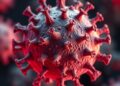
Credit: Photo courtesy of the Kawaoka lab, UW-Madison
Scientists have identified a set of biomarkers that indicate which patients infected with the Ebola virus are most at risk of dying from the disease.
The results come from scientists at the Department of Energy's Pacific Northwest National Laboratory and their colleagues at the University of Wisconsin-Madison, Icahn School of Medicine at Mount Sinai, the University of Tokyo and the University of Sierra Leone. The results were published online Nov. 16 in the journal Cell Host & Microbe.
The findings could allow clinicians to prioritize the scarce treatment resources available and provide them to the sickest patients, said the senior author of the study, Yoshihiro Kawaoka, a virology professor at the UW-Madison School of Veterinary Medicine.
The focus of the study were blood samples from Ebola patients that were obtained during the outbreak in Sierra Leone in 2014. The Wisconsin team obtained 29 blood samples from 11 patients who ultimately survived and nine blood samples from nine patients who died from the virus. The Wisconsin team inactivated the virus according to approved protocols, developed in part at PNNL, and then shipped the samples to PNNL and other institutions for analysis.
The team looked at activity levels of genes and proteins as well as the amounts of lipids and byproducts of metabolism. The team found 11 biomarkers that distinguish fatal infections from non-fatal ones and two that, when screened for early upon symptom onset, accurately predict which patients are likely to die.
"Our team studied thousands of molecular clues in each of these samples, sifting through extensive data on the activity of genes, proteins, and other molecules to identify those of most interest," said Katrina Waters, the leader of the PNNL team and a corresponding author of the paper. "This may be the most thorough analysis yet of blood samples of patients infected with the Ebola virus."
The team found that survivors had higher levels of some immune-related molecules and lower levels of others compared to those who died. Plasma cytokines, which are involved in immunity and stress response, were higher in the blood of people who perished. Fatal cases had unique metabolic responses compared to survivors, higher levels of virus, changes to plasma lipids involved in processes like blood coagulation, and more pronounced activation of some types of immune cells.
Pancreatic enzymes also leaked into the blood of patients who died, suggesting that damage from these enzymes contributes to the tissue damage characteristic of fatal Ebola virus disease.
The scientists found that levels of two biomarkers, known as L-threonine (an amino acid) and vitamin-D-binding-protein, may accurately predict which patients live and which die. Both were present at lower levels at the time of admission in the patients who ultimately perished.
The team found that many of the molecular signals present in the blood of sick, infected patients overlap with sepsis, a condition in which the body – in response to infection by bacteria or other pathogens – mounts a damaging inflammatory reaction.
Fifteen PNNL scientists contributed to the study. Among the corresponding authors of the study are three PNNL scientists: Waters, Thomas Metz and Richard D. Smith. Three additional PNNL scientists – Jason P. Wendler, Jennifer E. Kyle and Kristin E. Burnum-Johnson – are among six scientists who share "first author" honors.
###
Other PNNL authors include Jon Jacobs, Young-Mo Kim, Cameron Casey, Kelly Stratton, Bobbie-Jo Webb-Robertson, Marina Gritsenko, Matthew Monroe, Karl Weitz, and Anil Shukla.
Analyses of proteins, lipids and metabolites in the blood samples were performed at EMSL, the Environmental Molecular Sciences Laboratory, a DOE Office of Science User Facility at PNNL.
The study was funded by a Japanese Health and Labor Sciences Research Grant; by grants for Scientific Research on Innovative Areas from the Ministry of Education, Cultures, Sports, Science and Technology of Japan; by Emerging/Re-emerging Infectious Diseases Project of Japan; and by the National Institute of Allergy and Infectious Diseases, part of the National Institutes of Health. Support was also provided by the Department of Scientific Computing at the Icahn School of Medicine at Mount Sinai and by a grant from the National Institute of General Medicine.
Media Contact
Tom Rickey
[email protected]
@PNNLab
http://www.pnnl.gov/news
Related Journal Article
http://dx.doi.org/10.1016/j.chom.2017.10.011