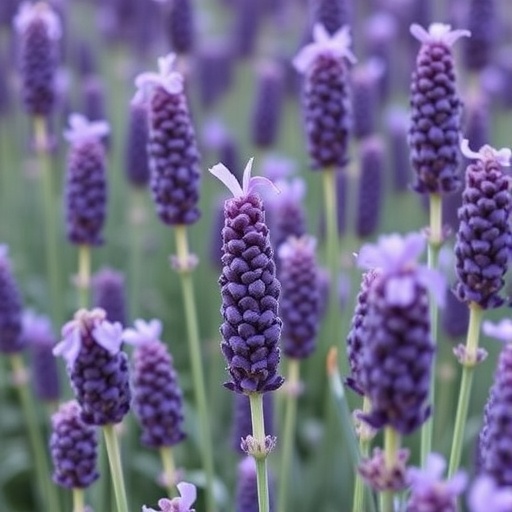
In the realm of botanical studies, the rich diversity of chemical compounds found in plants significantly influences their ecological interactions and potential applications in various industries, including pharmaceuticals, cosmetics, and agriculture. Recent research spearheaded by a team of scientists, including Hornburg, Breceda, and Amer, has unveiled new insights into the non-volatile chemical diversity present in lavender, a plant long revered for its aromatic qualities and therapeutic potential. By leveraging Nuclear Magnetic Resonance (NMR) spectroscopy as a tool for metabolomics analysis, the researchers have embarked on a journey to characterize the intricate biochemical profiles of lavender species, thereby elucidating their chemical complexity.
Lavender, particularly the species Lavandula angustifolia and Lavandula latifolia, is widely known not just for its captivating scent but also for its myriad of bioactive compounds. These compounds include essential oils, flavonoids, and phenolic acids, which contribute to lavender’s use in aromatherapy and natural medicine. The team identified that despite the extensive research surrounding lavender, there was still a gap in understanding the full chemical landscape available within this plant. Through NMR-based metabolomics, the researchers sought to bridge this gap and provide a comprehensive analysis of the chemical constituents in lavender.
NMR spectroscopy, a powerful analytical technique, allows for the non-destructive characterization of molecular structures, facilitating the identification of various metabolites without the need for extensive sample preparation. The process involves placing the plant extracts in a magnetic field, where specific nuclei absorb radiofrequency radiation. This absorption provides data regarding the chemical environment of the nuclei, enabling researchers to deduce the presence and quantity of various compounds. By applying this method to lavender, the team was able to generate detailed chemical profiles that showcase the plant’s diverse metabolic pathways.
One of the notable findings from the research was the identification of specific metabolites that are unique to different lavender species. This discovery has significant implications for the cultivation and utilization of lavender in commercial settings. For instance, understanding the chemical makeup of a specific lavender variety could inform growers which species to cultivate based on desired characteristics, such as aroma profile or therapeutic efficacy. Moreover, the presence of unique compounds could lead to the development of novel products tailored to consumer preferences or specific medicinal applications.
Through their meticulous analysis, the research team also uncovered variations in the concentration of certain compounds within the same species, influenced by factors such as geographical location and growth conditions. This highlights the ecological aspects affecting the chemical profiles of lavender, often leading to the hypothesis that environmental stressors could enhance the production of specific bioactive compounds. Such findings align with the broader discourse in plant metabolism, emphasizing the intricate relationships between plants and their environments.
Furthermore, the study contributes to the emerging field of precision agriculture, where understanding the chemical diversity of crops can lead to more sustainable farming practices. By utilizing knowledge gained from metabolomics, farmers may implement targeted agricultural strategies that promote the growth of desirable compounds, thereby optimizing yield and reducing the need for chemical fertilizers and pesticides. This could result in enhanced product quality and further consumer acceptance in the ever-evolving market of organic farming.
The implications of this research extend beyond agriculture and into the realms of perfumery and the cosmetic industry. With lavender’s popularity as a fragrance ingredient, understanding its complex biochemical profile can enhance product formulation. The identification of unique scent compounds adds another layer of sophistication to lavender-based products, potentially leading to premium offerings that leverage the plant’s rich chemical heritage. Additionally, this research could spawn innovations in fragrance design, inspiring perfumers to explore new scent experiences grounded in the authentic properties of lavender.
Additionally, the insights gained from NMR-based metabolomics could pave the way for further research into the therapeutic potential of lavender constituents. Prior studies have indicated various health benefits associated with lavender extracts, including anti-inflammatory, antioxidant, and anxiolytic properties. By dissecting the chemical intricacies of lavender, researchers can better understand how these compounds interact with biological systems and their potential in modern medicine. This might even spark interest in developing lavender-based pharmaceuticals, focusing on enhancing the efficacy of natural remedies while minimizing side effects.
The ongoing evolution of metabolomics technology offers the prospect of unprecedented insights into the biochemical world, revealing not only the diversity of metabolites but also their functional significance. As scientists continue to apply advanced analytical techniques like NMR to plant studies, there is a growing likelihood that similar methodologies will be adopted across various fields of research. This could lead to a renaissance of botanical understanding, opening new avenues in natural product research and integrating multidisciplinary approaches to reveal the secrets held within plants.
In conclusion, the feasibility of NMR-based metabolomics in characterizing the non-volatile chemical diversity of lavender illustrates the strides being made in plant sciences. The findings from Hornburg, Breceda, and Amer’s work not only enhance our understanding of lavender’s chemical landscape but also highlight the broader implications for agriculture, product development, and therapeutic research. As a plant that has captivated humans for centuries, lavender presents a rich tapestry of compounds waiting to be explored, and this research represents a significant step toward unlocking its full potential.
The research team’s exploration of lavender through the lens of metabolomics underscores the importance of advanced technology in botanical studies. By advancing our knowledge of plant chemistry, we can better appreciate the intricate relationships that exist in nature, ultimately benefiting various sectors that rely on plant materials. The future of lavender, and indeed many other plants, will likely hinge on our ability to harness scientific insights and translate them into practical applications that benefit society at large.
As we look ahead, the momentum generated by this research might inspire further inquiries into the metabolomics of other botanicals, expanding our understanding of their chemical complexities. With each discovery, we not only celebrate nature’s artistry but also fortify the foundation for innovations that adhere to sustainability and effectiveness in a rapidly changing world.
Subject of Research: Metabolomics analysis of non-volatile chemical diversity in lavender using NMR spectroscopy.
Article Title: Feasibility of NMR-based metabolomics for characterizing non-volatile chemical diversity in lavender.
Article References:
Hornburg, T., Breceda, C.J., Amer, S. et al. Feasibility of NMR-based metabolomics for characterizing non-volatile chemical diversity in lavender. Discov. Plants 2, 373 (2025). https://doi.org/10.1007/s44372-025-00451-6
Image Credits: AI Generated
DOI: https://doi.org/10.1007/s44372-025-00451-6
Keywords: lavender, NMR spectroscopy, metabolomics, chemical diversity, bioactive compounds, agriculture, perfumery, therapeutic potential.
Tags: applications of lavender in cosmeticsbioactive compounds in lavenderbotanical studies of lavenderecological interactions of lavenderessential oils and flavonoidsLavandula angustifolia and Lavandula latifolialavender chemical diversityNMR metabolomics analysisNMR spectroscopy in plant researchpharmaceutical uses of lavenderphenolic acids in lavendertherapeutic potential of lavender