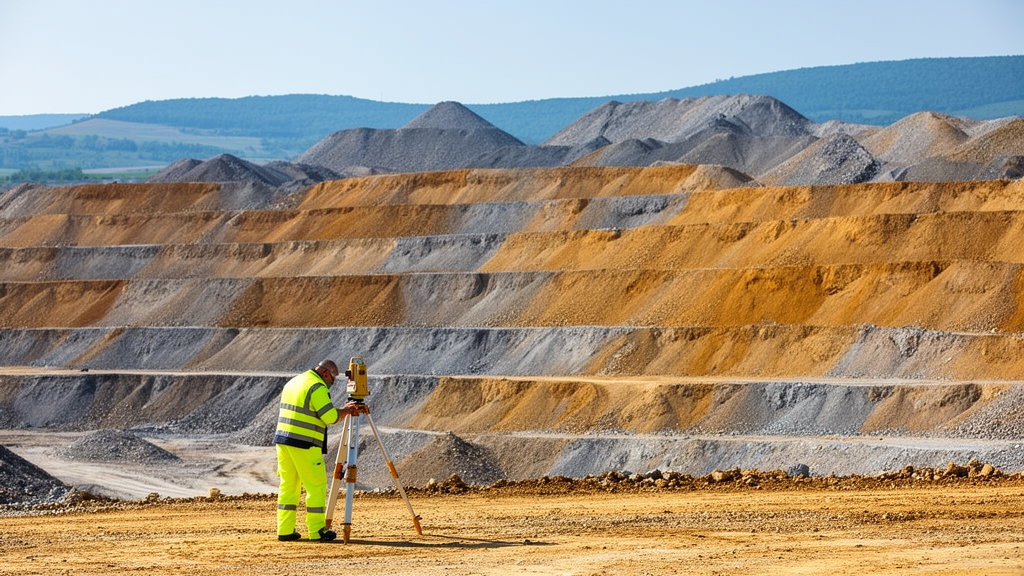
A comprehensive assessment conducted under the international FutuRaM research project has applied the United Nations Framework Classification for Resources to the historical Old Bor flotation tailings in eastern Serbia, evaluating whether massive volumes of deposited mining waste can be classified as a viable secondary source of critical metals. The Old Bor flotation tailings, situated within the broader Bor mining and smelting complex in the Bor mining district, represent more than a century of intensive porphyry copper exploitation from both underground workings and surface open pits. Over decades of industrial operations, historical flotation, smelting, and mineral disposal practices generated substantial accumulations of metal-bearing industrial residues that were deposited under operational regimes that do not satisfy modern environmental protection requirements. As global demand for metals accelerates alongside transitions toward circular economy paradigms and cleaner industrial technologies, anthropogenic deposits such as flotation tailings, slags, waste rock, and metallurgical residues are increasingly recognized as secondary raw material reserves rather than discarded waste. However, because historical residues cannot be automatically recognized as economic reserves without systematic verification, researchers undertook deep exploratory drilling, multi-campaign geochemical consolidation, mineralogical phase analyses, and three-dimensional volumetric modeling to integrate environmental, technical, and geological evidence into an internationally standardized reporting framework.
The study site encompasses an area of 1.24 square kilometers in the former Borski Potok valley, where waste dumping began following the construction of an initial retention dam during the historical extraction of the richest primary ore fractions from the Bor copper-gold deposit. As lower-grade extraction advanced and industrial facilities expanded, the containment dam was upgraded, initiating a second distinct phase of deposition directly over the older substrate. The natural geological basement beneath the tailings accumulation comprises volcaniclastic rocks, conglomerates, and alluvial valley sediments, with total tailings thickness varying significantly across the terrain and reaching depths of up to 65 meters. Decades of unmanaged exposure have turned the extensive bare surfaces of the deposit into prominent environmental liabilities, characterized by the mobilization of fine airborne dust across surrounding agricultural land and inhabited settlements during windy weather conditions. Furthermore, historical mid-twentieth-century dam failures discharged substantial volumes of contaminated industrial slurry down the Borska and Veliki Timok river channels, degrading thousands of hectares of fertile soils, while the high sulphide content of the tailings presents chronic risks of ongoing acid mine drainage capable of releasing copper, iron, arsenic, and other potentially hazardous elements into regional aquatic ecosystems.
To overcome historical exploratory limitations where previous shallow drill holes failed to penetrate into the deepest stratigraphic horizons of the deposit, the investigative team executed an exploratory core drilling campaign in July 2023 utilizing a CS-14 rotary drilling rig operated under dry conditions or with minimal water addition. Two deep boreholes, designated Futuram-1 and Futuram-2, were positioned across less explored sections of the deposit where the greatest vertical tailings accumulations were anticipated. Core recovery achieved high efficiency, ranging from 93 to 99 percent in Futuram-1 and from 92 to 100 percent in Futuram-2, yielding a total drilled length of 116 meters and confirming that tailings thickness reached at least 63 meters. Continuous core recovery permitted detailed geological logging conducted collaboratively by the Mining and Metallurgy Institute Bor and the Geological Survey of Slovenia, revealing that the internal architecture of the deposit consists of alternating thin strata, generally measuring up to one meter, of fine-grained material, pulverulent flotation sand, and silty pulverulent flotation sand displaying grey, dark grey, and brown colorations accompanied by visible sulphide mineralization.
Geochemical sampling of the retrieved cores involved collecting 115 representative composite samples at regular one-meter intervals, each weighing approximately one kilogram, which were subsequently processed through drying at 323 Kelvin, jaw crushing, pulverizing within a ring mill, and quartering to generate representative analytical pulps. Elemental quantification was executed by Bureau Veritas Commodities Canada in Vancouver through inductively coupled plasma mass spectrometry following aqua regia digestion, measuring a comprehensive suite of 65 distinct chemical elements. Rigorous quality assurance included the systematic insertion of 16 duplicate pairs, 19 certified reference standard measurements, and six blank controls, which demonstrated acceptable precision with deviations below 10 percent between duplicate analyses and analytical accuracy maintaining standard recovery within an interval of 90 to 110 percent without detectable bias. These freshly generated data were integrated with historical datasets, specifically 211 multielement assays from a 2015 to 2016 Japanese-Serbian collaboration and 51 analyses from the 2020 RIS-CuRE drilling initiative. Cross-laboratory drift evaluations involving re-assays of 20 historical samples showed strong linear correlation coefficients, with coefficient of determination values of 0.98 for copper, 0.96 for gold, and 0.89 for silver, confirming that disparate analytical generations could be harmonized into a unified geochemical database without mathematical transformation.
Stratigraphic and non-parametric statistical evaluations identified a fundamental vertical subdivision dividing the deposit into two distinct operational horizons. The uppermost 10 meters of the accumulation, designated as Field 2, represents a later depositional phase containing significantly depleted metal concentrations. Conversely, the underlying horizon, designated as Field 1, extends continuously from elevations between plus 359 and plus 299 meters down to the natural geological basement, preserving substantially elevated metal concentrations that reflect historical processing during eras of superior ore grades. Because spatial evaluations demonstrated that elemental contents fluctuate rapidly across meter intervals while lacking distinct, isolated high-grade zones that could be excavated selectively, the resource assessment adopted median concentrations rather than arithmetic means to prevent skewing from statistical outliers. Within the Field 1 horizon, median grades were established at 2300 milligrams per kilogram of copper (0.23 percent), 0.36 milligrams per kilogram of gold, and 1.40 milligrams per kilogram of silver, leading the researchers to exclude the depleted Field 2 stratum entirely from subsequent resource calculations.
Quantitative mineralogical determinations conducted on selected core intervals via X-ray diffraction utilizing the Rietveld refinement method revealed a matrix dominated by non-metallic gangue alongside reactive sulphides. Quartz constituted the principal phase, ranging from 56.0 to 67.9 weight percent, accompanied by significant clay mineral concentrations from the kaolinite group spanning 22.1 to 31.0 weight percent, while pyrite represented the dominant sulphide fraction at 6.3 to 10.0 weight percent. Gypsum appeared as an accessory phase between 1.7 and 5.2 weight percent, and zeolite group minerals occurred locally at 1.5 weight percent. Scanning electron microscopy coupled with energy-dispersive spectroscopy on samples containing peak precious metal grades revealed that copper is predominantly hosted within primary sulphides as well as within iron oxyhydroxides bearing trace copper substitutions, frequently accompanied by discrete impurities of arsenic, lead, and titanium. Precious metals exhibited close spatial correlations with sulphur and silica, with copper and silver concentrated within sulphides, sulphates, and silica-rich agglomerates. Discrete grains of gold and silver were not observed directly under scanning electron microscopy due to their low concentrations falling below microanalytical detection thresholds, though previous scientific literature indicates precious metals commonly occur within pyrite crystal lattices or as microscopic inclusions within copper sulphides.
Applying the United Nations Framework Classification for Resources required scoring the deposit across three independent conceptual axes, designated as the E axis for environmental, socio-economic viability, the F axis for technical feasibility, and the G axis for geological confidence. The deposit was assigned the E2 category along the environmental-socio-economic axis, supported by several positive operational parameters. The tailings reside within an established industrial mining district equipped with existing technical equipment, skilled labor, and active environmental monitoring systems, bolstered by long-standing societal acceptance of extractive operations. Furthermore, reprocessing would mitigate acute regional environmental burdens by eliminating sources of fugitive dust and arresting potential acid mine drainage, with secondary post-processing waste directed into existing modern tailings storage facilities. From an economic standpoint, recent financial modeling indicates that commercial metal extraction from the deposit is viable, demonstrating a positive cumulative net present value expected after 6.55 years of operational activity under state ownership managed by the Mining and Metallurgy Institute Bor.
In contrast to favorable socio-economic conditions, technical feasibility remains constrained, resulting in the assignment of the F3 category along the F axis. While multiple published laboratory investigations have documented successful copper extraction ranging from 60 to 95 percent using methods such as sulphuric acid leaching, physical flotation concentration, combined acid leaching with re-flotation, high-pressure oxidative leaching, and bacterial bioleaching utilizing sulphur-oxidizing microorganisms in alkaline media, metallurgical performance has not been confirmed beyond bench-scale experimentation. The researchers determined that advancing the project toward an F2 categorization—a prerequisite for establishing genuine potential viability—demands extensive empirical validation through semi-industrial or pilot-scale extraction testing, rigorous cut-off grade determinations, and formal assessments of required commercial processing infrastructure. Additional elements identified within the matrix, such as iron and sulphur, are not projected to contribute meaningfully to commercial viability due to low grades and metallurgical constraints, leading to their exclusion from recoverable resource accounting.
Geological confidence was classified under the highest certainty category, G1, based on comprehensive historical exploration and recent verification. The subsurface volume of the Old Bor deposit has been constrained through 14 deep boreholes, establishing high statistical confidence regarding horizontal variability and vertical grade continuity despite minor sampling limitations arising from non-grid drilling distributions. A three-dimensional model constructed from historical and modern topographic surveys calculated a total deposit volume of 15.03 million cubic meters using the trapezoidal rule, of which 10.60 million cubic meters reside within the prospective Field 1 layer. Multiplying this volume by measured median grades established a potentially viable resource within Field 1 containing 54.74 kilotonnes of copper, 8.57 tonnes of gold, and 33.32 tonnes of silver, assuming a baseline 100 percent theoretical recovery efficiency.
The study also delivered an empirical comparison between the UNFC framework and the Russian GKZ classification system historically utilized across Eastern Europe and Serbia, which categorizes resources based exclusively on exploration density and technical feasibility into classes A, B, C1, and C2. Prior assessments of the Old Bor tailings conducted under GKZ standards by independent researchers calculated a total deposit volume of 15.10 million cubic meters using parallel cross-sections and block modeling, demonstrating an exceptional volumetric agreement within a 3 percent deviation when compared to the 15.03 million cubic meters established under UNFC modeling. The GKZ evaluation assigned the deposit to the reserve class B plus C1—which translates directly to the UNFC G1 category under United Nations bridging guidelines—estimating 55.08 kilotonnes of copper at an average grade of 0.224 percent, 9.43 tonnes of gold at 0.386 milligrams per kilogram, and 56.27 tonnes of silver at 2.290 milligrams per kilogram across combined Fields 1 and 2. The agreement between the two independent copper and gold reserve totals validates the volumetric integrity of the deposit, with discrepancies in silver reflecting differences between composite sampling encompassing the lower-grade upper stratum versus selective non-parametric median estimation restricted strictly to the enriched basal horizon.
Ultimately, the synthesis of geological, engineering, and environmental criteria resulted in an aggregate classification of E2 F3 G1 for the copper, gold, and silver recovery project at the Old Bor flotation tailings, designating the deposit as close to potentially viable under international United Nations standards. While substantial tonnages of contained valuable metals, existing regional infrastructure, state institutional oversight, and positive remediation co-benefits strongly favor circular resource recovery, project progression remains tethered to technological scaling. Moving the project to an unambiguously viable classification requires removing the ten-meter low-grade overburden of Field 2 and executing rigorous semi-industrial pilot trials to prove metal recovery efficiencies outside laboratory glassware. Beyond presenting an actionable technical inventory of an important Southeastern European metal accumulation, the investigation establishes an operational benchmark for harmonizing disparate legacy datasets and demonstrates how bridging mechanisms between national GKZ inventories and the global UNFC framework can unlock the latent raw material potential buried within historical mining liabilities.
Subject of Research: Application of the UNFC resource classification framework to historical copper and gold mine tailings in Bor, Serbia
Article Title: Application of the UNFC framework to the classification of mine tailings: A case study from the Bor mining district, Serbia
Article References: Stojković, N., Bavec, Š., Marinković, V., Čeplak, B., Ristović, I., & Žibret, G. (2026). Application of the UNFC framework to the classification of mine tailings: A case study from the Bor mining district, Serbia. Cleaner Engineering and Technology, 35, Article 101364. https://doi.org/10.1016/j.clet.2026.101364
Image Credits: AI Generated
DOI: 10.1016/j.clet.2026.101364
Keywords: UNFC classification, mine tailings, Old Bor flotation tailings, anthropogenic resources, copper recovery, gold extraction, silver resources, Serbia mining, GKZ classification, FutuRaM project, environmental remediation, secondary raw materials, acid mine drainage, drilling campaign, resource assessment, mineralogical analysis, ICP-MS analysis
News Source: Violet Maxwell. (November 21, 2026). UNFC Framework Classifies Serbia’s Old Bor Mine Tailings as Potentially Viable Resource. Scienmag.