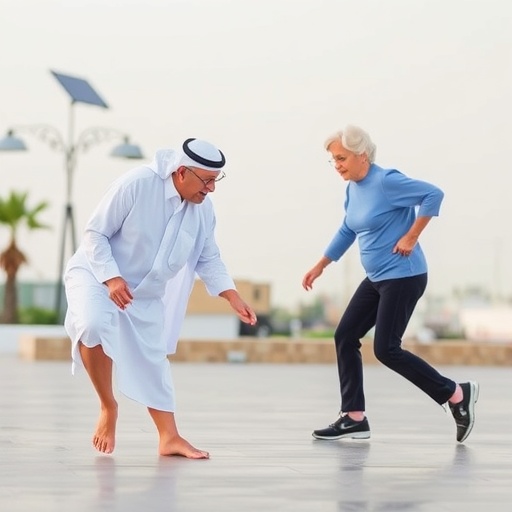
In recent years, the global population of older adults has been rapidly increasing, bringing to light the myriad health-related challenges faced by this demographic. Among these challenges, falls represent a significant threat to the health and well-being of older individuals, particularly in Saudi Arabia, where societal and environmental factors compound the risks. Understanding the barriers and facilitators to effective fall prevention in this region is critical to improving outcomes for the aging population. A recent qualitative study conducted by a team of researchers sheds light on these issues, highlighting essential insights into the behavioral, social, and environmental factors influencing falls among older adults in Saudi Arabia.
At the heart of the study is the exploration of various barriers that prevent older adults from engaging in fall prevention strategies. Researchers conducted in-depth interviews with a diverse group of participants, including healthcare professionals, caregivers, and older adults themselves. The findings suggest that a lack of awareness regarding fall risks and prevention strategies is prevalent among older adults. Many participants expressed limited knowledge about fall-related statistics or appropriate preventative measures. This lack of awareness leaves older individuals vulnerable, emphasizing the need for targeted educational programs to raise awareness about falls and prevention tactics.
Participants also cited environmental hazards as key contributors to falls. In Saudi Arabia, many homes lack essential modifications that could reduce fall risks, such as grab bars in bathrooms or clear pathways free of obstructions. The absence of such modifications stems not only from financial constraints but also from a cultural perspective that may undervalue the necessity of home adaptations for older residents. By fostering a culture that prioritizes home safety and accessibility, the likelihood of falls could be significantly diminished.
Social support emerged as another critical facilitator in fall prevention efforts. The study revealed that social networks, including family and peers, play a crucial role in helping older adults navigate their daily environments safely. Many participants highlighted the importance of companionship, stating that having someone to accompany them during outings could help mitigate fall risks. However, the study also indicated that social isolation is a common issue among the elderly, often leading to increased risks of falls. Strengthening community ties and promoting active social engagement can thus serve as effective preventative measures against falls.
Healthcare professionals interviewed in the study expressed conclusive concerns about the fragmentation of healthcare services, which can further complicate fall prevention efforts. Many older adults rely on multiple healthcare providers, leading to inconsistent advice and a lack of cohesive fall prevention strategies. This disjointed approach not only confuses older adults but also undermines their ability to follow through with recommended fall prevention measures. Creating a more integrated healthcare system that focuses on continuous, holistic care for older adults could simplify the fall prevention process and improve adherence to safety recommendations.
Economic factors also pose significant barriers to fall prevention. Many older adults face financial limitations that impede their ability to invest in fall-proofing their homes or accessing preventative health services. For instance, purchasing mobility aids or hiring professional caregivers to assist with daily tasks can be financially prohibitive. An assessment of the economic landscape affecting older adults could lead to more sustainable solutions, such as subsidies or community-based programs that facilitate access to necessary resources.
The cultural context of Saudi Arabia also presents unique challenges to fall prevention among older adults. Societal norms regarding aging and independence significantly influence how older adults engage with their communities and care for themselves. In some instances, the cultural emphasis on elder independence can deter older individuals from seeking help or utilizing fall prevention measures. Encouraging a shift in cultural attitudes towards aging and support may play a significant role in reducing falls and fostering a safer environment for older Saudis.
A significant takeaway from the study is the urgent need for collaborative efforts among various stakeholders. Policymakers, healthcare providers, community leaders, and families must work together to create an integrated framework that supports fall prevention. This collaboration could include advocating for policy changes that fund home modification programs, enhance community awareness initiatives, and promote intergenerational programs that facilitate social connections for older adults.
Furthermore, the role of technology in aiding fall prevention cannot be overlooked. The emergence of smart home technologies and health monitoring systems presents new opportunities to enhance safety for older adults. Technology can assist in identifying fall risks in real-time and provide immediate alerts to caregivers or medical professionals. However, this innovation requires a level of digital literacy that may not be prevalent among older individuals. Offering training and support programs for older adults and their families on how to use technology can help bridge this gap, making fall prevention tools accessible and effective.
In conclusion, the qualitative study presents compelling insights into the various barriers and facilitators related to fall prevention among older adults in Saudi Arabia. A multi-faceted approach, which includes better education on fall risks, environmental modifications, enhanced social support, and technological integration, is essential to fostering a safer environment for the aging population. Addressing these complex issues requires collaboration among various sectors, ensuring that older adults not only thrive but also remain safe and active within their communities, ultimately improving their quality of life.
As the number of older adults continues to rise, the insights from this study are crucial for informing policymakers and healthcare providers. The collaborative, culturally sensitive strategies discussed are not only applicable to Saudi Arabia but may also resonate with other nations facing similar challenges. In this global age, understanding the unique experiences of older individuals in diverse contexts brings us closer to achieving more effective, compassionate, and inclusive solutions for fall prevention across the world.
Through this study and ongoing efforts, we can strive towards an inspiring vision where older adults are empowered, supported, and safeguarded against the risks of falls. It serves as a reminder for all societies to take actionable steps in this direction, advocating for healthier, safer environments that nurture the dignity and independence of older individuals.
Subject of Research: Fall prevention among older adults in Saudi Arabia.
Article Title: Exploring barriers and facilitators to fall prevention among older adults in Saudi Arabia: a qualitative study.
Article References:
Albasha, N., Alruwaythi, S., AlDubayyan, L. et al. Exploring barriers and facilitators to fall prevention among older adults in Saudi Arabia: a qualitative study.
BMC Geriatr (2025). https://doi.org/10.1186/s12877-025-06884-8
Image Credits: AI Generated
DOI: 10.1186/s12877-025-06884-8
Keywords: Fall prevention, older adults, Saudi Arabia, barriers, facilitators, qualitative research.
Tags: awareness of fall risks among older adultsbarriers to fall prevention strategiescaregiver roles in preventing fallschallenges of aging in Saudi Arabiacommunity support for senior safetyeducational programs for fall preventionenvironmental factors affecting elderly safetyfall prevention for seniorshealthcare professionals and fall safetyqualitative study on fall preventionsocial factors influencing elderly fallsstrategies for improving elderly health outcomes