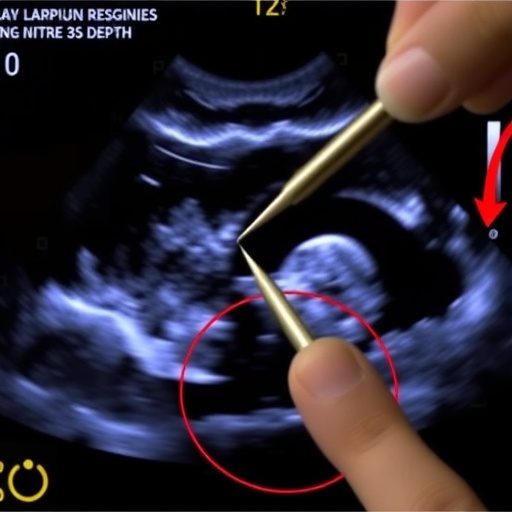
In the rapidly evolving world of complementary and alternative medicine, one area that has garnered increasing attention is the application of acupuncture and its various methodologies. Recent advancements in ultrasound imaging technology have paved the way for groundbreaking research into the psychophysical responses associated with needling depth. A new study by Choi et al. explores this critical aspect, shedding light on how different needling depths may influence patient responses, comfort levels, and treatment efficacy.
Acupuncture, a traditional practice rooted in Chinese medicine, employs the insertion of fine needles into designated points on the body to alleviate pain and promote overall wellness. While the technique has been celebrated for its therapeutic benefits, the lack of standardized practices regarding needle depth has often led to inconsistent outcomes. As practitioners vary their techniques based on intuition or experience, the need for scientific validation and guidance surrounding needle depth has become increasingly pressing.
The study conducted by Choi and colleagues focuses on determining the optimal needling depth using state-of-the-art ultrasound imaging technology. This approach not only expands our understanding of acupuncture but also enhances the ability to provide evidence-based treatments. Traditionally, assessments of acupuncture techniques have been largely anecdotal. However, with advancements in imaging techniques, researchers can now visualize needle placement accurately and measure the specific physiological responses elicited by varying depths.
One of the crucial findings of the study is that the depth of needle insertion can significantly alter the psychophysical responses experienced by patients. Through the use of ultrasound imaging, the researchers were able to assess the effects of deeper needling on the surrounding tissues, including muscle and fascia. Understanding how these tissues respond to different depths opens the door to better therapeutic strategies and improved patient experiences.
The research highlights not only the physiological aspects of needling but also the psychological responses involved. Patients’ perceptions of pain and discomfort during acupuncture sessions can heavily dictate their overall experience and willingness to continue treatment. By visualizing needle placement and movement in real-time, clinicians can adjust techniques to minimize discomfort, potentially leading to enhanced patient satisfaction and adherence to treatment protocols.
Moreover, the implications of this research extend beyond acupuncture practitioners to the broader healthcare community. Understanding the science behind needling depth can inform a multidisciplinary approach to pain management and treatment. This study could help bridge the gap between conventional medicine and alternative practices, fostering an environment where both can coexist and complement one another for enhanced patient care.
The innovative use of ultrasound imaging in this area also highlights the importance of integrating technology into traditional practices. As healthcare moves towards more personalized and data-driven models, the findings from Choi et al. serve as a pivotal step in marrying ancient wisdom with modern science. This could ultimately transform not only acupuncture but also other alternative therapies by providing empirical evidence that validates their efficacy and safety.
In an era where patients are increasingly informed and interested in their treatment options, studies like these are essential for promoting informed decision-making. As the medical community continues to seek effective pain management solutions, understanding the nuances of acupuncture can empower both practitioners and patients alike. In particular, knowledge about needling depth may enhance the customization of treatments, leading to tailored approaches that consider individual patient needs and pain thresholds.
Furthermore, the study encourages future research in the field of psychophysical responses to acupuncture. Exploring variables such as needle gauge, insertion velocity, and even patient mental state can lead to a more comprehensive understanding of how acupuncture operates at psychological and physiological levels. Importantly, this research lays the foundation for future clinical trials that can seek to validate these findings and extend their applicability across various patient populations.
As we advance our understanding of acupuncture through rigorous scientific inquiry, it is imperative to foster collaborative efforts between researchers, clinicians, and educators. Creating curricula that incorporate these findings into acupuncture training programs can ensure that new practitioners are well-equipped to utilize evidence-based techniques. This foresight not only enhances patient care but also solidifies the legitimacy of acupuncture within the broader healthcare landscape.
Ultimately, the research by Choi et al. stands as a testament to the transformative power of combining tradition with technological advancement. It illustrates how modern techniques can elevate traditional practices, ensuring their relevance in contemporary medicine. By continuing to investigate the nuances of acupuncture, we take significant steps toward improving patient outcomes, satisfaction, and overall wellness.
This study’s impact is expected to resonate throughout the holistic health community for years to come. As more practitioners adopt evidence-based practices, patients can expect more effective, safe, and satisfying treatments based on a solid foundation of research and technology. With ongoing studies and the integration of advanced imaging techniques, the future of acupuncture appears promising, inviting more patients to explore its potential benefits confidently and informed.
In conclusion, the exploration of psychophysical responses to needling depth, as presented in the study by Choi et al., stands as a critical contribution to the field of acupuncture. By utilizing advanced diagnostic imaging, the research not only enhances our understanding of the practice but also sets the stage for future innovations in holistic health strategies. As we continue to delve deeper into the complexities of acupuncture, the synergy of ancient practices with modern science will undoubtedly benefit patients and practitioners alike.
Subject of Research: Psychophysical responses to needling depth in acupuncture
Article Title: Psychophysical responses to needling depth using ultrasound imaging
Article References:
Choi, DH., Moon, H., Kang, B. et al. Psychophysical responses to needling depth using ultrasound imaging. BMC Complement Med Ther (2025). https://doi.org/10.1186/s12906-025-05242-w
Image Credits: AI Generated
DOI: 10.1186/s12906-025-05242-w
Keywords: acupuncture, needling depth, psychophysical responses, ultrasound imaging, complementary medicine, pain management
Tags: acupuncture and needle insertion techniquesacupuncture treatment efficacyadvancements in acupuncture methodologiesChoi et al. acupuncture studycomplementary and alternative medicine researchevidence-based acupuncture practicesneedle depth influence on painpatient comfort in acupuncturepsychophysical responses to acupuncturescientific validation of acupuncturestandardization of acupuncture techniquesultrasound imaging in acupuncture