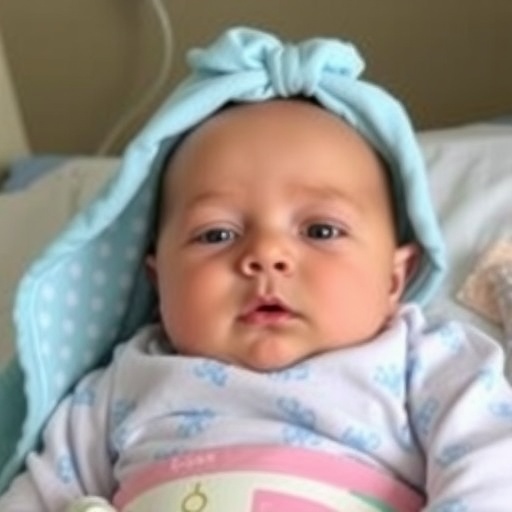
A groundbreaking clinical trial led by researchers in the United Kingdom has delivered a decisive verdict on the utility of surfactant therapy for infants suffering from severe bronchiolitis requiring mechanical ventilation. This treatment, long established as a standard intervention to aid breathing in premature newborns by replenishing deficient lung surfactant, has been rigorously evaluated for potential benefits in critically ill infants with bronchiolitis—a common yet serious viral respiratory illness predominantly caused by respiratory syncytial virus (RSV). The study’s comprehensive findings, recently published in The Lancet Respiratory Medicine, spotlight that surfactant administration, while safe, fails to confer any reduction in ventilation duration for newborns battling this debilitating lung infection.
Bronchiolitis is characterized by inflammation of the small airways in the lungs, primarily instigated by RSV, and represents the foremost cause of hospital admission among infants during winter months across the UK. Clinically, the condition manifests through symptoms of respiratory distress, including severe coughing, wheezing, and difficulty breathing, that necessitate supportive therapy in a subset of patients. Premature and newborn infants are particularly vulnerable due to their immature lungs and underdeveloped immune responses. In these cases, reduced endogenous surfactant—a critical lipoprotein complex responsible for maintaining alveolar stability and reducing surface tension—has been observed, thereby impairing effective pulmonary gas exchange.
Building on this pathophysiological insight, the Bronchiolitis Endotracheal Surfactant Study (BESS) trial, supported by a collaborative partnership between the UKRI Medical Research Council (MRC), National Institute for Health and Care Research (NIHR), and pharmaceutical contributor Chiesi Farmaceutici SpA, sought to scientifically assess whether exogenous surfactant supplementation might accelerate clinical recovery. This randomized controlled trial represents the most extensive investigation of its kind, enrolling 232 infants from 15 pediatric hospitals across England, Scotland, and Northern Ireland over the course of six consecutive winter seasons, spanning from 2019 to 2024.
Contrary to initial hypotheses grounded in the proven efficacy of surfactant therapy in premature neonates with respiratory distress syndrome, the trial’s rigorous data analysis revealed no statistically significant decrease in the duration of mechanical ventilation among infants receiving surfactant compared to those receiving standard care alone. This finding challenges prior assumptions about the interchangeable roles of surfactant therapy across different respiratory pathologies, underscoring the complexity of viral bronchiolitis and the multifactorial nature of pulmonary dysfunction in these patients.
Professor Calum Semple OBE, the trial’s principal investigator affiliated with the University of Liverpool and Alder Hey Children’s NHS Foundation Trust, articulated the pivotal conclusions succinctly: “While surfactant administration proved safe in the trial cohort, it did not influence the clinical course in terms of ventilator dependency. This insight directs future therapy development towards alternative mechanisms beyond surfactant replacement for this vulnerable patient population.” The assurance of safety is notable, as surfactant administration involves direct endotracheal delivery and carries inherent procedural risks, but importantly no adverse effects were identified, reaffirming the intervention’s clinical tolerability.
The clinical imperative to discover effective treatments for severe bronchiolitis remains compelling. With approximately 25,000 infants admitted annually in the UK due to RSV-related bronchiolitis and around 1,000 requiring invasive ventilatory support, the burden on neonatal intensive care units is considerable. Currently, management is largely supportive, employing supplemental oxygen and fluid therapy, with no pharmacological intervention proven to alter the disease trajectory in critically ill patients. The BESS trial hence represents a critical step in refining therapeutic strategies based on robust evidence.
Encouragingly, the development and implementation of preventative vaccination strategies against RSV represent a beacon of hope for reducing bronchiolitis incidence and severity. Recent advances have introduced maternal RSV vaccination programs targeting pregnant women in the late stages of gestation, aiming to confer passive immunity to neonates during the highest risk period post-birth. Professor Semple advocates strongly for uptake of this vaccine, highlighting its potential for substantial impact: “Whilst we continue exploring improved therapies, maternal RSV vaccination offers a practical means to protect newborns from the harsh realities of bronchiolitis.”
The broader implications of the BESS trial emphasize the necessity to pursue mechanistic research into the pathogenesis of bronchiolitis beyond surfactant deficiency. Viral respiratory infections provoke intricate inflammatory cascades, epithelial injury, and mucus plugging, suggesting that targeted anti-inflammatory or antiviral strategies, or those modulating immune responses, may hold more promise. Additionally, advancements in respiratory support technologies and clinical care protocols remain vital adjuncts in optimizing patient outcomes.
The coordination and scale of the BESS trial exemplify the critical role of collaborative research infrastructures, such as the MRC and NIHR, in fostering high-quality clinical investigations that translate fundamental biomedical insights into clinical realities. This partnership ensures that research aligns closely with public health priorities and patient needs, leveraging expert multidisciplinary teams and state-of-the-art facilities. Furthermore, by engaging families and caregivers in the research process, the trial underscores the importance of patient-centered approaches in clinical innovation.
The negative outcome of the BESS trial, while initially disappointing, provides a definitive answer that curtails unwarranted surfactant use in this context, preserving scarce medical resources and guiding clinicians towards evidence-based practices. It also reinforces the paradigm that not all therapeutic modalities are universally applicable across respiratory diseases, despite apparent pathophysiological similarities. This finding exemplifies the complexity of translating neonatal respiratory therapies to other lung conditions and paves the way for novel exploration.
As the scientific community digests these findings, the focus sharpens on multifaceted approaches integrating prevention, early diagnosis, supportive care optimization, and new therapeutic avenues. The battle against RSV and bronchiolitis thus continues, with the BESS trial marking a crucial milestone that shapes the trajectory of pediatric respiratory medicine and neonatal critical care.
Subject of Research: People
Article Title: Surfactant Therapy Shows No Benefit in Severe Bronchiolitis: Findings from the BESS Randomized Controlled Trial
News Publication Date: 21-Mar-2026
Web References: https://www.liverpool.ac.uk/people/malcolm-semple; https://mrc.ukri.org
Keywords: Respiratory disorders, Bronchiolitis, Respiratory syncytial virus, Lung surfactant, Neonatal intensive care, Mechanical ventilation, Randomized controlled trial, Pediatric respiratory medicine, Viral respiratory infection, Maternal vaccination, Neonatal health, Critical care
Tags: bronchiolitis clinical trial UKbronchiolitis hospital admissions UKinfant respiratory distress treatmentmechanical ventilation in infantsneonatal lung surfactant deficiencypremature infant lung treatmentrespiratory syncytial virus impactRSV bronchiolitis managementsurfactant safety in infantssurfactant therapy efficacy studysurfactant therapy in severe bronchiolitisventilation duration in bronchiolitis