• HOME
  • NEWS
  • EXPLORE
    • CAREER
      • Companies
      • Jobs
    • EVENTS
    • iGEM
      • News
      • Team
    • PHOTOS
    • VIDEO
    • WIKI
  • BLOG
  • COMMUNITY
    • FACEBOOK
    • INSTAGRAM
    • TWITTER
Sunday, February 8, 2026
BIOENGINEER.ORG
No Result
View All Result
  • Login
  • HOME
  • NEWS
  • EXPLORE
    • CAREER
      • Companies
      • Jobs
        • Lecturer
        • PhD Studentship
        • Postdoc
        • Research Assistant
    • EVENTS
    • iGEM
      • News
      • Team
    • PHOTOS
    • VIDEO
    • WIKI
  • BLOG
  • COMMUNITY
    • FACEBOOK
    • INSTAGRAM
    • TWITTER
  • HOME
  • NEWS
  • EXPLORE
    • CAREER
      • Companies
      • Jobs
        • Lecturer
        • PhD Studentship
        • Postdoc
        • Research Assistant
    • EVENTS
    • iGEM
      • News
      • Team
    • PHOTOS
    • VIDEO
    • WIKI
  • BLOG
  • COMMUNITY
    • FACEBOOK
    • INSTAGRAM
    • TWITTER
No Result
View All Result
Bioengineer.org
No Result
View All Result
Home NEWS Science News Biology

UH biomedical engineer pursues nerve regeneration

Bioengineer by Bioengineer
January 25, 2018
in Biology, Science News
Reading Time: 2 mins read
0
Share on FacebookShare on TwitterShare on LinkedinShare on RedditShare on Telegram
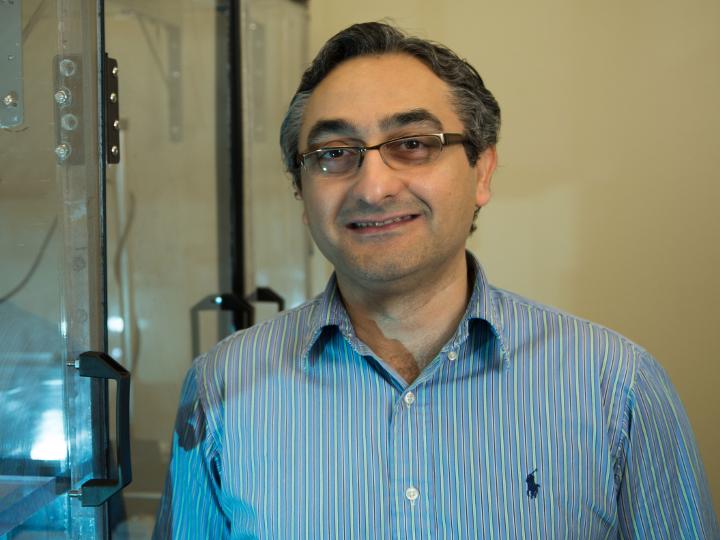
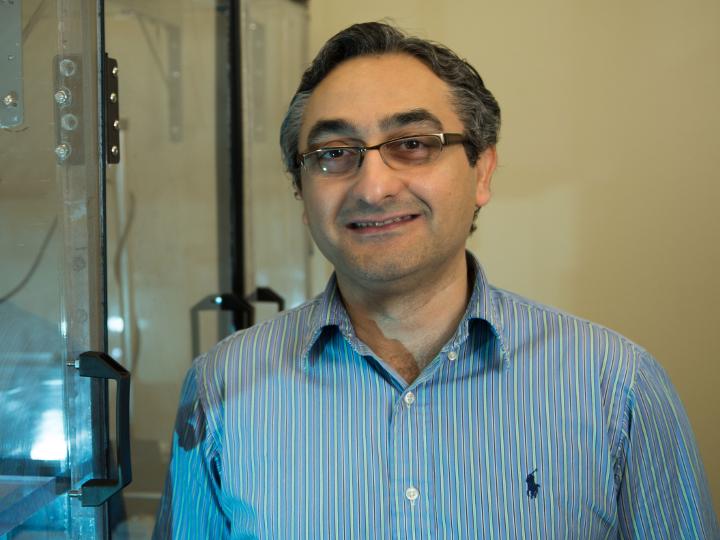
IMAGE

A biomedical engineer from the University of Houston will use a $1.2 million grant from the National Institutes of Health to determine how best to spur nerve regeneration in the nervous system.

The nervous system functions as the body's electrical system, a collection of specialized cells that transmit signals between different parts of the body. But injuries and certain degenerative diseases – including Parkinson's disease, amyotrophic lateral sclerosis and multiple sclerosis – can interrupt that communication, posing a challenge for scientists seeking ways to return the body's nervous system to healthy function.

Mohammad Reza Abidian, associate professor of biomedical engineering, said surgical repairs can sometimes bridge small gaps between damaged nerves – typically gaps of less than one centimeter – but that isn't an option for more severely damaged nerves. Instead, scientists are seeking to spur nerve regeneration in ways that can mend the breech.

"Nature can regulate nerve regeneration, but fully functional recovery may require additional steps," he said. "We want to provide cues for the axons to regenerate along specific pathways."

The nervous system is made up of the central nervous system – the brain and spinal cord – and the peripheral nervous system, which communicates with the central nervous system through axons, transmitting instructions from the brain to the arms and legs, for example. Abidian's work under this grant will focus on directing axons to regenerate along specific pathways.

Axons search out signals from their physiological environment to determine which direction to grow, and Abidian said scientists know that those signals can be disrupted by illness or injury. To overcome that disruption, researchers need to understand how shifts in the concentration of chemicals or other physical factors, known as the gradient, affect axonal growth, as well as how that gradient should be shaped. Abidian and his lab will develop a technology platform that will allow them to test various gradient shapes, individually and in combination, and then do testing in the lab and in animal studies to determine how those changes affect axonal regeneration.

The work is a continuation of research he began in graduate school; he started working with the peripheral nervous system during a post-doctoral fellowship at the University of Michigan.

His expertise includes developing implantable micro and nanodevices that can safely interact with the nervous system, and while his research group doesn't target specific diseases, researchers there create materials and devices to solve specific neurological problems.

Abidian said the work in axonal regeneration would be useful for repairing the damage caused by neurodegenerative diseases or injuries, but it also has applications for the field of neural prosthetics, devices that can artificially restore lost function.

###

Media Contact

Jeannie Kever
[email protected]
713-743-0778
@UH_News

http://www.uh.edu/news-events

Share12Tweet8Share2ShareShareShare2

Related Posts

Evaluating a Self-Care App for Chest Trauma Patients

February 8, 2026

Anesthesia Method’s Impact on Elderly Hip Fracture Recovery

February 8, 2026

Menopause Care: Insights from Workforce Review and Consultation

February 7, 2026

LRRK2R1627P Mutation Boosts Gut Inflammation, α-Synuclein

February 7, 2026
Please login to join discussion

POPULAR NEWS

  • Robotic Ureteral Reconstruction: A Novel Approach

    Robotic Ureteral Reconstruction: A Novel Approach

    82 shares
    Share 33 Tweet 21
  • Digital Privacy: Health Data Control in Incarceration

    63 shares
    Share 25 Tweet 16
  • Breakthrough in RNA Research Accelerates Medical Innovations Timeline

    53 shares
    Share 21 Tweet 13
  • Mapping Tertiary Lymphoid Structures for Kidney Cancer Biomarkers

    50 shares
    Share 20 Tweet 13

About

We bring you the latest biotechnology news from best research centers and universities around the world. Check our website.

Follow us

Recent News

Evaluating a Self-Care App for Chest Trauma Patients

Anesthesia Method’s Impact on Elderly Hip Fracture Recovery

Menopause Care: Insights from Workforce Review and Consultation

Subscribe to Blog via Email

Enter your email address to subscribe to this blog and receive notifications of new posts by email.

Join 73 other subscribers
  • Contact Us

Bioengineer.org © Copyright 2023 All Rights Reserved.

Welcome Back!

Login to your account below

Forgotten Password?

Retrieve your password

Please enter your username or email address to reset your password.

Log In
No Result
View All Result
  • Homepages
    • Home Page 1
    • Home Page 2
  • News
  • National
  • Business
  • Health
  • Lifestyle
  • Science

Bioengineer.org © Copyright 2023 All Rights Reserved.