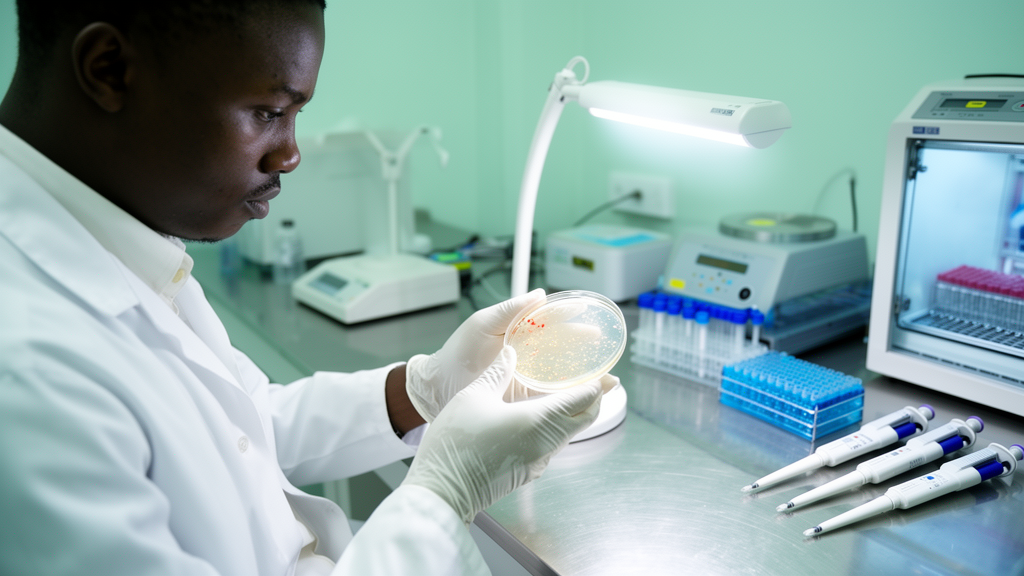
A cross-sectional study conducted at Kayunga Regional Referral Hospital in Uganda has identified that 42.1% of culture-confirmed urinary tract infection isolates exhibited resistance to at least one antimicrobial agent. The research, published in BMC Infectious Diseases, provides facility-level data from a district and regional hospital setting, an area where such information has previously been limited. The study was designed to determine the prevalence of antimicrobial resistance, describe specific resistance patterns, and identify associated factors among patients with confirmed infections. By focusing on a regional referral hospital in Uganda, the researchers aimed to address the gap in local data regarding how resistance rates are manifesting in healthcare delivery within low- and middle-income countries.
The study was conducted between January and June 2024. Researchers reviewed the KRRH Laboratory Microbiology Register, which recorded 530 patients with presumptive urinary tract infections based on pyuria observed through microscopy and dipstick chemistry. From this pool, 240 patients were approached in random order for participation. Ultimately, 164 patients with culture-confirmed urinary tract infections were enrolled in the study.
For the microbiological analysis, the team performed culture and antimicrobial susceptibility testing using the Kirby-Bauer disk diffusion method. Zone diameters were interpreted using organism-specific criteria from the Clinical and Laboratory Standards Institute M100, 33rd edition. To maintain methodological rigor, drug and organism combinations that lacked specific CLSI criteria or involved intrinsic resistance were not interpreted. Antimicrobial resistance was defined as resistance to at least one agent for which criteria applied, with intermediate results classified as not resistant.
Among the 164 isolates, 69 (42.1%, 95% CI 34.4–50.0%) were resistant to at least one antimicrobial agent. Escherichia coli was the most frequent uropathogen, accounting for 85 isolates, or 51.8% of the total. Within this group, 51 isolates, representing 60.0%, showed resistance to at least one agent. Other pathogens showed varying levels of resistance: 7 of 34 Klebsiella spp. isolates (20.6%), 6 of 18 Proteus spp. isolates (33.3%), and all 5 Enterococcus spp. isolates (100%) were resistant to at least one agent. In contrast, none of the 12 Pseudomonas spp. or 10 Staphylococcus spp. isolates were resistant to the agents with applicable criteria, highlighting significant differences in resistance profiles across different bacterial species.
When examining specific antibiotic classes among Enterobacterales, which comprised 137 of the isolates, the study found that resistance was highest to ampicillin at 32.0%, followed by ceftriaxone at 23.4% and ceftazidime at 16.1%. Resistance to cotrimoxazole and meropenem was lowest, with each showing a resistance rate of 2.2%.
The study also investigated sociodemographic, behavioral, and health-system factors associated with antimicrobial resistance. Data were collected through structured interviews, and associations were assessed using chi-square or Fisher’s exact tests, followed by multivariable logistic regression. In the multivariable analysis, tertiary education was associated with lower odds of antimicrobial resistance, with an adjusted odds ratio of 0.36 (95% CI 0.16–0.77; p = 0.010).
Conversely, several factors were associated with higher odds of antimicrobial resistance. Being married was associated with higher odds, with an adjusted odds ratio of 2.60 (95% CI 1.12–6.43; p = 0.031). Not using herbal medicines was also linked to higher odds of resistance, with an adjusted odds ratio of 2.10 (95% CI 1.03–4.38; p = 0.044). Additionally, not having received antimicrobial resistance health education was associated with higher odds, with an adjusted odds ratio of 2.11 (95% CI 1.05–4.32; p = 0.038).
The findings underscore the significant burden of antimicrobial resistance in regional healthcare settings in Uganda. Furthermore, the identified associations with education and health education suggest that patient-level interventions may be important in addressing resistance. The researchers conclude that patient education and antimicrobial stewardship at regional hospitals need to be evaluated and supported to mitigate the impact of antimicrobial resistance on healthcare delivery.
Subject of Research: Prevalence of antimicrobial resistance and associated factors in urinary tract infections in Uganda
Article Title: Prevalence of antimicrobial resistance and associated factors among patients diagnosed with urinary tract infections at Kayunga Regional Referral Hospital, Uganda
Article References: Watongola, E. M., Ddamulira, C., Wanziima, J., Kibirige, I., Bwambale, J., & Tamale, A. (2026). Prevalence of antimicrobial resistance and associated factors among patients diagnosed with urinary tract infections at Kayunga Regional Referral Hospital, Uganda. BMC Infectious Diseases. https://doi.org/10.1186/s12879-026-14737-x
Image Credits: AI Generated
DOI: 10.1186/s12879-026-14737-x
Keywords: antimicrobial resistance, urinary tract infections, Uganda, E. coli, cross-sectional study, public health, infectious diseases, antibiotic stewardship, Prevalence, antimicrobial, resistance, associated
News Source: Kristina Jarvis. (November 11, 2026). Uganda UTI Study Finds 42% Antimicrobial Resistance Rate. Scienmag.