• HOME
  • NEWS
  • EXPLORE
    • CAREER
      • Companies
      • Jobs
    • EVENTS
    • iGEM
      • News
      • Team
    • PHOTOS
    • VIDEO
    • WIKI
  • BLOG
  • COMMUNITY
    • FACEBOOK
    • INSTAGRAM
    • TWITTER
Wednesday, December 31, 2025
BIOENGINEER.ORG
No Result
View All Result
  • Login
  • HOME
  • NEWS
  • EXPLORE
    • CAREER
      • Companies
      • Jobs
        • Lecturer
        • PhD Studentship
        • Postdoc
        • Research Assistant
    • EVENTS
    • iGEM
      • News
      • Team
    • PHOTOS
    • VIDEO
    • WIKI
  • BLOG
  • COMMUNITY
    • FACEBOOK
    • INSTAGRAM
    • TWITTER
  • HOME
  • NEWS
  • EXPLORE
    • CAREER
      • Companies
      • Jobs
        • Lecturer
        • PhD Studentship
        • Postdoc
        • Research Assistant
    • EVENTS
    • iGEM
      • News
      • Team
    • PHOTOS
    • VIDEO
    • WIKI
  • BLOG
  • COMMUNITY
    • FACEBOOK
    • INSTAGRAM
    • TWITTER
No Result
View All Result
Bioengineer.org
No Result
View All Result
Home NEWS Science News Biology

UConn rainforest acquires major collection of ginger relatives

Bioengineer by Bioengineer
October 30, 2019
in Biology
Reading Time: 2 mins read
0
IMAGE
Share on FacebookShare on TwitterShare on LinkedinShare on RedditShare on Telegram

Over 200 species of rare ginger relatives were recently acquired and established into cultivation by staff at the UConn Rainforest
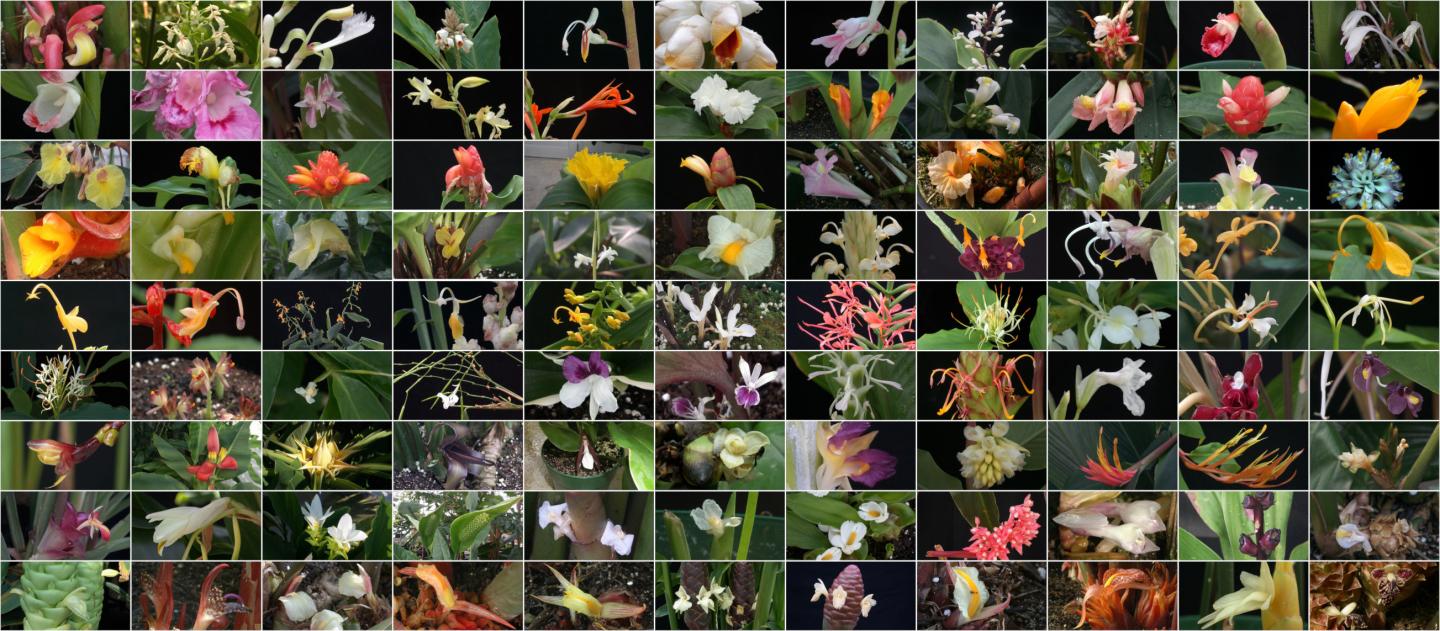
IMAGE

Credit: Clinton Morse

Over 200 species of rare ginger relatives were recently acquired and established into cultivation by staff at the Ecology & Evolutionary Biology Biodiversity Education and Research Greenhouses aka The UConn Rainforest.

This exceptional collection was made available to UConn by Dr. W. John Kress, Distinguished Scientist and Curator Emeritus at the Smithsonian Institution, who has conducted “over forty years of tropical field research and plant collecting across the globe” and is one of the world’s foremost experts on this plant group.

Dr. Carlos Garcia-Robledo, former Smithsonian Postdoctoral Fellow in Kress’ lab and currently an assistant professor at the Department of Ecology & Evolutionary Biology – UConn initiated the contact between institutions to acquire this unique plant collection. Garcia-Robledo noted: “this is one of the most outstanding collection of living plants in the world. When John told me that he wanted to share his collection with UConn, I was ecstatic”

Mr. Clinton Morse, UConn’s Living Plant Collections Manager, orchestrated the acquisition of this collection over the summer months. “During my 25+ year tenure here at UConn I’ve had the good fortune to acquire a number of unique species from colleagues at the Smithsonian that helped to fill critical gaps in our collections. But the breadth of diversity and species rarity of this particular acquisition arguably make the UConn collection the most extensive living ginger collection outside of the tropics.”

The collection spans all 8 families of Zingiberales (a major order of charismatic plants that include bananas, gingers, cardamom, turmeric, birds of paradise and prayer plants) and includes over 2/3 of all currently recognized genera, many of which are rarely seen in cultivation.

A number of the species acquired are presently new to science and will be formally described, named and published in the near future by Kress and students at UConn.

The collection serves as a foundation for investigations by a number of UConn researchers as well as a repository of living material available to scientists at peer institutions. Garcia-Robledo notes “with the support of the National Science Foundation, National Geographic and Smithsonian, my research team uses Neotropical Zingiberales to understand the effects of global warming on biotic interactions. This collection represents a unique opportunity to answer new questions at a global scale.”

Plant species are becoming extinct at an unprecedented rate. Garcia-Robledo notes “In the last two and a half centuries, more plant species became extinct than bird, mammal and amphibian species combined”. The Zingiberales are also threatened by global environmental change, Kress notes “As their native habitats are irrevocably degraded and altered it is imperative to keep them alive and available for continued research.”

###

Media Contact
Elaina Hancock
[email protected]

Tags: BiodiversityBiologyEcology/Environment
Share12Tweet8Share2ShareShareShare2

Related Posts

Rethinking Gender Inference from Health Record Algorithms

Rethinking Gender Inference from Health Record Algorithms

December 31, 2025
blank

Mapping RNA Editome Development in Ningxiang Pig Fat

December 31, 2025

Revealing Chloroplast Genomes: Insights on Plant Evolution

December 31, 2025

Genomic Insights into Staphylococcus epidermidis Se252 from Plants

December 31, 2025
Please login to join discussion

POPULAR NEWS

  • blank

    PTSD, Depression, Anxiety in Childhood Cancer Survivors, Parents

    105 shares
    Share 42 Tweet 26
  • NSF funds machine-learning research at UNO and UNL to study energy requirements of walking in older adults

    71 shares
    Share 28 Tweet 18
  • Exploring Audiology Accessibility in Johannesburg, South Africa

    52 shares
    Share 21 Tweet 13
  • Nurses’ Views on Online Learning: Effects on Performance

    71 shares
    Share 28 Tweet 18

About

We bring you the latest biotechnology news from best research centers and universities around the world. Check our website.

Follow us

Recent News

4R-Tau Seeding Uncovers Progressive Supranuclear Palsy Subtypes

Fluid Dynamics Reveal Hemifacial Spasm Vessel Insights

Methionine Restriction Reverses Kidney Fibrosis Epigenetically

Subscribe to Blog via Email

Enter your email address to subscribe to this blog and receive notifications of new posts by email.

Join 71 other subscribers
  • Contact Us

Bioengineer.org © Copyright 2023 All Rights Reserved.

Welcome Back!

Login to your account below

Forgotten Password?

Retrieve your password

Please enter your username or email address to reset your password.

Log In
No Result
View All Result
  • Homepages
    • Home Page 1
    • Home Page 2
  • News
  • National
  • Business
  • Health
  • Lifestyle
  • Science

Bioengineer.org © Copyright 2023 All Rights Reserved.