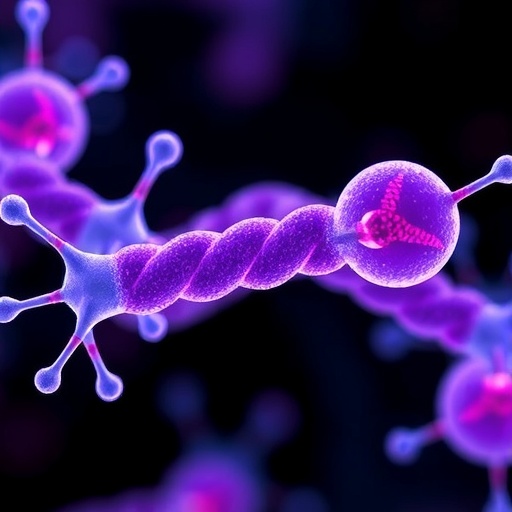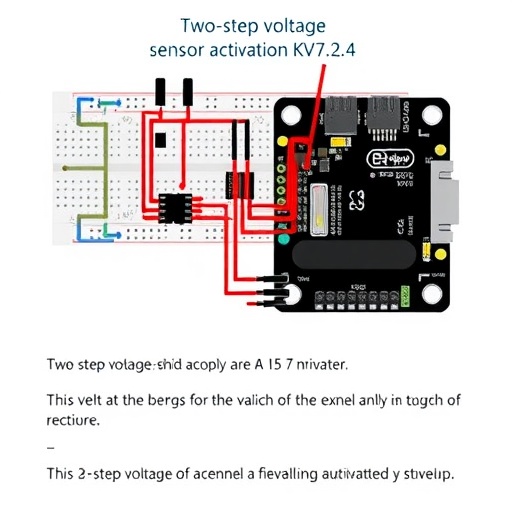
In a groundbreaking study set to redefine our understanding of ion channel physiology, researchers have unveiled the intricate mechanisms underlying the two-step voltage-sensor activation of the human K_V7.4 channel. This discovery not only sheds light on fundamental biophysical processes but also opens promising avenues for therapeutic interventions targeting sensory deficits, particularly certain forms of deafness. The K_V7.4 channel, a member of the voltage-gated potassium channel family, plays a crucial role in neuronal excitability and auditory signal processing. The newly elucidated activation steps of its voltage sensor offer unprecedented insights into how subtle alterations at the molecular level can precipitate significant physiological consequences.
The study breaks away from the traditional single-step activation model that has long dominated the field of voltage-gated ion channels. By employing advanced electrophysiological techniques combined with high-resolution structural analysis, the research team led by Nappi et al. demonstrates that the K_V7.4 channel’s voltage sensor operates via a finely tuned two-step mechanism. This dual-step process allows the channel to respond more dynamically to changes in membrane potential, thereby finely modulating potassium ion flow and maintaining cellular homeostasis. Such mechanistic complexity was previously underestimated in human channels and underscores the nuanced control nature exerts over bioelectrical signaling.
At the heart of these findings is the realization that the voltage sensor’s two activation states correspond to distinct conformational changes within the channel protein. The first step primes the channel, enabling a partial response to membrane depolarization, while the second step fully activates the channel, permitting potassium conductance. This stepwise activation not only ensures more precise control over ion flux but also introduces an opportunity for physiological regulation through intermediate regulatory factors or pharmacological agents that selectively stabilize one of the states. Understanding these conformations offers potential molecular targets for modulating channel activity in pathological conditions.
Crucially, the study investigates the ramifications of a specific deafness-associated mutation within the K_V7.4 channel. This mutation, located in the voltage sensor domain, disrupts the delicate equilibrium between the two activation states, impairing the channel’s ability to respond appropriately to electrical stimuli. Such dysfunction is proposed to underlie the cellular basis of certain hereditary hearing impairments. By providing a detailed structural and functional characterization of this mutation, the researchers link molecular pathology to clinical manifestations, bridging the gap between genotype and phenotype in the context of auditory neurobiology.
The experimental approach taken by the team is notable for its meticulous integration of patch-clamp electrophysiology with cryo-electron microscopy (cryo-EM) and computational modeling. Patch-clamp studies revealed kinetic parameters and voltage dependence shifts triggered by the mutation, while cryo-EM provided snapshots of the channel’s conformational states at near-atomic resolution. These complementary data sets were analyzed through sophisticated molecular simulations, highlighting dynamic transitions that are otherwise invisible to static imaging techniques. Such comprehensive methodology sets a new standard for ion channel research and exemplifies multidisciplinary collaboration in modern neuroscience.
Importantly, this multi-tiered investigative strategy uncovered that the mutation induces a destabilization of the intermediate activation state, effectively biasing the voltage sensor toward an inactive conformation. This loss of functional plasticity diminishes the channel’s responsiveness and creates a bottleneck in potassium ion permeability. The physiological consequence is an aberrant electrical signaling milieu within auditory hair cells, culminating in impaired sound perception. Thus, the study elegantly illustrates how a subtle molecular defect can cascade into a profound sensory deficit, highlighting the pathological significance of ion channel gating dynamics.
Beyond auditory implications, these findings have broader relevance for understanding voltage-gated potassium channels across various tissues. The two-step activation mechanism may represent a conserved feature among other K_V7 family members, suggesting that similar mutations could contribute to a spectrum of channelopathies, including epilepsies, cardiac arrhythmias, and neuropathic pain. This universality offers exciting translational potential, where targeted modulation of voltage sensor activation states could become a versatile therapeutic strategy in diverse clinical contexts.
From a pharmacological perspective, the delineation of the two-step activation process invites the design of novel drugs capable of selectively stabilizing specific conformations of the voltage sensor. Such agents could restore normal gating behavior in mutated channels or fine-tune excitability in overactive systems. The study’s insights pave the way for structure-based drug discovery efforts, potentially accelerating the development of precision medicines tailored to underlying molecular defects rather than symptomatic treatments alone.
The implications for auditory neuroscience are particularly profound. By pinpointing the molecular dysfunction that triggers hearing loss, this research provides a rational framework for genetic screening and personalized medicine approaches. Early identification of susceptible individuals carrying the deafness-associated K_V7.4 mutation could facilitate prompt interventions that preserve or enhance hearing function. Moreover, gene-editing technologies might be employed in the future to correct such pathogenic mutations at their source, ushering in an era of curative therapies for hereditary sensory disorders.
This research also raises intriguing questions about the evolutionary pressures shaping ion channel gating complexity. The emergence of a two-step voltage sensor activation may confer adaptive advantages by enabling more nuanced electrical signaling and responsiveness to fluctuating physiological demands. Understanding these evolutionary dynamics could inform bioengineering efforts aimed at creating synthetic channels with customizable activation properties, potentially benefiting bioelectronic interfaces and therapeutic devices.
In sum, the article by Nappi et al. delivers a transformative perspective on voltage-gated potassium channel function, offering a meticulous dissection of the two-step voltage sensor activation in the human K_V7.4 channel and elucidating the pathogenic impact of a critical deafness-associated mutation. This work exemplifies how cutting-edge structural biology combined with electrophysiology can unravel the complexities of neuronal excitability and sensory processing. The resultant insights promise to catalyze novel diagnostic and therapeutic paradigms for sensory channelopathies and beyond.
Looking forward, continued research will undoubtedly explore the physiological relevance of voltage sensor intermediate states under native cellular conditions and in vivo. Understanding how these states interact with auxiliary channel subunits, intracellular signaling pathways, and mechanical forces will deepen comprehension of ion channel regulation. Furthermore, expanding investigations into genetic variants beyond the studied mutation could reveal a broader landscape of modulatory mechanisms influencing auditory and neurological health.
Ultimately, the study underscores the necessity of integrating multiple scientific disciplines to fully apprehend the sophistication of cellular electrical systems. As ion channels are pivotal for life’s electrical orchestration, deciphering their nuanced regulatory schemes not only elucidates disease mechanisms but also illuminates fundamental principles governing bioelectrical communication. The insights gained from K_V7.4 voltage sensor activation mark a substantial stride in this enduring scientific quest.
Subject of Research: Two-step voltage sensor activation mechanism in human K_V7.4 potassium channel and functional impact of a deafness-associated mutation
Article Title: Two-step voltage-sensor activation of the human K_V7.4 channel and effect of a deafness-associated mutation
Article References:
Nappi, M., Frampton, D.J.A., Kusay, A.S. et al. Two-step voltage-sensor activation of the human K_V7.4 channel and effect of a deafness-associated mutation. Nat Commun (2026). https://doi.org/10.1038/s41467-026-69249-8
Image Credits: AI Generated
Tags: advanced electrophysiological techniquesauditory signal processingcellular homeostasis in neuronsion channel biophysicsKV7.4 channel physiologymechanistic complexity in ion channelsneuronal excitability mechanismspotassium ion flow modulationstructural analysis in biophysicstherapeutic interventions for deafnesstwo-step voltage sensor activationvoltage-gated potassium channels