


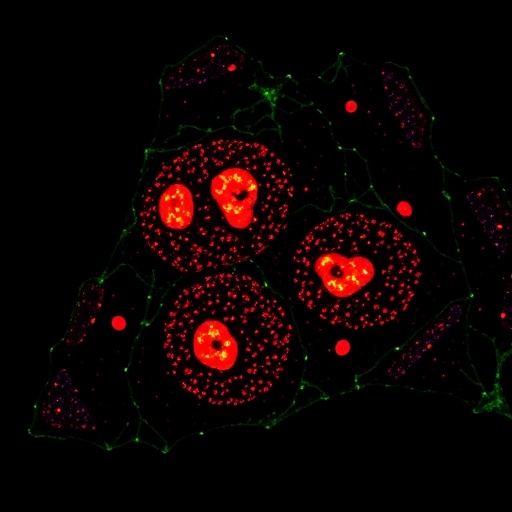
In a groundbreaking development that challenges prevailing paradigms of cancer immunotherapy resistance, researchers have unveiled a novel intrinsic mechanism by which tumor cells circumvent the immune system’s cytotoxic T lymphocyte attack. The study, conducted by Zhao et al. and published in Cell Research in 2026, reveals that PD-L1, a protein traditionally recognized for its role in immune checkpoint modulation, exhibits an unexpected enzymatic activity: functioning as an E3 ubiquitin ligase. This enzymatic function directly promotes the ubiquitylation and subsequent degradation of β2-microglobulin (β2m), a critical component of the major histocompatibility complex class I (MHC-I) molecules.
Immune checkpoint blockade therapies targeting the PD-1/PD-L1 axis have revolutionized cancer treatment over the past decade by reinvigorating exhausted T cells to attack tumor cells. However, therapeutic outcomes have been limited by the frequent emergence of resistance, often attributed to extrinsic factors such as immunosuppressive tumor microenvironments or loss of antigen presentation machinery. The discovery that PD-L1 itself intrinsically undermines antigen presentation refines this landscape by implicating PD-L1 as a direct regulator of β2m stability and MHC-I expression on tumor and antigen-presenting cells.
β2m plays a pivotal role as a non-polymorphic component of MHC-I, necessary for the proper folding, assembly, and surface expression of the antigen-presenting complex that flags intracellular peptides to CD8+ T cells. By mediating ubiquitin-dependent degradation of β2m, PD-L1 effectively impairs MHC-I surface levels, blunting tumor antigen presentation, thereby diminishing tumor visibility to cytotoxic T lymphocytes. This novel mechanism enables tumor cells to evade immune surveillance more insidiously than previously understood, through intrinsic modulation of their antigen presentation apparatus rather than solely through external checkpoints.
Functional assays in the study demonstrated that interfering with PD-L1’s E3 ubiquitin ligase activity or disrupting its interaction with β2m reverses this degradation pathway. Restoration of β2m levels led to enhanced MHC-I surface expression and improved recognition by CD8+ T cells, substantially increasing tumor cell susceptibility to destruction. These findings carry profound therapeutic implications, particularly for cancers characterized by low baseline β2m expression, which exhibit marked resistance to existing PD-1/PD-L1 blockade therapies.
The discovery also elucidates why certain tumors are refractory to immune checkpoint blockade despite PD-L1 expression and presence of tumor-infiltrating lymphocytes. A tumor intrinsically orchestrating MHC-I downregulation via PD-L1’s ligase function effectively handicaps T cell mediated immune recognition from within. This newly identified “intrinsic resistance” mechanism expands the conceptual framework beyond the previously understood extrinsic suppressive factors such as regulatory T cells, myeloid-derived suppressor cells, or hostile cytokine milieus.
From a molecular perspective, the revelation that PD-L1 is endowed with E3 ubiquitin ligase activity is unexpected as PD-L1 has long been described as a type I transmembrane protein primarily acting as a ligand for PD-1 receptor, inhibiting T cell activation. The study’s biochemical analyses detailed how PD-L1 forms part of a ubiquitin ligase complex, targeting β2m for mono- and polyubiquitylation, an essential step marking proteins for proteasomal degradation. This challenges the canonical view and positions PD-L1 as both a checkpoint ligand and an intracellular enzyme directly modulating immune evasion mechanisms.
This research invites reassessment of current therapeutic strategies. For example, PD-L1 inhibitors designed primarily to block receptor-ligand interactions may be insufficient if PD-L1’s enzymatic activity persists. Therefore, developing next-generation inhibitors that abrogate PD-L1’s E3 ligase function or block its binding site for β2m could dramatically improve treatment efficacy. Such strategies could restore antigen presentation capacity and potentiate T cell-mediated immunity in resistant tumor types.
Moreover, the study suggests a potential biomarker for predicting patient response to PD-1/PD-L1 blockade: measuring β2m abundance or detecting PD-L1 ligase activity in tumors. Cancers with high PD-L1 ligase activity and concomitant β2m degradation may require combinatorial or alternative immunotherapeutic regimens. This opens new avenues for personalized medicine approaches targeting both extracellular and intracellular immune evasion pathways.
The interplay between PD-L1 and β2m described also raises intriguing questions about tumor evolution under immune pressure. Tumors may acquire or select for heightened PD-L1 ligase activity to survive in hostile immune environments. Understanding this selective force could inform strategies to forestall resistance or pre-emptively target tumors before extensive immune escape evolves.
In essence, this study refines the immune evasion narrative by attributing a multifaceted role to PD-L1, not simply as a ligand transmitting negative signals to T cells, but as an active participant reshaping antigen presentation landscapes. It reinforces the concept that tumor cells exploit both external immunosuppressive signals and intrinsic molecular machinery to avoid immune destruction.
The clinical relevance is underscored by the finding that targeting PD-L1’s E3 ligase function sensitizes tumor cells to PD-L1 blockade, overcoming a significant hurdle in immunotherapy. This provides a rationale for therapeutic innovation aimed at dual inhibition of PD-L1’s receptor engagement and its enzymatic degradation of β2m, enhancing anti-tumor immunity.
Future research could delineate whether this mechanism extends to other cancers beyond those studied and how it interacts with additional immune evasion tactics. It also prompts examination of whether β2m degradation by PD-L1 occurs in antigen-presenting cells beyond tumor cells, potentially influencing broader immune contexts.
Overall, Zhao and colleagues provide compelling evidence of a hitherto unrecognized function of PD-L1, broadening the molecular understanding of immune escape and resistance in cancer. This advancement stands to invigorate immunotherapy research and foster development of more effective, durable treatment strategies.
By redefining the boundaries of tumor immune evasion, this discovery heralds prospective breakthroughs in overcoming resistance mechanisms that have long stymied the promises of immune checkpoint blockade. Its impact will likely resonate across oncology, immunology, and therapeutic development in the years to come.
Subject of Research: Tumor immune evasion mechanisms involving PD-L1-mediated β2-microglobulin ubiquitylation and degradation
Article Title: Tumor PD-L1 induces β2m ubiquitylation and degradation for cancer cell immune evasion
Article References:
Zhao, Q., Li, C., Zhang, M. et al. Tumor PD-L1 induces β2m ubiquitylation and degradation for cancer cell immune evasion. Cell Res (2026). https://doi.org/10.1038/s41422-025-01205-5
Image Credits: AI Generated
DOI: https://doi.org/10.1038/s41422-025-01205-5
Tags: antigen-presenting cells regulationCancer Immunotherapy Resistancecellular immunology advancementsimmune checkpoint blockade therapiesintrinsic tumor cell mechanismsMHC-I antigen presentationPD-1/PD-L1 axisPD-L1 enzymatic activityT lymphocyte attack evasiontherapeutic outcomes in cancer treatmentTumor immune evasion mechanismsβ2-microglobulin degradation



