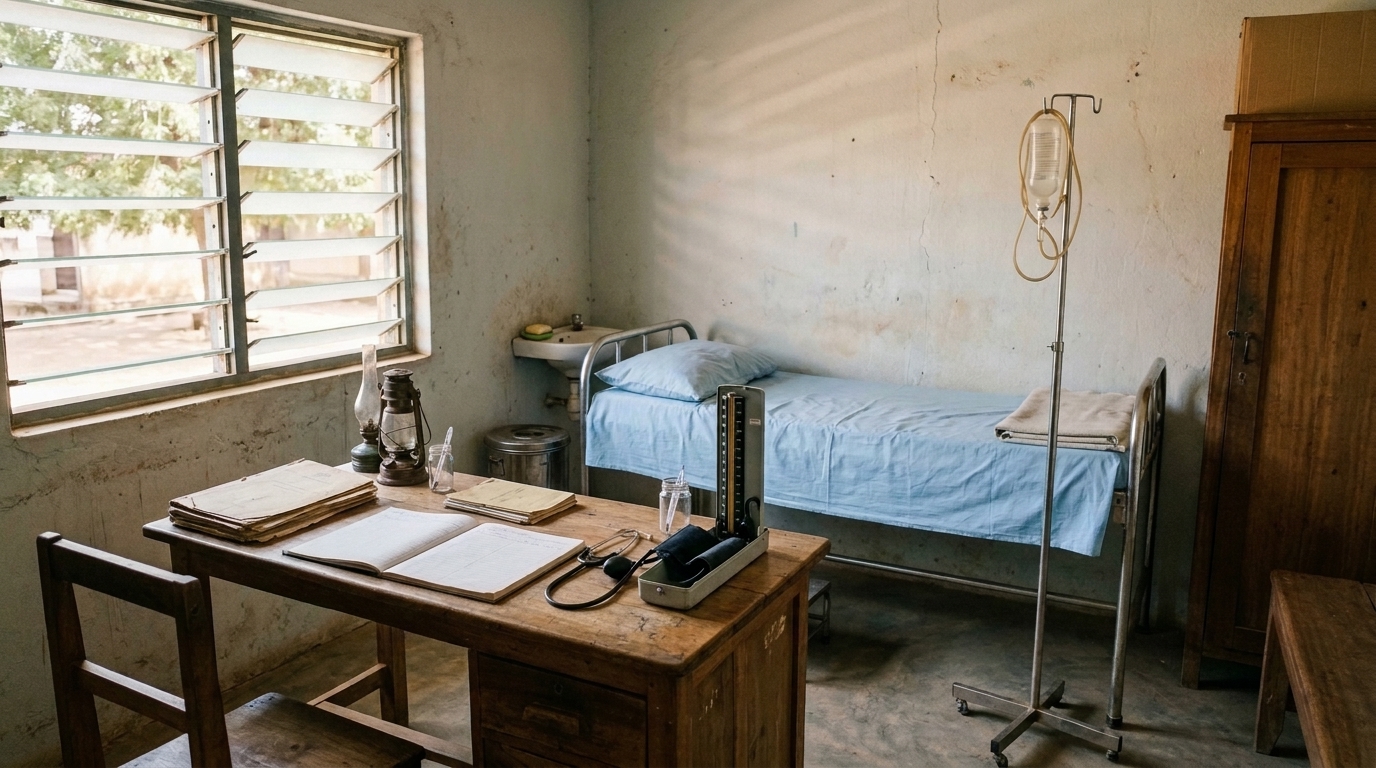
A narrative review and conceptual synthesis published in Discover Health Systems demonstrates that severe disruptions in continuity of care across Nigeria stem from a synergistic breakdown across clinical care delivery, medical education, and health workforce governance rather than isolated physician migration. Led by researchers Sadiq Muhammad Maaji, Saifullahi Idris Umar, and Ibrahim Isma’il Beli, the investigation analyzed peer-reviewed literature and institutional policy documents published between January 2000 and December 2025. By examining the dynamic structural interactions among healthcare service delivery, postgraduate training systems, and state governance mechanisms, the authors developed the Triple Helix of Collapse Framework. This conceptual model establishes that widespread physician departures, commonly discussed as brain drain or Japa, represent an outward symptom of deep institutional decay rather than an independent root cause, directly destabilizing relational, informational, and managerial dimensions of ongoing patient care.
Continuity of care represents a core attribute of functioning healthcare systems and serves as an essential prerequisite for achieving Universal Health Coverage and related Sustainable Development Goals. As defined within the synthesis, continuity encompasses three interdependent dimensions that collectively sustain patient trust, therapeutic efficacy, and institutional resilience over extended treatment periods. Relational continuity denotes the sustained therapeutic bond established between patients and consistent healthcare providers over time. Informational continuity refers to the seamless, accurate, and timely transfer of comprehensive medical records, laboratory results, prescribed medications, and treatment strategies across distinct practitioners and care settings. Managerial continuity reflects the coherent, consistent, and well-coordinated delivery of complementary clinical services across primary, secondary, and tertiary tiers, ensuring evolving patient needs are managed systematically without operational fragmentation.
The foundational layer that enables simultaneous breakdown across all three operational helices is an entrenched environment of legal and policy paralysis within the state apparatus. Rather than functioning as an independent operational helix, this structural base establishes the unfavorable institutional conditions under which clinical practice, professional education, and public oversight deteriorate concurrently. The review characterizes this foundational stagnation by chronic sector underfunding, widespread lapses in regulatory enforcement, and inconsistent or coercive labor policies directed at medical professionals. In addition, the systemic normalization of elite medical tourism by senior public officials visibly signals an institutional lack of faith in domestic health infrastructure, eroding public trust and workplace morale. These baseline deficits dismantle workforce protections, paralyze systemic health planning, and trap healthcare institutions in reactive crisis responses.
Within the clinical care delivery helix, acute personnel shortages, geographic maldistribution, and severe specialist deficits systematically fragment patient services. Nigeria operates with fewer than 30,000 active physicians serving an expanding population exceeding 200 million individuals, yielding a national doctor-to-patient ratio of roughly 1:8,000, which falls substantially below established international benchmarks. This deficit is exacerbated by stark geographic disparities, leaving over 60 percent of rural communities without meaningful access to physician-led healthcare due to heavy physician concentration in urban and peri-urban secondary and tertiary medical centers. The shortage is particularly pronounced across specialized clinical fields, with the entire nation possessing fewer than 300 psychiatrists, fewer than 150 neurosurgeons, fewer than 80 oncologists, approximately 200 endocrinologists, and fewer than 250 nephrologists, while pediatric subspecialists represent only a minor fraction of these figures. Furthermore, although thousands of obstetricians and gynecologists are registered, fewer than 1,000 practice actively nationwide, with fewer than 50 specialists serving the entire North-East region, forcing patients to rely on episodic emergency care instead of continuous, preventative clinical management.
The medical education helix exhibits a parallel institutional crisis marked by pervasive trainee attrition and consultant flight that severely impairs the system’s capacity to reproduce its professional workforce. Evidence compiled from surveyed resident doctors indicates that 60 percent intend to emigrate, while nine out of ten early-career medical consultants report active emigration plans. This loss appears prominently in postgraduate examination registers, where only 2,500 to 3,000 candidates registered out of an estimated pool of 8,500 resident doctors, indicating that approximately 5,000 trainees abandoned postgraduate training pipelines prematurely. Over a five-year period, more than 1,300 senior consultants left the country, leaving behind fewer than 6,216 registered consultants and only about 3,000 active hospital consultants nationwide, many of whom are nearing retirement age. This depletion strips teaching hospitals of essential supervisory capacity, structured mentorship, and cumulative institutional memory, while training environments are further degraded by excessive workloads, toxic hierarchical dynamics, and documented psychological, physical, and verbal mistreatment of junior doctors.
Within the health workforce governance helix, chronic fiscal starvation and the non-enforcement of fundamental labor protections compromise the state’s capacity to regulate and sustain its professional personnel. Historical national budget allocations to the health sector have consistently remained below the 5 percent threshold established by the Abuja Declaration, failing regional and international commitments. Consequently, healthcare staff endure excessive schedules, regularly working over 100 hours per week, with surgical trainees logging up to 122 hours weekly without mandated rest periods, occupational safeguards, or proportional remuneration. Pervasive workplace hazards are underscored by studies showing that 31 to 78 percent of health personnel experience workplace violence, including over 345 recorded physical assaults against doctors in 2022 alone, alongside reported incidents of physician collapse and death while on active hospital duty. State authorities have largely responded to labor dissatisfaction with punitive measures and coercive interventions rather than addressing occupational safety, fair remuneration, or constitutional rights to workplace dignity.
The methodological architecture of the study relied on a structured narrative review and conceptual synthesis that surveyed literature across PubMed, Web of Science, Google Scholar, and targeted grey literature sources spanning 2000 through 2025. Using defined Medical Subject Headings, keywords, and Boolean operators covering continuity of care, physician migration, brain drain, medical education, and health governance, the initial query captured 751 records. Preliminary screening of titles and abstracts identified 217 relevant publications, which underwent duplicate removal and detailed full-text examination against predefined inclusion criteria focusing on Nigeria and directly comparable low- and middle-income health systems. A total of 52 core studies were ultimately retained for thematic extraction alongside grey literature comprising government legal frameworks, international agency reports from the World Health Organization and International Labour Organization, and publications from professional regulatory bodies including the Nigerian Medical Association and the Medical and Dental Council of Nigeria.
Through iterative thematic synthesis, the study abstracted extracted findings into a self-reinforcing vicious cycle demonstrating how collapse within one helix inevitably accelerates deterioration across the others. A compromised medical education system cannot train sufficient replacements to replenish clinical facilities, while an unsupportive governance environment accelerates professional departures from both instructional academies and public hospital wards. Concurrently, deteriorating hospital working conditions demoralize clinical educators and trainees, further degrading academic performance and administrative compliance. The resulting breakdown of continuity of care operates not only as the earliest visible sign of health system dysfunction but also as its most sensitive operational barometer, reinforcing public cynicism, entrenching emergency coping mechanisms, and deepening policy inertia in a destructive feedback loop.
To dismantle this self-reinforcing trajectory of system failure, the authors outline five targeted, sequenced reform interventions addressing the core mechanisms of collapse within each operational helix. First, the National Health Act should be amended by the National Assembly to establish an independent Health Sector Accountability Commission empowered to audit health financing, enforce labor compliance, and investigate systemic governance failures that disrupt care continuity. Second, the Federal Ministries of Health and Labour must enforce strict national duty-hour caps for interns, residents, and medical officers, conditioning institutional accreditation, funding eligibility, and private operating licenses upon compliance. Third, the educational pipeline must be stabilized by ring-fencing tertiary healthcare funds for protected, fully funded residency posts with mandatory consultant-to-trainee ratios. Fourth, state governments must implement targeted rural clinical stabilization packages utilizing Basic Health Care Provision Fund resources to offer housing, hardship allowances, and referral support tied to service benchmarks. Finally, professional bodies and government ministries must enact a binding national stewardship compact to define shared responsibilities and restore institutional trust.
The authors delineate explicit interpretive boundaries, emphasizing that because the study employs a narrative and conceptual review design rather than an empirical trial or meta-analysis, the identified relationships remain explanatory and interpretive rather than established causal mechanisms. The synthesis incorporated heterogeneous evidence across academic journals, institutional reports, and selected media accounts utilized where formal literature was sparse, introducing potential variations in underlying data precision and contextual perspectives. Furthermore, while the Triple Helix of Collapse Framework was developed using Nigeria as an empirical case study, its analytical generalizability to other low- and middle-income healthcare jurisdictions facing workforce attrition and governance instability requires future longitudinal and mixed-methods empirical validation.
Subject of Research: Systems analysis of healthcare continuity, medical education, and workforce governance collapse in Nigeria
Article Title: Reframing continuity of care in Nigeria through the triple helix of collapse framework for understanding health workforce and system failure in low and middle income countries
Article References: Maaji, S. M., Umar, S. I., & Beli, I. I. (2026). Reframing continuity of care in Nigeria through the triple helix of collapse framework for understanding health workforce and system failure in low and middle income countries. Discover Health Systems, 5(1), Article 47. https://doi.org/10.1007/s44250-026-00371-6
Image Credits: AI Generated
DOI: 10.1007/s44250-026-00371-6
Keywords: continuity of care, health systems, physician migration, medical education, health workforce governance, Nigeria, human resources for health, Universal Health Coverage, Reframing, continuity, care, triple
News Source: Courtney Benton. (November 9, 2026). Triple Helix Framework Explains Systemic Breakdown in Nigeria Healthcare Continuity. Scienmag.