


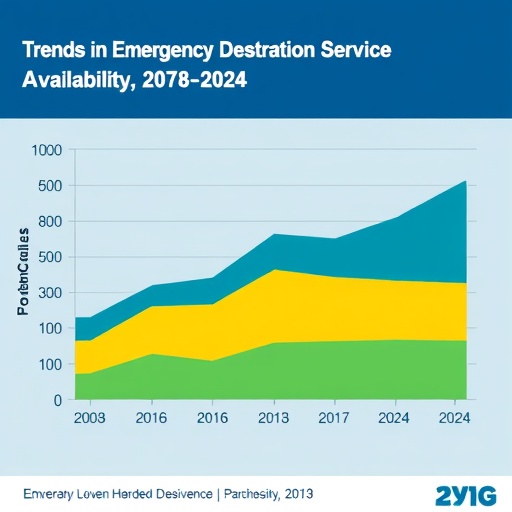
Recent studies have revealed significant shifts in the operational dynamics of emergency departments (EDs) across California, particularly concerning the continuous availability of medical services from 2004 to 2024. This decade-long analysis highlights critical trends that have implications for patient care and systemic efficiency in emergency medicine. As the healthcare landscape evolves, understanding the nuances of emergency department operations is essential for addressing patient needs and improving outcomes.
The research led by Spencer, Toretsky, and Hsia focuses on how California emergency departments have adapted to the increasing demands of healthcare, particularly in urban settings where population density and the occurrence of emergencies are more pronounced. This comprehensive examination scrutinizes the factors contributing to changes in ED service availability, including policy shifts, technological advancements, and varying patient inflow. The outcomes of this study can inform policymakers and healthcare providers about necessary adjustments in resource allocation and management strategies.
One of the most striking findings of the study is that there has been an overall increase in the demand for emergency services in California. This trend can be attributed to multiple factors, including an aging population with increased health complexities and the rise of non-urgent cases that increasingly seek care in emergency rooms. As a result, EDs have had to recalibrate their service models to ensure that they can meet patient needs more effectively while maintaining a high standard of care.
Moreover, the researchers examined how the availability of services has changed in response to these increasing demands. They focused on the shift from the traditional “on call” system to a more “on-demand” model of service availability. This transition has been fueled by technological innovations that enable quicker access to specialists and streamlined referral systems within hospitals. Such advancements can significantly impact patient care by reducing wait times and improving outcomes, especially for critical cases.
Alongside availability, the quality of service in emergency departments has also been evaluated. The transition to more accessible healthcare services has brought about varied staff responses, with some EDs experiencing burnout and staffing shortages. These trends necessitate a broader discussion about the sustainability of emergency department operations in California and whether the current models in place are viable under increasing pressures.
The role of telehealth has emerged as a pivotal innovation affecting emergency service availability. During the COVID-19 pandemic, many hospitals integrated telemedicine into their emergency service protocols, allowing physicians to assess patients remotely. This not only alleviated pressure on physical EDs but also provided patients, particularly those in rural areas, with quicker access to care. However, the sustainability of this model post-pandemic raises questions about the extent to which telehealth can integrate into traditional emergency services.
Patient demographics and socio-economic factors also play a vital role in understanding trends in emergency department utilization. The research suggests that lower-income populations are more likely to rely on emergency services as their primary healthcare access point. Consequently, addressing health equity becomes paramount when considering future changes in policy and service delivery within California’s emergency departments.
The study emphasizes the need for adaptive strategies that incorporate patient-centered approaches within emergency services. Insights drawn from patient feedback and experiences can be instrumental in refining care delivery models. This patient-centric view promotes an understanding of how best to address the unique challenges present in diverse communities across California.
In terms of future implications, the findings point to a crucial gap in preventative care that EDs face. As more patients seek immediate care for non-urgent issues, there exists an opportunity for community health programs to intervene earlier in the healthcare timeline. By offering alternative avenues for care, hospitals can mitigate the strain on emergency departments, ultimately leading to better health outcomes for the populations they serve.
With projections indicating a continued rise in patient volume through 2024, California’s emergency departments must implement innovative solutions to enhance capacity and improve response times. As trends evolve, ongoing research in this area will be essential in keeping healthcare systems agile and responsive to public needs.
Continued engagement with healthcare professionals and stakeholders in emergency medicine can catalyze meaningful change. Collaborative strategies that pool resources and knowledge can drive the redesign of services in response to emerging trends, thereby improving healthcare availability for all citizens.
Ultimately, the work of Spencer, Toretsky, and Hsia lays the groundwork for a future where emergency services are not only reactive but also proactive—aiming to address underlying health disparities through both emergency responses and community health initiatives. For California emergency departments, the next decade will be critical in defining the intersection of technology, patient care, and healthcare policy.
The evolution of emergency services in California extends beyond numbers; it is a portrayal of a healthcare system striving to meet the demands of an increasingly complex patient population. Future research will play a vital role in ensuring that these departments can rise to the occasion, maintaining their essential function within the broader healthcare system.
In summary, as the trends in emergency service availability continue to unfold, it is evident that the relationship between healthcare delivery and patient care in California is at a pivotal moment. Healthcare teams must adapt, innovate, and engage in constant evaluation to improve service efficacy in a rapidly changing landscape.
Subject of Research: Trends in Continuous Service Availability in California Emergency Departments
Article Title: On Call or On Demand? Trends in Continuous Service Availability in California Emergency Departments, 2004–2024.
Article References:
Spencer, M., Toretsky, C. & Hsia, R.Y. On Call or On Demand? Trends in Continuous Service Availability in California Emergency Departments, 2004–2024.
J GEN INTERN MED (2026). https://doi.org/10.1007/s11606-026-10212-0
Image Credits: AI Generated
DOI: https://doi.org/10.1007/s11606-026-10212-0
Keywords: Emergency departments, healthcare trends, California, service availability, emergency medicine, telehealth, patient care.
Tags: aging population and emergency careCalifornia healthcare evolutionED operational dynamics analysisemergency department service trendshealthcare policy impacts on EDsimproving outcomes in emergency medicinenon-urgent cases in emergency roomspatient care in emergency medicineresource allocation in healthcaresystemic efficiency in emergency servicestechnological advancements in emergency departmentsurban emergency services challenges



