• HOME
  • NEWS
  • EXPLORE
    • CAREER
      • Companies
      • Jobs
    • EVENTS
    • iGEM
      • News
      • Team
    • PHOTOS
    • VIDEO
    • WIKI
  • BLOG
  • COMMUNITY
    • FACEBOOK
    • INSTAGRAM
    • TWITTER
Thursday, April 2, 2026
BIOENGINEER.ORG
No Result
View All Result
  • Login
  • HOME
  • NEWS
  • EXPLORE
    • CAREER
      • Companies
      • Jobs
        • Lecturer
        • PhD Studentship
        • Postdoc
        • Research Assistant
    • EVENTS
    • iGEM
      • News
      • Team
    • PHOTOS
    • VIDEO
    • WIKI
  • BLOG
  • COMMUNITY
    • FACEBOOK
    • INSTAGRAM
    • TWITTER
  • HOME
  • NEWS
  • EXPLORE
    • CAREER
      • Companies
      • Jobs
        • Lecturer
        • PhD Studentship
        • Postdoc
        • Research Assistant
    • EVENTS
    • iGEM
      • News
      • Team
    • PHOTOS
    • VIDEO
    • WIKI
  • BLOG
  • COMMUNITY
    • FACEBOOK
    • INSTAGRAM
    • TWITTER
No Result
View All Result
Bioengineer.org
No Result
View All Result
Home NEWS Science News Biology

Treetop leaves of tall trees store extra water

Bioengineer by Bioengineer
February 13, 2018
in Biology
Reading Time: 2 mins read
0
Share on FacebookShare on TwitterShare on LinkedinShare on RedditShare on Telegram
IMAGE

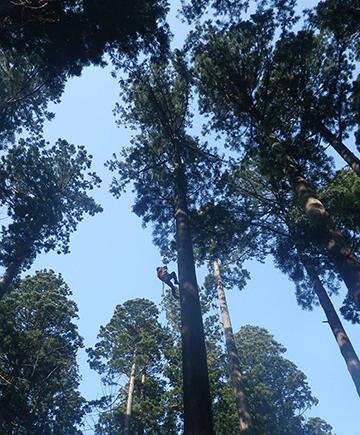
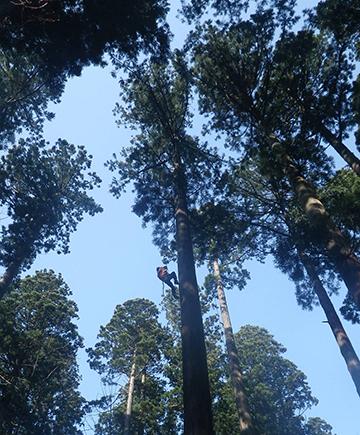
A research team led by Associate Professor Ishii Roaki and Doctoral Student Azuma Wakana from the Kobe University Graduate School of Agricultural Science has discovered that the water storage tissue that they recently found in the world's tallest tree, Sequoia sempervirens (coast redwood), is also found in Japan's tallest trees, Cryptomeria japonica (Japanese cedar). The results of this research were published on 4 September 2015 in the online version of the journal Trees.

How do tall trees supply water to pinnacle leaves? Until now, it was thought that the highest leaves of tall trees suffered from constant water deficit because the water absorbed by the roots had to be transported a long way. Even among tree physiologists, most research focused on identifying the constraints to water transport, which would define the limits of tree height.

In 2012, Professor Ishii's research group climbed the world's tallest redwoods, and collected leaf samples from various heights. They discovered that, with increasing height in the tree, the proportion of "xylem tissue" which transports water from the roots decreased, whereas "transfusion tissue", which stores water, increased. They inferred that in redwood, the stored water came from moisture absorbed through the leaf surface, such as fog and dew.

On 9 September 2014, the group conducted field work in Akita Prefecture to determine whether similar foliar water storage functions existed in Japan's tallest cedar trees, a close relative of redwood that can reach heights of over 50 meters. They flash-froze the leaf samples using liquid nitrogen and examined them under a cryo-scanning electron microscope. Images of the transfusion tissue revealed that the cells absorbed water and expanded during the night, then contracted during the daytime, confirming that the tallest Japanese cedars have the same foliar water storage functions as coast redwood.

These observations suggest that in tall tree species such as coast redwood and Japanese cedar, water storage tissue in the treetop leaves acts as a water supply tank. The treetop leaves are prone to water deficit. The stored water counteracts constraints on water transport and helps to maintain important physiological functions such as photosynthesis. The maximum height of trees is an important factor determining forest productivity and CO2 absorption. Professor Ishii commented, "This research may help to predict future changes in the function of forests in preventing global warming and the effects of climate change on tree growth."

###
Share12Tweet8Share2ShareShareShare2

Related Posts

Insights into CD4+ T-Cell Depletion and Pulmonary Infections in Critically Ill Immunocompromised Patients

Insights into CD4+ T-Cell Depletion and Pulmonary Infections in Critically Ill Immunocompromised Patients

April 2, 2026
Advanced Sensors Reduce Costs in Genetic Disorder Research

Advanced Sensors Reduce Costs in Genetic Disorder Research

April 2, 2026

Advancing Blood Purification: Innovations Beyond Traditional Dialysis

April 2, 2026

IBMCP Team Uncovers “Molecular Switch” Governing Plant Vascular Tissue Formation

April 2, 2026
Please login to join discussion

POPULAR NEWS

  • blank

    Revolutionary AI Model Enhances Precision in Detecting Food Contamination

    96 shares
    Share 38 Tweet 24
  • Imagine a Social Media Feed That Challenges Your Views Instead of Reinforcing Them

    1007 shares
    Share 398 Tweet 249
  • Promising Outcomes from First Clinical Trials of Gene Regulation in Epilepsy

    51 shares
    Share 20 Tweet 13
  • Popular Anti-Aging Compound Linked to Damage in Corpus Callosum, Study Finds

    44 shares
    Share 18 Tweet 11

About

We bring you the latest biotechnology news from best research centers and universities around the world. Check our website.

Follow us

Recent News

Insights into CD4+ T-Cell Depletion and Pulmonary Infections in Critically Ill Immunocompromised Patients

Lentinus edodes-Derived β-Glucan Suppresses Human Cervical Cancer Progression via DMBT1 Pathway

Advanced Sensors Reduce Costs in Genetic Disorder Research

Subscribe to Blog via Email

Enter your email address to subscribe to this blog and receive notifications of new posts by email.

Join 78 other subscribers
  • Contact Us

Bioengineer.org © Copyright 2023 All Rights Reserved.

Welcome Back!

Login to your account below

Forgotten Password?

Retrieve your password

Please enter your username or email address to reset your password.

Log In
No Result
View All Result
  • Homepages
    • Home Page 1
    • Home Page 2
  • News
  • National
  • Business
  • Health
  • Lifestyle
  • Science

Bioengineer.org © Copyright 2023 All Rights Reserved.