Focusing on a rare but devastating complication in patients with single-ventricle heart disease, a research team has revealed the role of leakage from the liver's lymphatic system, and used a novel procedure to seal off those leaks and improve symptoms in patients.
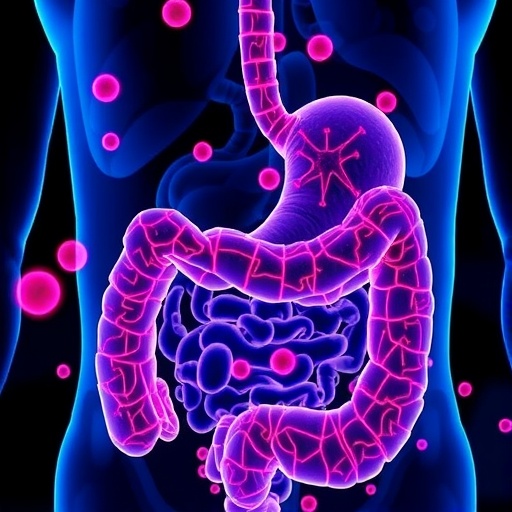
The researchers, from Children's Hospital of Philadelphia and Penn Medicine, focused on protein-losing enteropathy (PLE), a severe loss of proteins in the intestine that is a rare but potentially life-threatening side effect of staged heart surgery in patients with single-ventricle disease.
The cause of PLE is unknown, but scientists have suspected the lymphatic system was involved. The team's study, published recently in the Journal of the American College of Cardiology, confirms the role of abnormal lymphatic circulation between the liver and small intestine. It also and demonstrates how liver lymphatic imaging and a novel intervention that seals off the abnormal lymph flow can improve the quality of life for patients with this condition.
"We are learning that more and more conditions are caused by leaks in the lymphatic system," said Maxim Itkin, MD, co-author of the study and co-director of the Center for Lymphatic Imaging and Interventions at CHOP and Penn Medicine. "After identifying the leakage site in a lymphatic vessel, the team intervenes, using a technique called lymphatic embolization. Through a small needle, we can block the abnormal flow with a variety of tools – endovascular glue, coils, iodized oil – based on an individual patient's needs."
"Patients with devastating side effects of the single-ventricle palliation process, such as protein-losing enteropathy, endure frequent trips to the bathroom, and their bodies lose essential protein. We have long suspected the lymphatic system was involved and can now begin to provide hope for these patients," said Yoav Dori, MD, PhD, co-author of the study and co-director of the Center for Lymphatic Imaging and Interventions at CHOP and Penn Medicine.
The CHOP-Penn Medicine team has previously shown that this novel lymphatic system imaging and intervention can cure patients with plastic bronchitis and chylothorax, two other devastating side effect of single-ventricle palliative surgery.
The current study is a retrospective review of imaging and medical records of eight patients with congenital heart disease (CHD) with elevated central venous pressure complicated by PLE who underwent lymphatic imaging and interventions at CHOP. The patients included six children and two adults, with a median age of 21 years.
In their analysis, the researchers demonstrated lymphatic congestion within the liver and leakage of the liver lymph into the duodenum, mostly through abnormal lymphatic connections. Their findings strongly suggest that this is the dominant cause of PLE in this cohort, and likely in the CHD population.
The authors said that their promising initial report must be followed by further investigation. "Further research and experience with the technique is needed to improve long-term outcomes of this procedure," they added.
###
Maxim Itkin et al. Congenital Heart Disease Complicated by Protein-Losing Enteropathy: Redefining Pathophysiology and Providing Novel Therapy. Journal of the American College of Cardiology, (June 20, 2017) doi: 10.1016/jacc.2017.04.023
About Children's Hospital of Philadelphia: Children's Hospital of Philadelphia was founded in 1855 as the nation's first pediatric hospital. Through its long-standing commitment to providing exceptional patient care, training new generations of pediatric healthcare professionals, and pioneering major research initiatives, Children's Hospital has fostered many discoveries that have benefited children worldwide. Its pediatric research program is among the largest in the country. In addition, its unique family-centered care and public service programs have brought the 546-bed hospital recognition as a leading advocate for children and adolescents. For more information, visit http://www.chop.edu
Media Contact
Joey McCool Ryan
[email protected]
267-426-6070
@chop_research
http://www.chop.edu
http://dx.doi.org/10.1016/jacc.2017.04.023
############
Story Source: Materials provided by Scienmag