

• HOME
  • NEWS
  • EXPLORE
    • CAREER
      • Companies
      • Jobs
    • EVENTS
    • iGEM
      • News
      • Team
    • PHOTOS
    • VIDEO
    • WIKI
  • BLOG
  • COMMUNITY
    • FACEBOOK
    • INSTAGRAM
    • TWITTER
Saturday, February 7, 2026
BIOENGINEER.ORG
No Result
View All Result
  • Login
  • HOME
  • NEWS
  • EXPLORE
    • CAREER
      • Companies
      • Jobs
        • Lecturer
        • PhD Studentship
        • Postdoc
        • Research Assistant
    • EVENTS
    • iGEM
      • News
      • Team
    • PHOTOS
    • VIDEO
    • WIKI
  • BLOG
  • COMMUNITY
    • FACEBOOK
    • INSTAGRAM
    • TWITTER
  • HOME
  • NEWS
  • EXPLORE
    • CAREER
      • Companies
      • Jobs
        • Lecturer
        • PhD Studentship
        • Postdoc
        • Research Assistant
    • EVENTS
    • iGEM
      • News
      • Team
    • PHOTOS
    • VIDEO
    • WIKI
  • BLOG
  • COMMUNITY
    • FACEBOOK
    • INSTAGRAM
    • TWITTER
No Result
View All Result
Bioengineer.org
No Result
View All Result
Home NEWS Science News Biology

Traumatic brain injury: Discovery of two molecules could lead to new drug treatments

Bioengineer by Bioengineer
July 26, 2018
in Biology
Reading Time: 2 mins read
0
Share on FacebookShare on TwitterShare on LinkedinShare on RedditShare on Telegram
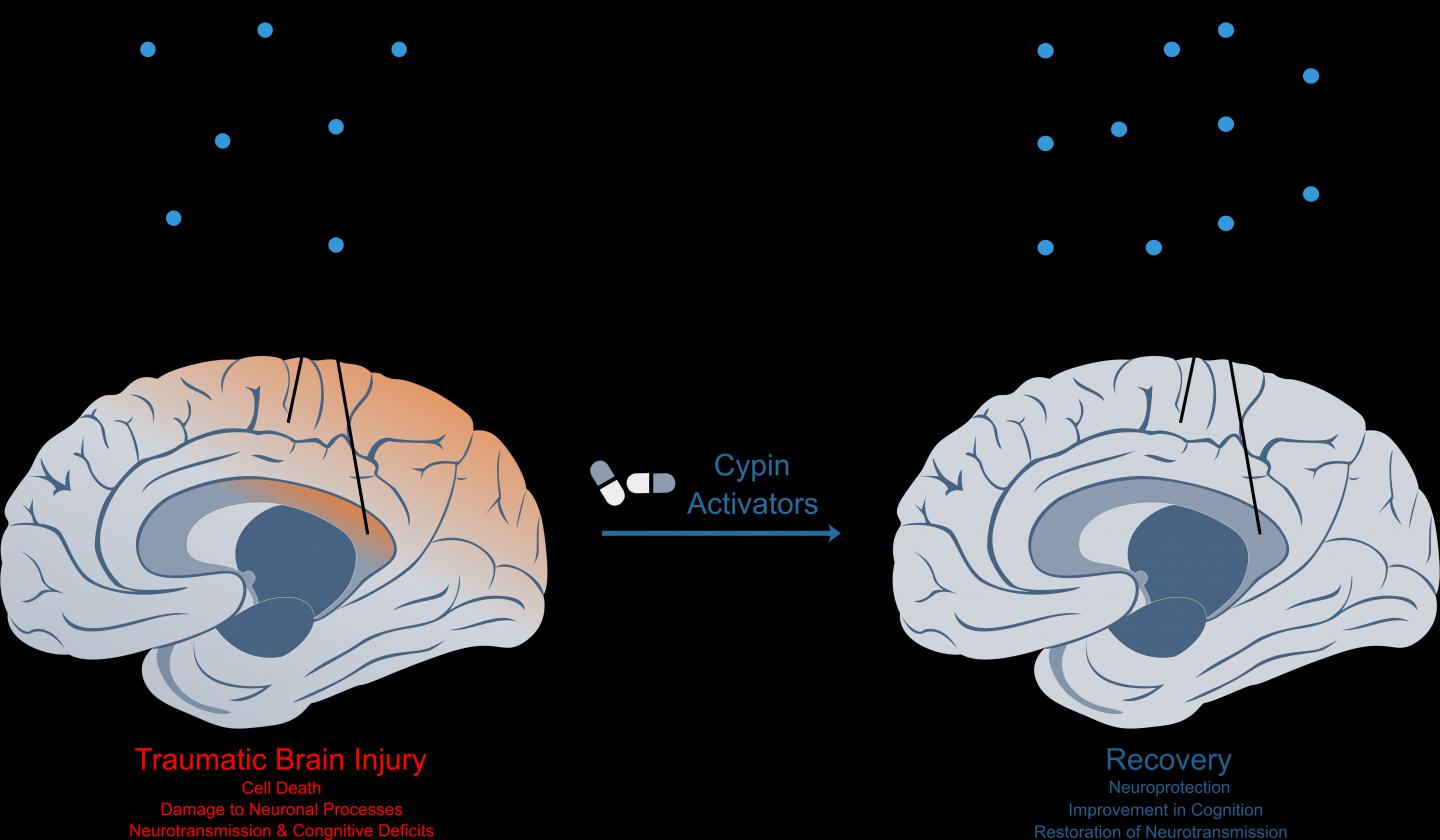
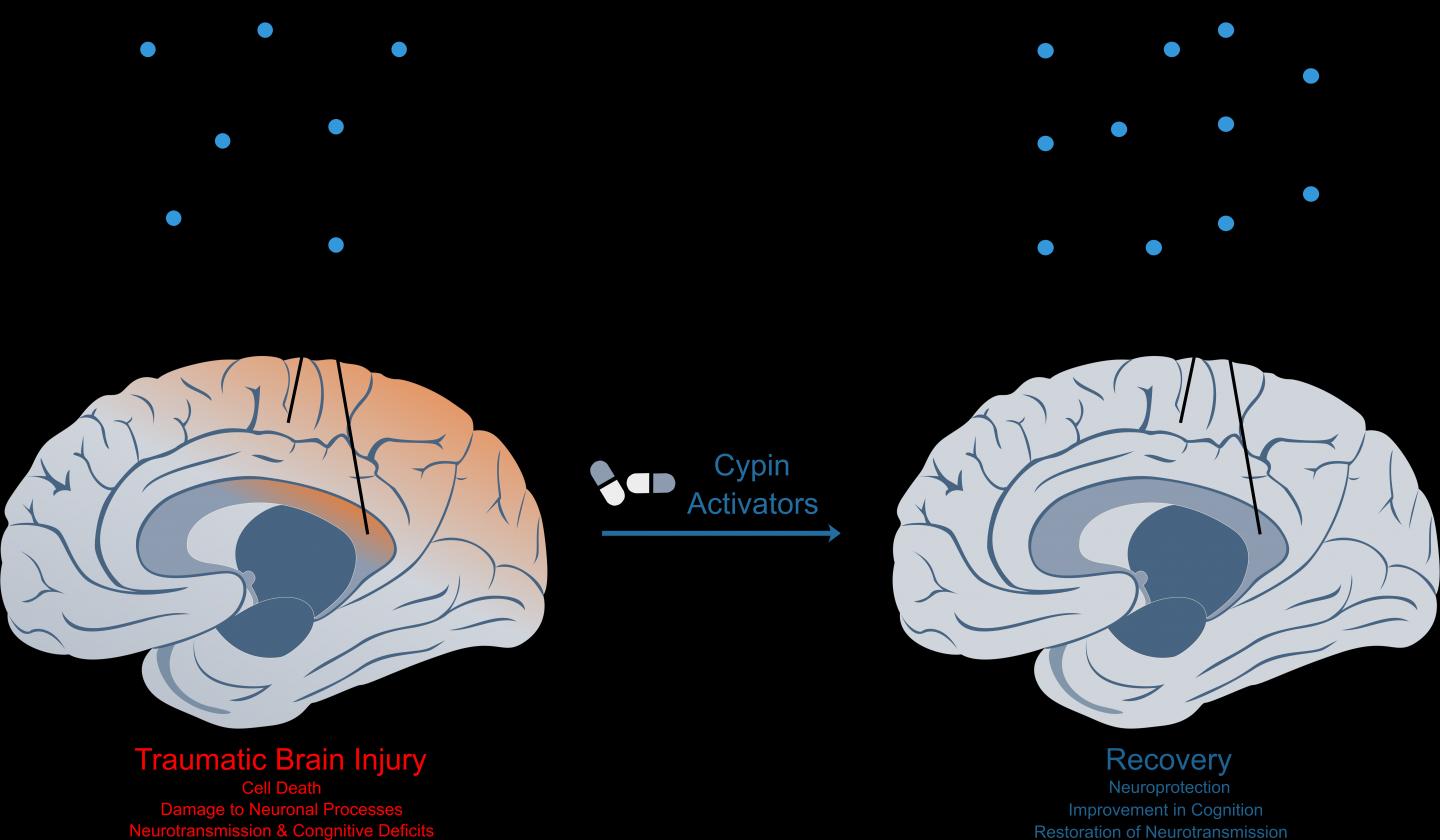
IMAGE

Credit: Mihir Patel/Rutgers University-New Brunswick

After 10 years of research, a Rutgers-led team of scientists has identified two molecules that protect nerve cells after a traumatic brain injury and could lead to new drug treatments.

The molecules promote full recovery after traumatic brain injury (TBI) in mice, according to the study published online in Neurobiology of Disease. Traumatic brain injury is the leading cause of death for people under 45 years old in the United States and is associated with disability, early-onset dementia, cognitive disorders, mental illness and epilepsy.

Nearly all approaches for treating TBI focus on trying to prevent neurons, or nerve cells, from degenerating or on attempting to promote their survival, the study notes. TBI typically alters neural circuits within injured brain regions.

"The big issue with treatment after TBI is that there are no drugs that work well on patients to restore memory, and we're targeting reconnectivity of neural circuitry," said Bonnie L. Firestein, senior author of the study and a professor in the Department of Cell Biology and Neuroscience at Rutgers University-New Brunswick. "That means we want our neurons to function properly and connect with other neurons. We want to allow people to retain their cognition and ability to remember and learn, so our angle is novel."

The researchers studied the protein cypin, an enzyme that breaks down guanine, which is an important building block for DNA and RNA in cells. The scientists previously showed that cypin is involved in promoting the proper shape in neurons and "keeping them happy," Firestein said. This study found that speeding the breakdown of guanine protects neurons from injury and retains brain functioning.

Scientists at Rutgers-New Brunswick, University of Pennsylvania, Fox Chase Chemical Diversity Center Inc. and Columbia University want to develop drugs from the molecules for further studies.

###

Support for the study came from the New Jersey Commission on Brain Injury Research, National Institutes of Health, American Academy of Neurology and Rutgers University School of Arts and Sciences Honors Program Research Fellowship. The study included graduate, medical and undergraduate students.

Media Contact

Todd Bates
[email protected]
848-932-0550
@RutgersU

http://www.rutgers.edu

Original Source

https://news.rutgers.edu/traumatic-brain-injury-discovery-two-molecules-could-lead-new-drug-treatments/20180726#.W1m-HtJKi70 http://dx.doi.org/10.1016/j.nbd.2018.07.019

Share12Tweet7Share2ShareShareShare1

Related Posts

New Study Uncovers Mechanism Behind Burn Pit Particulate Matter–Induced Lung Inflammation

New Study Uncovers Mechanism Behind Burn Pit Particulate Matter–Induced Lung Inflammation

February 6, 2026

DeepBlastoid: Advancing Automated and Efficient Evaluation of Human Blastoids with Deep Learning

February 6, 2026

Navigating the Gut: The Role of Formic Acid in the Microbiome

February 6, 2026

AI-Enhanced Optical Coherence Photoacoustic Microscopy Revolutionizes 3D Cancer Model Imaging

February 6, 2026
Please login to join discussion

POPULAR NEWS

  • Robotic Ureteral Reconstruction: A Novel Approach

    Robotic Ureteral Reconstruction: A Novel Approach

    82 shares
    Share 33 Tweet 21
  • Digital Privacy: Health Data Control in Incarceration

    63 shares
    Share 25 Tweet 16
  • Study Reveals Lipid Accumulation in ME/CFS Cells

    57 shares
    Share 23 Tweet 14
  • Breakthrough in RNA Research Accelerates Medical Innovations Timeline

    53 shares
    Share 21 Tweet 13

About

We bring you the latest biotechnology news from best research centers and universities around the world. Check our website.

Follow us

Recent News

Neg-Entropy: The Key Therapeutic Target for Chronic Diseases

Multidisciplinary Evidence-Based Guidelines for Therapeutic Drug Monitoring of Biologics in Inflammatory Bowel Disease

Early Tuberculosis Treatment Lowers Sepsis Mortality in People with HIV

Subscribe to Blog via Email

Enter your email address to subscribe to this blog and receive notifications of new posts by email.

Join 73 other subscribers
  • Contact Us

Bioengineer.org © Copyright 2023 All Rights Reserved.

Welcome Back!

Login to your account below

Forgotten Password?

Retrieve your password

Please enter your username or email address to reset your password.

Log In
No Result
View All Result
  • Homepages
    • Home Page 1
    • Home Page 2
  • News
  • National
  • Business
  • Health
  • Lifestyle
  • Science

Bioengineer.org © Copyright 2023 All Rights Reserved.
