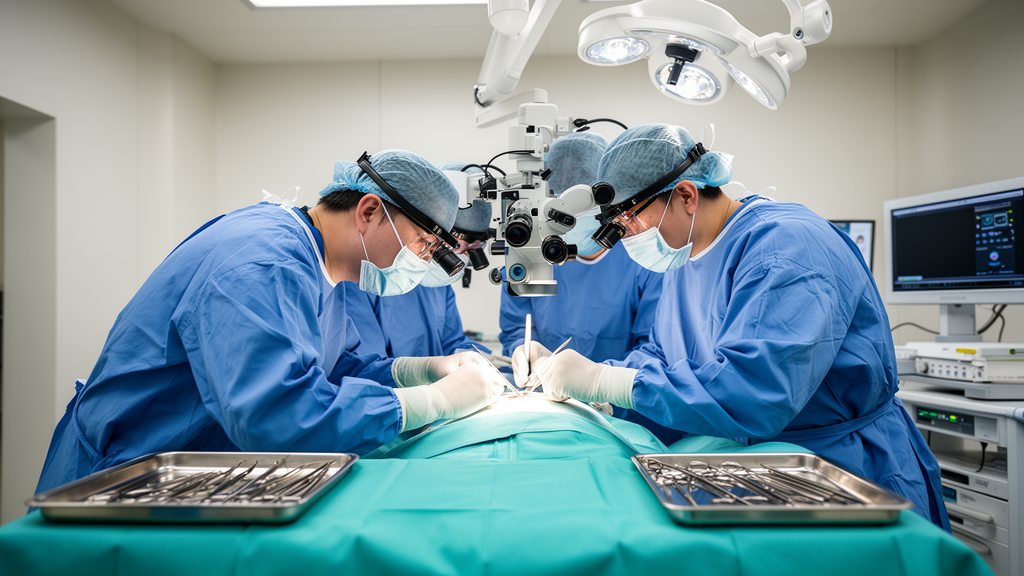
Microvascular free flap reconstruction provided definitive soft tissue coverage in 23 of 24 adult trauma patients treated for extensive tissue damage, according to a retrospective clinical study published in BMC Surgery. The multidisciplinary analysis evaluated operative strategies, reconstructive characteristics, and complications across 29 independent tissue transfers performed between January 2021 and April 2026. Researchers focused on complex traumatic wounds measuring at least 50 square centimeters or involving direct exposure of underlying critical anatomical structures, establishing detailed clinical observations on institutional reconstructive pathways.
However, trauma-specific evidence regarding free flap outcomes remains sparse in surgical literature, especially concerning diverse injury patterns that encompass heterogeneous or multiple anatomical areas.
To investigate these operational outcomes, the surgical team conducted a descriptive retrospective review of 24 adult patients treated at their specialized trauma center. Eligible cases specifically met criteria requiring defects of at least 50 square centimeters or critical structural exposure necessitating microvascular intervention. The protocol analyzed patient-level clinical trajectories alongside flap-level operational data separately. Methodologically, each independent microvascular transfer was tracked individually, whereas composite or chimeric constructs sharing an identical vascular pedicle were categorized as a single tissue transfer.
The anatomical distribution of traumatic injuries within the cohort showed significant concentration in the lower extremities. Defects involving the lower limb accounted for the majority of index presentations, representing 16 of the 24 patients, or 66.7 percent of the cohort. Wounds affecting the head and neck, face, or skull base constituted the second most frequent presentation, seen in five patients, or 20.8 percent. Defects isolated to the upper extremity occurred in two patients, representing 8.3 percent, while only a single individual presented with traumatic tissue loss spanning multiple anatomical regions.
Executing these repairs required 29 independent microvascular transfers utilizing several standard donor sites selected to meet specific defect demands. The anterolateral thigh flap proved to be the most frequently utilized donor tissue, accounting for 12 of the 29 reconstructive procedures, or 41.4 percent of the transfers. Parascapular or scapular tissue transfers represented the second most common reconstructive selection, utilized in five procedures, or 17.2 percent. Lateral arm flaps were selected for four transfers, representing 13.8 percent of the microvascular procedures performed across the patient series.
Postoperative monitoring revealed that microvascular compromise occurred in four of the 24 patients, translating to a 16.7 percent rate of emergent secondary operative intervention. The management of these compromised tissues involved distinct clinical pathways: one flap was successfully salvaged in place, whereas one initial flap suffered complete loss and was replaced with a new free flap. Two additional patients experienced reconstructive compromise that required the transfer of supplementary free flaps to ensure complete defect coverage.
Despite these perioperative challenges, definitive soft tissue coverage was ultimately achieved in 23 of the 24 patients, representing a successful reconstructive rate of 95.8 percent. In terms of additional postoperative complications, surgical site infections were documented in four patients, or 16.7 percent of the cohort, and wound dehiscence similarly affected four patients. Across the study group, the median hospital length of stay reached 22 days, while the recorded median follow-up interval stood at two months, during which functional recovery patterns across distinct anatomical regions were detailed descriptively.
The authors emphasized that while microvascular free tissue transfer successfully established soft tissue coverage in almost all treated patients, the observational data do not establish comparative therapeutic effectiveness. Interpretation of the results remains restricted by the retrospective case-series design, small overall sample size, heterogeneous injury mechanisms, brief median follow-up duration, and the absence of standardized functional assessment instruments. Consequently, the findings primarily serve to outline institutional strategies and early surgical outcomes rather than definitive treatment efficacy.
Subject of Research: Clinical outcomes and operative strategies of microvascular free flap reconstructions for large traumatic soft tissue defects
Article Title: Microvascular free flap reconstructions for large traumatic soft tissue defects: a case series of operative strategy and early clinical outcomes
Article References: Huo, J., Liu, C., Guillette, G., Achu, E. T., Shurkhay, V., Patel, U., & Charles, M. (2026). Microvascular free flap reconstructions for large traumatic soft tissue defects: a case series of operative strategy and early clinical outcomes. BMC Surgery. https://doi.org/10.1186/s12893-026-04332-x
Image Credits: AI Generated
DOI: 10.1186/s12893-026-04332-x
Keywords: microvascular surgery, free flap reconstruction, traumatic soft tissue defects, anterolateral thigh flap, parascapular flap, lateral arm flap, limb salvage, surgical outcomes, pedicle compromise, flap salvage, wound dehiscence, postoperative infection, trauma surgery, case series, BMC Surgery, reconstructive surgery
News Source: Ophelia Keating. (November 13, 2026). Trauma Study Reports Microvascular Free Flap Coverage in Twenty-Three Patients. Scienmag.