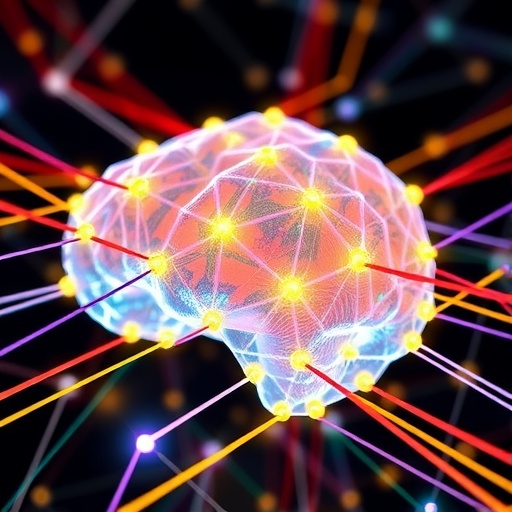
A new frontier in computing is emerging with the development of integrated photonic synapses, neurons, memristors, and neural networks, as explored in a groundbreaking publication by a team of researchers led by Academician Gu Min from the University of Shanghai for Science and Technology. The research, featured in the journal Opto-Electronic Technology, highlights the potential of photonic neuromorphic computing to overcome the conventional challenges faced in modern computing systems, chiefly bottlenecks related to bandwidth, power consumption, and data transfer speeds.
In traditional computing architectures, particularly the von Neumann model, memory units and processing cores are separate. This separation necessitates constant data movement between the two, leading to significant latency and energy inefficiency. As computing scales up, the limitations of this model become increasingly pronounced. In contrast, neuromorphic photonics enables computation through the use of light, which inherently allows for ultra-high bandwidth and low latency operations. By leveraging the unique properties of light, researchers propose a more efficient way to execute critical computations, such as matrix-vector multiplication, significantly reducing power consumption and increasing operational speeds.
Central to this evolution in computational technology is the concept of integrated photonic neural networks (IPNNs). These networks utilize a trio of foundational building blocks: photonic synapses, photonic neurons, and photonic memristors. Photonic synapses play a crucial role in weight storage and loading, essential for neural network operations. Various devices can be used as photonic synapses, including microring resonators (MRRs), Mach-Zehnder interferometers (MZIs), and phase-change materials (PCMs). Each of these devices serves a specific purpose, maximizing energy efficiency while ensuring compactness and effectiveness in weight storage.
Photonic neurons are equally vital, serving as the nonlinear activation units within the network. By favoring all-optical activation schemes, the researchers highlight the potential for increased efficiency in neural network applications. Furthermore, photonic memristors provide crucial memory capabilities, allowing for both volatile and non-volatile storage. This ability to store and process data at optical speeds presents an advantage over traditional electronic counterparts, thereby facilitating real-time data manipulation.
The review also delves into various architectures that have been developed for integrated photonic neural networks. Among them are coherent networks, which may utilize structures such as MZI meshes to enable rapid on-chip training. Additionally, researchers discuss parallelized IPNNs that employ multiplexing techniques for a significant increase in data throughput. Integrated diffractive networks are identified as a promising architecture for low-latency inference tasks, while reservoir computing emerges as a versatile approach for processing dynamic signals.
Despite the promising advancements in IPNN technology, the researchers emphasize that several hurdles must be addressed for the successful deployment of these systems. Calibration and stability remain critical challenges that need to be navigated. The seamless integration of photonic and electronic components is paramount, particularly in efforts to develop programmable, general-purpose architectures capable of efficient training. Overcoming these obstacles is essential for translating research breakthroughs into practical applications that could revolutionize fields such as edge computing, autonomous driving, and intelligent manufacturing.
The outlook for IPNNs remains positively charged, with the researchers proposing that future developments in optoelectronic integration and programmable platforms will significantly improve robustness and performance. As the team continues to investigate and refine materials like phase-change compounds, microcombs, and advanced multiplexing techniques, the prospect of widespread adoption of photonic neuromorphic computing seems more attainable than ever. This could lead to a paradigm shift in artificial intelligence, transforming how computations are performed and ushering in a new era of energy-efficient, high-speed computing.
To achieve a broader understanding, the authors provide a roadmap that lays out the necessary advancements needed to realize the full potential of photonic neural networks. Breakthroughs in achieving low-energy nonlinearities are highlighted as key objectives, as are initiatives aimed at enhancing storage capabilities, calibration stability for large arrays, and improving photonic-electronic co-packaging. This proactive approach indicates a clear trajectory toward developing photonic AI systems that are not only capable of handling significant computational loads but are also energy-efficient and scalable.
In sum, the future of computing may very well lie in the intersection of photonics and artificial intelligence, as evidenced by the promising developments in integrated photonic neural networks. Researchers anticipate that as foundational technologies and architectures continue to evolve, photonic neuromorphic computing will become a reality, paving the way for intelligent systems that can operate at unprecedented speeds while minimizing energy consumption. This signals a revolutionary step forward, where traditional limits imposed by electronic processing may soon be eclipsed by the versatility and efficiency provided by light-based computation.
Subject of Research: Integrated Photonic Neural Networks
Article Title: Integrated photonic synapses, neurons, memristors, and neural networks for photonic neuromorphic computing
News Publication Date: 2025
Web References: https://www.oejournal.org/oet/archive_list_en
References: Han SF, Shen WH, Gu M, et al. Integrated photonic synapses, neurons, memristors, and neural networks for photonic neuromorphic computing. Opto-Electron Technol 1, 250011 (2025). DOI: 10.29026/oet.2025.250011
Image Credits: OET
Tags: bandwidth efficiency in computingenergy-efficient data processingintegrated photonic neural networkslight-based computation methodslow-power computing technologiesmatrix-vector multiplication in photonicsneuromorphic computing advancementsoptical synapses in computingovercoming computing bottlenecksphotonic synapses and neuronsphotonic technology in general-purpose computing