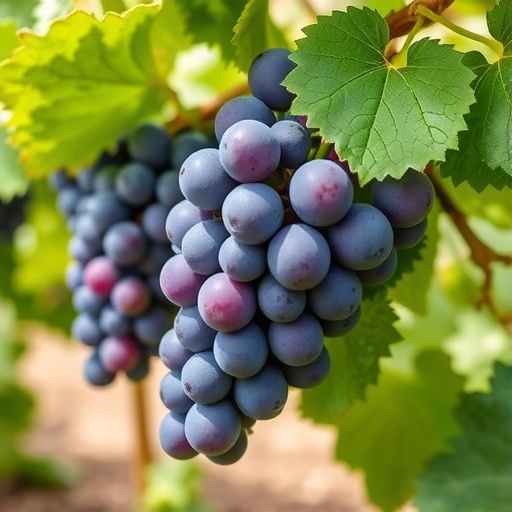
In recent years, the push towards sustainable and circular economies has garnered unprecedented attention, prompting researchers to explore innovative ways to repurpose agricultural by-products. Among these, grape seed biomass stands out as a promising candidate, thanks to its rich composition of (poly)phenolic compounds known for their various health benefits. A groundbreaking study led by K. Samarakoon and H.P.V. Rupasinghe investigates the microbial valorization of grape seeds, revealing not only enhancements in their (poly)phenolic profile but also the production of postbiotic metabolites. This research could fundamentally change how we perceive waste in food production, suggesting that what is typically discarded may hold untapped potential.
The valorization process capitalizes on the advanced capabilities of specific microorganisms that are adept at breaking down complex organic materials. Researchers employed various strains of beneficial microbes to ferment grape seed biomass, a process that could lead to the extraction of valuable bioactive compounds. Traditional methods of extraction often fall short in leveraging the full range of bioactive molecules present in grape seeds, but through microbial valorization, the study indicates an efficient method for enhancing these compounds. The study highlights that this process not only optimizes extraction but also leads to the formation of novel metabolites that can be classified as postbiotics.
Postbiotics, a term that has gained traction in recent years, refers to the bioactive compounds generated during fermentation that confer health benefits without containing living microorganisms. The transition from prebiotic to postbiotic status reflects a tailored transformation that retains the functional aspects of the original compounds. The research found that the microbial fermentation not only elevated the concentration of polyphenolics but also produced secondary metabolites that are theorized to exert antioxidant effects, improve gut health, and even modulate immune responses. This advantageous shift could lead to new applications in food technology and nutritional supplements.
By enhancing the (poly)phenolic profile, the study makes a case for the dual benefit of utilizing grape seed biomass as a functional ingredient in food products. The potential applications are vast, ranging from the development of health supplements to the formulation of functional foods that can bolster overall wellness. With consumers becoming increasingly health-conscious and aware of the ingredients in their diets, the importance of this research cannot be overstated. Grape seed biomass could be a game changer, offering a sustainable resource that also aligns with the growing trend for natural and functional food ingredients.
Furthermore, the environmental implications of such valorization cannot be ignored. Grapes are one of the world’s most widely cultivated fruits, leading to significant amounts of waste when they are processed for wine or juice. This research posits that by repurposing grape seed biomass, we could mitigate waste while simultaneously introducing beneficial compounds into the food system. The concept of circular economies fits perfectly here, turning waste into a valuable resource and minimizing the environmental footprint associated with winemaking.
One of the standout findings of the study is the observed increase in the antioxidant capacity of the grape seed extracts post-fermentation. Antioxidants are vital in combating oxidative stress, an imbalance that can lead to chronic diseases such as cancer, heart disease, and neurodegenerative disorders. By harnessing the power of microbial fermentation, the researchers created an ecosystem that not only preserves but amplifies the health benefits of grape seed extracts.
In addition to the health benefits, there are opportunities for integrating these extracts into various product formats. Food industries are continuously searching for ways to enhance nutritional value, color, and flavor in products. The incorporation of microbial postbiotics derived from grape seeds could meet these demands while also contributing to cleaner label claims. This aligns seamlessly with current consumer preferences for transparency and health-oriented products.
Moreover, the study opens up avenues for further research to explore the influence of different fermentation parameters such as time, temperature, and microbial strain selection on the final product’s efficacy. Understanding these dynamics will be crucial for standardizing processes and maximizing yields of beneficial compounds. Future studies could delve deeper into the specific mechanisms through which harvested postbiotics exert their effects, potentially leading to more refined applications in health and wellness sectors.
In terms of commercialization, the potential for transitioning from lab-scale findings to industrial applications is significant. The food industry stands ready for innovations that incorporate sustainability and health benefits, and grape seed biomass might be at the forefront of this transformation. Collaborations between academia and industry could catalyze this shift, leading to the development of cutting-edge food products that appeal to a wide demographic.
The findings from Samarakoon and Rupasinghe’s study not only provide a compelling argument for microbial valorization of grape seed biomass but also serve as a framework for exploring other agricultural by-products. Various fruit and vegetable wastes carry similar profiles of beneficial compounds, and applying microbiological techniques to these could unlock a treasure trove of bioactive ingredients, further promoting sustainability across food systems.
As research continues to evolve, the implications of microbial valorization are set to reverberate beyond the food sector. Other industries, including cosmetics and pharmaceuticals, may also benefit from harnessing the properties of postbiotics derived from natural sources, thereby expanding the horizon of what is achievable through scientific innovation. Overall, the revelation that microbial fermentation can enhance (poly)phenolic profiles while generating postbiotic metabolites is a landmark discovery that could reshape our understanding of waste utilization and health benefits in food production.
By integrating scientific research with practical applications, the work done by Samarakoon and Rupasinghe has the potential to inspire a more sustainable approach to food systems worldwide. As the world grapples with challenges of sustainability and health, the valorization of grape seed biomass emerges as a beacon of hope, demonstrating how innovative thinking can turn potential waste into a source of health-promoting compounds that align with the ethos of environmental stewardship and human well-being.
Subject of Research: Microbial Valorization of Grape Seed Biomass
Article Title: Microbial Valorization of Grape Seed Biomass Enhances (Poly)phenolic Profile and Generates Postbiotic Metabolites
Article References:
Samarakoon, K., Rupasinghe, H.P.V. Microbial Valorization of Grape Seed Biomass Enhances (Poly)phenolic Profile and Generates Postbiotic Metabolites.
Waste Biomass Valor (2026). https://doi.org/10.1007/s12649-026-03483-5
Image Credits: AI Generated
DOI: https://doi.org/10.1007/s12649-026-03483-5
Keywords: Grape seed biomass, microbial valorization, postbiotics, (poly)phenolic compounds, sustainability, food products, circular economy.
Tags: (poly)phenolic compound optimizationbeneficial microorganisms in agriculturecircular economy in food productionenhancing bioactive compounds extractiongrape seed biomass valorizationhealth benefits of (poly)phenolsinnovative waste repurposing strategiesmicrobial fermentation of grape seedsmicrobial valorization techniquespostbiotic metabolites productionsustainable agricultural by-productstransformation of agricultural waste