


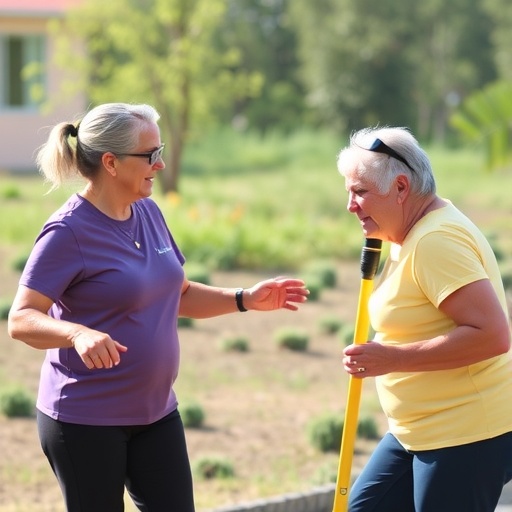
In the realm of aging populations, addressing health-related physical fitness among older adults becomes increasingly vital, particularly within rural communities where social isolation is often prevalent. Recent research led by a team of scholars, including prominent authors Xi, Y., Li, S., and Ni, Y., proposes a groundbreaking multi-component exercise training program designed explicitly for rural older adults living alone. This initiative is steeped in the frameworks of the trans-theoretical model (TTM), a behavioral change model that delineates the stages individuals undergo when modifying behavior. By delving into this innovative study protocol, we unravel how it aspires to transform the lives of elderly residents who, facing unique challenges, could significantly benefit from tailored physical fitness interventions.
The trans-theoretical model serves as a cornerstone in the design of this exercise program and offers a structured approach to understanding behavior change. It posits that individuals move through distinct stages—precontemplation, contemplation, preparation, action, and maintenance—when striving to alter their behaviors effectively. This model’s application to exercise training for older adults is particularly relevant, given the challenges they face in adapting to new physical routines. By addressing these stages, the research intends to foster sustainable lifestyle changes that not only enhance physical fitness but also address mental well-being.
As we turn our attention to the rural older adult population, the necessity for this study becomes more apparent. Many older adults in remote areas often contend with limited social interaction, which can contribute to feelings of loneliness and depression. The authors underscore that physical inactivity is a common issue in these communities, further exacerbating their overall health status. By implementing a program rooted in the TTM, the researchers aim to create more than just a temporary improvement; they aspire to instill long-term behavior change that leads to enhanced health outcomes for participants.
The randomized controlled trial central to this research will rigorously evaluate the efficacy of the exercise training program. Participants will be randomly assigned to either the intervention group, which will engage in the multi-component exercise program, or a control group that will not receive the intervention. This approach will allow for robust comparisons of health-related physical fitness improvements, as outcomes can be systematically measured and analyzed. Such a method ensures high-quality data, facilitating a clearer understanding of the efficacy of the proposed interventions.
Throughout the protocol, we anticipate that various dimensions of health-related fitness will be assessed, including cardiovascular endurance, muscular strength, flexibility, and body composition. These measures are critical indicators of health and well-being, particularly in older adults who may be at risk of chronic illnesses. By focusing on multiple facets of fitness, the research endeavors to capture a holistic view of participants’ health improvements, offering insights into the variety of benefits that a tailored exercise program can provide.
Moreover, the study acknowledges the importance of adaptability in physical training protocols. Realizing that older adults may present with diverse fitness levels and health conditions, the exercise training program will be designed with flexibility in mind. This adaptability is not only essential for meeting individual needs but also serves to minimize injury risk, fostering an environment where participants can feel safe and encouraged to engage in physical activity.
Mental health considerations are expertly interwoven into the fabric of the training program. The authors recognize that physical activity is not only beneficial for the body but also significantly impacts mental health, particularly in combating feelings of loneliness and isolation. By creating a supportive and engaging environment for exercise, participants are likely to experience social interaction and support, fostering peer relationships that can aid in reducing isolation. This aspect of the program highlights the comprehensive approach undertaken by the researchers, acknowledging that true health encompasses both physical and mental well-being.
An integral facet of the study protocol is the community’s involvement. Local resources, such as recreation centers and senior organizations, will play a significant role in successfully implementing the exercise program. Collaborating with community stakeholders not only enhances participant recruitment but also ensures continuity beyond the research period. By galvanizing community support, the study lays the groundwork for sustained programs that can continue to benefit older adults long after the trial concludes.
Furthermore, the anticipated outcomes of this research have the potential to inform public health policy and future programming not just in rural areas, but across diverse populations. By providing evidence-based insights into effective exercise strategies tailored for older adults, the findings could influence systemic changes that prioritize age-friendly initiatives and resource allocation. Such implications extend beyond individual health, potentially reshaping community-centered approaches to aging.
In conclusion, the artful blend of the trans-theoretical model within this multi-component exercise training program marks a significant advancement in addressing the health-related physical fitness of rural older adults. By focusing on both physical and mental well-being, the study protocol promises to provide valuable insights while contributing to ongoing conversations about physical activity, especially for vulnerable populations. As research progresses, the outcomes will undoubtedly contribute vital knowledge to the field, bringing us one step closer to enhancing the lives of older adults through innovative and evidence-based interventions.
As we await the study’s findings, one can reflect on the broader implications of such research in addressing the needs of an aging society. The intersection of physical activity, community engagement, and mental health is not just a critical area of inquiry; it is also a pathway toward fostering healthier, more connected, and resilient older adults within our society. The continuing dialogue surrounding these findings will serve as a reminder that innovative solutions in health can emerge, ensuring that the golden years of life are characterized by vitality and empowerment.
Subject of Research: The effect of a multi-component exercise training program on health-related physical fitness among rural older adults living alone.
Article Title: Effect of a multi-component exercise training program based on the trans-theoretical model on health-related physical fitness among rural older adults living alone: a study protocol for a randomized controlled trial.
Article References:
Xi, Y., Li, S., Ni, Y. et al. Effect of a multi-component exercise training program based on the trans-theoretical model on health-related physical fitness among rural older adults living alone: a study protocol for a randomized controlled trial.
BMC Geriatr (2026). https://doi.org/10.1186/s12877-026-07072-y
Image Credits: AI Generated
DOI: 10.1186/s12877-026-07072-y
Keywords: Aging, exercise training, trans-theoretical model, rural older adults, health-related fitness, mental health.



