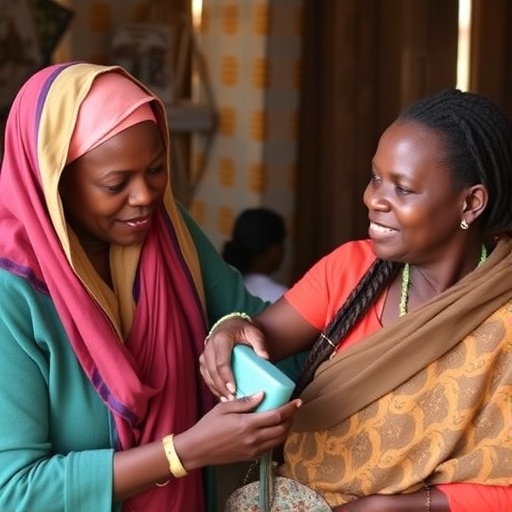
In the remote mountainous regions of Lesotho, where healthcare infrastructure remains sparse and access to medical professionals is limited, managing chronic diseases such as hypertension presents a formidable challenge. A pioneering study conducted by researchers from the University of Basel in collaboration with the Swiss non-profit SolidarMed, the Lesotho Ministry of Health, and the National University of Lesotho, has demonstrated a transformative approach to this problem. Employing trained lay health workers equipped with a novel tablet-based decision-support system, this initiative has achieved markedly superior control of high blood pressure compared to conventional treatment administered in distant healthcare facilities.
Hypertension, a silent yet potent risk factor for cardiovascular maladies including heart attacks and strokes, persists as a significant global health burden. Worldwide, it is estimated that a substantial portion of hypertensive individuals remain undiagnosed or untreated, particularly within low- and middle-income countries. The geographical and logistical barriers inherent to rural Africa exacerbate these disparities, where patients often face daunting journeys to clinics that are many kilometers away, staffed with scarce healthcare professionals. This study stands as the first robust empirical validation of the potential for community health workers to safely and effectively extend hypertension care beyond the formal clinic environment.
Central to this innovative care model is the use of a tablet application embedded with clinical decision-making algorithms. Lay health workers, following a brief, two-week intensive training period, were empowered to screen over 6,600 villagers for elevated blood pressure. Of these, more than 1,200 individuals were identified with hypertension, and over 500 exhibited clinically significant, high-risk elevations necessitating pharmacologic intervention. Using the app, which guided medication choices and dosing for antihypertensive agents amlodipine and hydrochlorothiazide, lay workers initiated and titrated therapy in accordance with standardized protocols. Follow-up visits allowed for fine-tuning of therapy, ensuring precision and safety comparable to that offered by professional clinicians.
Comparison between the intervention group managed by lay workers and a control cohort receiving conventional facility-based care revealed compelling outcomes. Patients under lay worker supervision achieved superior blood pressure control, coupled with no increase in serious adverse events or complications. This equivalence in safety and superiority in efficacy underscores the viability of task-shifting strategies, where responsibilities traditionally reserved for clinicians can be safely assumed by trained community members when supported by digital tools and rigorous governance structures.
The study highlights several critical components indispensable to the success of this model. Foremost is the provision of digital clinical decision support, which mitigates risks associated with lay providers’ limited formal medical education by offering stepwise guidance akin to a clinical algorithm. Equally important are robust training and continuous supervision instituted by healthcare authorities, alongside integration within existing health systems to facilitate seamless patient referral and monitoring. This multifaceted approach fosters a sustainable framework that leverages local human resources to extend access to essential care.
From a public health perspective, this paradigm shift carries profound implications. Hypertension affects millions across sub-Saharan Africa, where the dual burdens of rising non-communicable diseases and inadequate healthcare workforce threaten population health outcomes. By decentralizing care and employing community-based strategies, this model not only enhances treatment coverage but also alleviates congestion in overstretched primary health centers. Reducing blood pressure even marginally yields significant reductions in the incidence of cardiovascular events, translating into lives saved and reduced healthcare costs.
Dr. Lebohang Sao, District Medical Officer in the study region, emphasizes the real-world impact of community health worker engagement. Early identification and sustained follow-up of hypertensive patients in their home environments reduce the likelihood of complications, emergency hospitalizations, and mortality. This approach strengthens the continuum of care, fosters patient trust, and encourages adherence through culturally congruent care delivery.
The study, published in the prestigious journal Nature Medicine, forms part of the wider Community Based Chronic Care Lesotho (ComBaCaL) program, a multi-year collaborative research initiative funded by the Swiss Agency for Development and Cooperation. This initiative exemplifies how scientific rigor and international partnership can generate evidence-based solutions tailored to resource-constrained settings. It also provides a scalable blueprint for similar contexts globally, where chronic disease management remains a pressing and under-addressed imperative.
Looking ahead, the research team is conducting further evaluations focused on cost-effectiveness, sustainability, and long-term clinical outcomes. These analyses are essential to inform policy decisions and investments by governments and global health organizations aiming to implement comparable task-shifting models. Integration of digital health innovations combined with community empowerment represents a promising frontier in global health equity.
In conclusion, this groundbreaking work from Lesotho validates the hypothesis that lay health workers, when equipped with appropriate training and technology, can safely deliver effective hypertension care that surpasses conventional facility-based treatment in rural underserved populations. By bridging healthcare gaps, this model unlocks new potentials for tackling chronic diseases and improving cardiovascular health outcomes in low-resource environments.
Subject of Research: Lay community health worker-led care with mobile decision support for uncontrolled hypertension in rural Lesotho.
Article Title: Lay community health worker-led care with mobile decision support for uncontrolled hypertension: a cluster-randomized trial.
Web References: https://doi.org/10.1038/s41591-026-04208-w
Image Credits: Meri Hyöky/The Hub
Keywords: hypertension, community health workers, digital health, task-shifting, Lesotho, cardiovascular disease, rural healthcare, mobile decision support, non-communicable diseases, global health equity, antihypertensive therapy, chronic disease management
Tags: cardiovascular disease preventionchronic disease care in low-income countriescommunity health worker programsempirical validation of community health strategieshypertension management in rural Africaimproving blood pressure controlinnovative healthcare solutionsLesotho healthcare initiativesnon-profit health interventionsremote healthcare accesstablet-based decision-support systemstrained lay health workers