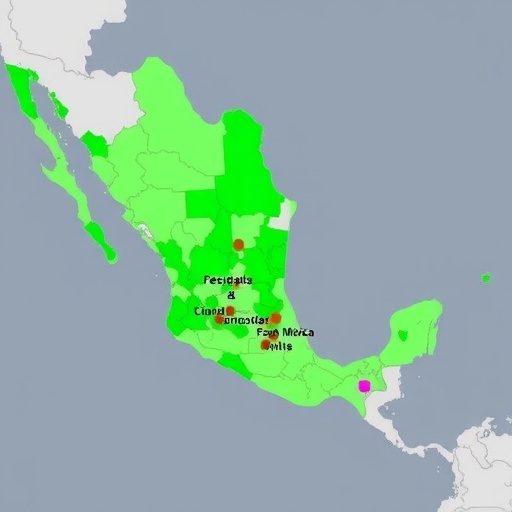
In a groundbreaking study published in Acta Parasitologica, researchers have unveiled compelling evidence of the presence of Toxoplasma gondii in retail meat products across Southern Mexico. This discovery spotlights a previously underappreciated public health risk associated with the consumption of meat from everyday markets, raising alarms about the potential widespread exposure to this parasitic protozoan in vulnerable populations. Given T. gondii’s notorious ability to cause toxoplasmosis, particularly severe in immunocompromised individuals and pregnant women, the implications of this research resonate far beyond Mexico’s borders.
The investigation spearheaded by Vela, Bravo Ramos, Rojas, and colleagues employed advanced molecular detection techniques to analyze various meat samples obtained from retail outlets in the region. Utilizing polymerase chain reaction (PCR)-based assays, their methodology offered a high sensitivity and specificity for detecting T. gondii DNA even in trace amounts within different types of meat. This rigorous approach ensured that the presence of the parasite was confirmed with a precision that surpasses conventional serological or microscopic methods typically used in similar epidemiological assessments.
Findings revealed a concerning frequency of T. gondii contamination among commonly consumed meats, including beef, pork, and poultry, though with varying prevalence rates. The data challenges assumptions about the safety of retail meats presumed to be free of parasitic threats and underscores the latent risk posed by the parasite’s tissue cysts, which can remain viable in undercooked or improperly stored meat products. The researchers further sought to unravel the complex web of risk factors contributing to this contamination landscape.
Remarkably, the study’s multifactorial risk analysis pinpointed several critical determinants linked to higher T. gondii detection rates in meat. These include environmental conditions favoring oocyst survival, such as humidity and temperature, alongside farming practices that increase exposure to feline definitive hosts. The prominence of free-ranging livestock systems without protective biosecurity measures emerged as a significant contributor to endemicity. Additionally, inadequate meat handling and processing protocols at the retail level were highlighted as amplifiers of contamination risk.
These revelations come at a pivotal moment in the global discourse on foodborne parasitic diseases. While T. gondii infection has long been recognized as one of the most common zoonotic parasitic infections worldwide, the detailed mapping of contamination within the meat supply chain presented in this study offers unprecedented insights. It also echoes calls by public health authorities for more stringent surveillance programs targeting food animals and retail environments, designed to mitigate human exposure at the consumer level.
The biological lifecycle of T. gondii involves felines as definitive hosts who shed oocysts that subsequently contaminate soil and water systems. Livestock animals acquire infections through ingestion of these oocysts, and the parasite then forms cysts within their muscle tissues. Humans become incidental hosts typically through ingestion of raw or undercooked meat harboring these tissue cysts. Understanding this lifecycle is fundamental to contextualizing the study’s findings and proposing effective intervention strategies that break transmission chains from animals to humans.
Considering the socioeconomic context of Southern Mexico, where traditional culinary practices may include the consumption of meat prepared with minimal cooking, and where refrigeration access varies, the detection of T. gondii in retail meat assumes even greater public health urgency. The study emphasizes the need for targeted educational campaigns focused on safe meat handling, adequate cooking temperatures, and improved hygienic practices among both vendors and consumers.
Regulatory implications arising from this study are profound. Current meat inspection frameworks in many regions do not routinely screen for T. gondii, largely due to technical and cost constraints. However, the demonstrated prevalence documented here supports recommendations for integrating molecular diagnostic tools into routine quality control workflows, especially in areas identified as high-risk. This proactive approach could substantially reduce the incidence of human toxoplasmosis linked to contaminated meat consumption.
The research also advocates for enhanced farm-level interventions, including better animal husbandry practices such as restricting feline access to livestock enclosures and feedstock, regular health monitoring of animals, and biosecurity training for farmers. Promoting sustainable farming designs that minimize environmental contamination with oocysts is key to reducing parasite infection rates in animal reservoirs.
Importantly, this study opens avenues for further research exploring the genetic diversity of T. gondii strains circulating in Southern Mexico’s meat products. Strain virulence varies considerably, and correlating specific genotypes with clinical outcomes in human toxoplasmosis cases could improve prognostic and therapeutic strategies. Serial sampling over time may also reveal seasonal patterns and environmental influences affecting T. gondii prevalence in retail meats.
From a public health policy perspective, an interdisciplinary strategy intertwining veterinary medicine, food safety, epidemiology, and community health education holds promise. This One Health approach recognizes that controlling T. gondii infection requires coordinated actions across human, animal, and environmental interfaces. The study by Vela and colleagues thus exemplifies vital cross-sector collaboration in addressing zoonotic parasitic threats.
Global implications of these findings are significant. As meat trade and consumption patterns evolve worldwide, findings from Southern Mexico provide a cautionary tale applicable to many middle- and low-income countries experiencing similar ecological and socioeconomic conditions. The documented risk factors and suggested mitigation strategies offer a valuable template for international food safety standards aimed at reducing toxoplasmosis incidence.
In sum, this thorough examination of Toxoplasma gondii in retail meat in Southern Mexico represents a clarion call to the scientific community, regulatory agencies, and consumers alike. It underscores that food safety vigilance cannot overlook parasitic pathogens whose stealthy persistence in everyday food products poses silent but serious health risks. Emerging molecular diagnostic technologies showcased here will likely be pivotal in shaping next-generation surveillance and control measures that safeguard public health on a global scale.
The study’s comprehensive data collection, high-resolution molecular analyses, and insightful risk-factor modeling collectively illuminate the urgent need to rethink current meat safety paradigms. As awareness grows, consumer demand for safer products and more transparent supply chains is likely to increase, potentially driving innovation in meat production and public health infrastructure supported by cutting-edge research such as this. The ramifications for preventing toxoplasmosis-related morbidity and broader zoonotic disease transmission represent a critical frontier for modern parasitology and food safety science.
By bringing hidden threats within the meat supply into sharp focus, this research offers a transformative perspective with lasting implications. Future efforts inspired by these findings could pave the way toward diminished parasitic burdens, healthier communities, and more resilient food systems globally, marking a pivotal advance in the quest to control neglected foodborne parasites. The study not only heightens awareness but also mobilizes evidence-based action plans that integrate local realities with global health objectives in a uniquely impactful manner.
Subject of Research: Detection of Toxoplasma gondii in retail meat from Southern Mexico and associated risk factors.
Article Title: Detection of Toxoplasma Gondii and Risk Factors in Retail Meat in Southern Mexico.
Article References:
Vela, L.A., Bravo Ramos, J.L., Rojas, S.B. et al. Detection of Toxoplasma Gondii and Risk Factors in Retail Meat in Southern Mexico. Acta Parasitol. 71, 23 (2026). https://doi.org/10.1007/s11686-025-01214-9
DOI: https://doi.org/10.1007/s11686-025-01214-9
Tags: consumer awareness of meatborne pathogensimplications of Toxoplasma gondiimeat products and public healthmolecular detection of parasitesparasitic infections in vulnerable populationsPCR methods in epidemiologyprevalence of Toxoplasma in foodpublic health risks of Toxoplasmaretail meat safety concernsSouthern Mexico meat contaminationToxoplasma gondii in meattoxoplasmosis in immunocompromised individuals