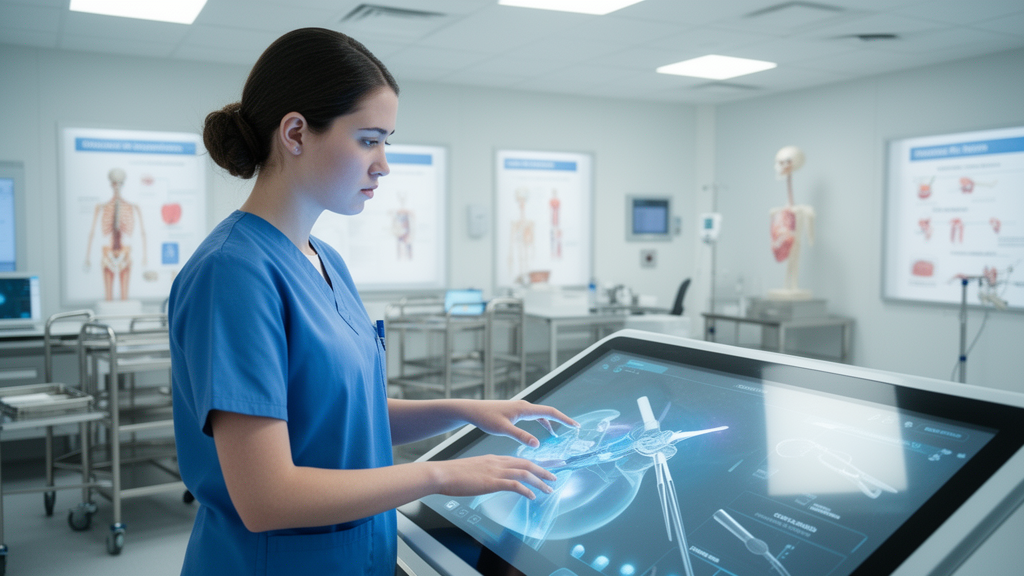
A randomized controlled trial has demonstrated that integrating a Touch Surgery simulation platform into a flipped classroom model significantly enhances cognitive performance and self-reported attentional engagement among surgical technology students compared with conventional instructional methods.
Surgical technologists face an increasing need to anticipate surgeons’ procedural requirements and cultivate a thorough cognitive comprehension of surgical operations to support intraoperative performance. Despite this demand, limited evidence has evaluated the integration of cognitive task analysis–based simulation as a dedicated pre-class activity within flipped classroom models designed for surgical technology trainees.
To investigate this approach, researchers conducted a randomized controlled pretest–posttest trial between February and May 2026 involving 67 surgical technology students at Ardabil University of Medical Sciences. The investigation was prospectively registered in the Iranian Registry of Clinical Trials under identifier IRCT20220518054911N1.
The trial participants were randomly allocated to one of two educational arms: an intervention group that utilized a Touch Surgery simulation-based flipped classroom, or a control group that completed a conventional flipped classroom curriculum featuring narrated PowerPoint instructional materials.
The study gathered data across multiple domains using three distinct instruments: a demographic questionnaire, a researcher-developed examination designed to measure domain knowledge alongside cognitive performance, and the standardized Course Interest Survey to evaluate learner motivation.
Both cohorts demonstrated statistically significant gains in knowledge acquisition and cognitive performance when comparing their pre-test results with post-test scores. However, between-group comparisons revealed distinct curricular advantages: students assigned to the Touch Surgery intervention achieved significantly higher post-test cognitive performance scores than those in the control cohort.
Evaluation of learner motivation revealed that overall motivational measures did not differ significantly between the intervention and control groups, nor was there a statistically significant difference in post-test knowledge scores. Nevertheless, students in the Touch Surgery group reported significantly higher scores on the attention subscale of the Course Interest Survey.
The authors concluded that cognitive simulation platforms provide a feasible and effective educational strategy for strengthening procedural cognition and step-by-step learning in surgical technology programs, offering practical benefits for learner-centered curricula in resource-limited academic environments.
Subject of Research: Evaluation of Touch Surgery simulation within flipped classrooms for surgical technology education
Article Title: Comparison of a touch surgery–based flipped classroom with a conventional flipped classroom on knowledge, cognitive performance, and motivation in surgical technology students: a randomized controlled trial
Article References: Totonchilar, S., Khorammakan, R., Emadi, N., & Dashti-Kalantar, R. (2026). Comparison of a touch surgery–based flipped classroom with a conventional flipped classroom on knowledge, cognitive performance, and motivation in surgical technology students: a randomized controlled trial. BMC Medical Education. https://doi.org/10.1186/s12909-026-10722-9
Image Credits: AI Generated
DOI: 10.1186/s12909-026-10722-9
Keywords: Touch Surgery, surgical technology students, flipped classroom, cognitive performance, procedural cognition, surgical education, randomized controlled trial, Course Interest Survey, Ardabil University of Medical Sciences, narrated PowerPoint, cognitive task analysis, pretest-posttest design, attention subscale, intraoperative performance, medical simulation, step-by-step learning, learner-centered education
News Source: Ophelia Keating. (November 11, 2026). Touch Surgery Simulation Enhances Cognitive Performance in Surgical Technology Students. Scienmag.