Credit: Dr. Madalene Heng
What is the effect of Topical Curcumin Gel for treating burns and scalds? In a recent research paper, published in the open access journal BioDiscovery, Dr. Madalene Heng, Clinical Professor of Dermatology at the David Geffen School of Medicine, stresses that use of topical curcumin gel for treating skin problems, like burns and scalds, is very different, and appears to work more effectively, when compared to taking curcumin tablets by mouth for other conditions.
"Curcumin gel appears to work much better when used on the skin because the gel preparation allows curcumin to penetrate the skin, inhibit phosphorylase kinase and reduce inflammation," explains Dr Heng.
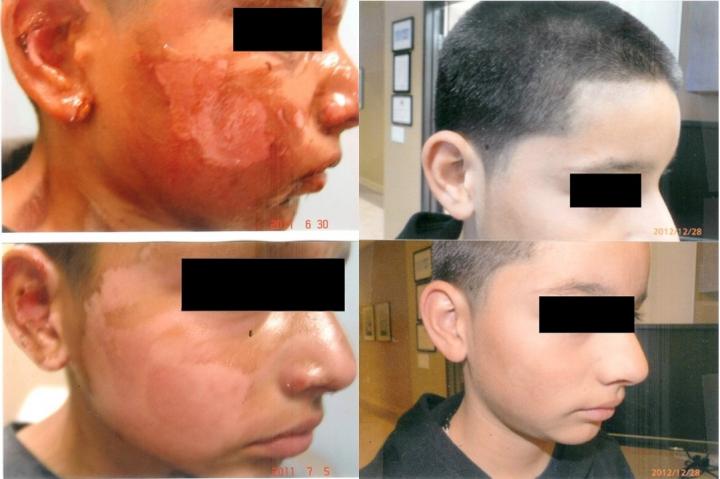
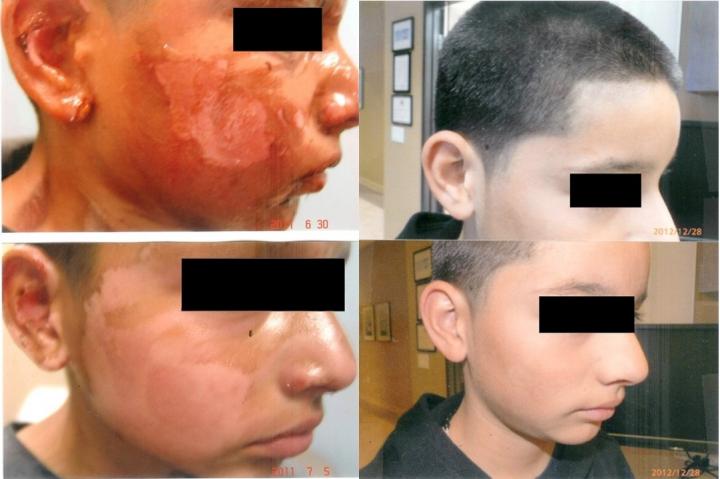
In this report, use of curcumin after burns and scalds were found to reduce the severity of the injury, lessen pain and inflammation, and improve healing with less than expected scarring, or even no scarring, of the affected skin. Dr. Heng reports her experience using curcumin gel on such injuries using three examples of patients treated after burns and scalds, and provides a detailed explanation why topical curcumin may work on such injuries.
Curcumin is an ingredient found in the common spice turmeric. Turmeric has been used as a spice for centuries in many Eastern countries and gives well known dishes, such as curry, their typical yellow-gold color. The spice has also been used for cosmetic and medical purposes for just as long in these countries.
In recent years, the medicinal value of curcumin has been the subject of intense scientific studies, with publication numbering in the thousands, looking into the possible beneficial effects of this natural product on many kinds of affliction in humans.
This study published reports that topical curcumin gel applied soon after mild to moderate burns and scalds appears to be remarkably effective in relieving symptoms and improved healing of the affected skin.
"When taken by mouth, curcumin is very poorly absorbed into the body, and may not work as well," notes Dr. Heng. "Nonetheless, our tests have shown that when the substance is used in a topical gel, the effect is notable."
The author of the study believes that the effectiveness of curcumin gel on the skin – or topical curcumin – is related to its potent anti-inflammatory activity. Based on studies that she has done both in the laboratory and in patients over 25 years, the key to curcumin's effectiveness on burns and scalds is that it is a natural inhibitor of an enzyme called phosphorylase kinase.
This enzyme in humans has many important functions, including its involvement in wound healing. Wound healing is the vital process that enables healing of tissues after injury. The process goes through a sequence of acute and chronic inflammatory events, during which there is redness, swelling, pain and then healing, often with scarring in the case of burns and scalds of the skin. The sequence is started by the release of phosphorylase kinase about 5 mins after injury, which activates over 200 genes that are involved in wound healing.
Dr. Heng uses curcumin gel for burns, scalds and other skin conditions as complementary treatment, in addition to standard treatment usually recommended for such conditions.
###
Original Source:
Heng M (2017) Phosphorylase Kinase Inhibition Therapy in Burns and Scalds. BioDiscovery 20: e11207. https://doi.org/10.3897/biodiscovery.20.e11207
Media Contact
Madalene Heng
[email protected]
@Pensoft
http://www.pensoft.net