• HOME
  • NEWS
  • EXPLORE
    • CAREER
      • Companies
      • Jobs
    • EVENTS
    • iGEM
      • News
      • Team
    • PHOTOS
    • VIDEO
    • WIKI
  • BLOG
  • COMMUNITY
    • FACEBOOK
    • INSTAGRAM
    • TWITTER
Wednesday, June 24, 2026
BIOENGINEER.ORG
No Result
View All Result
  • Login
  • HOME
  • NEWS
  • EXPLORE
    • CAREER
      • Companies
      • Jobs
        • Lecturer
        • PhD Studentship
        • Postdoc
        • Research Assistant
    • EVENTS
    • iGEM
      • News
      • Team
    • PHOTOS
    • VIDEO
    • WIKI
  • BLOG
  • COMMUNITY
    • FACEBOOK
    • INSTAGRAM
    • TWITTER
  • HOME
  • NEWS
  • EXPLORE
    • CAREER
      • Companies
      • Jobs
        • Lecturer
        • PhD Studentship
        • Postdoc
        • Research Assistant
    • EVENTS
    • iGEM
      • News
      • Team
    • PHOTOS
    • VIDEO
    • WIKI
  • BLOG
  • COMMUNITY
    • FACEBOOK
    • INSTAGRAM
    • TWITTER
No Result
View All Result
Bioengineer.org
No Result
View All Result
Home NEWS Science News Chemistry

Tool encoded in coronaviruses provides a potential target for COVID-19

Bioengineer by Bioengineer
February 23, 2021
in Chemistry
Reading Time: 2 mins read
0
IMAGE
Share on FacebookShare on TwitterShare on LinkedinShare on RedditShare on Telegram

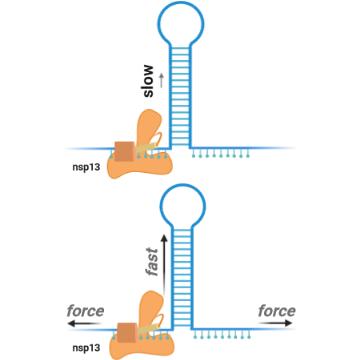
Viruses make copies of themselves during an infection, and new research sheds light on one of the coronavirus molecules that is important for this process, providing a potential drug target that could work for Covid-19 and other coronavirus outbreaks too.
IMAGE

Credit: Image courtesy of Keith Mickolajczyk.

ROCKVILLE, MD – Coronaviruses exploit our cells so they can make copies of themselves inside us. After they enter our cells, they use our cell machinery to make unique tools of their own that help them generate these copies. By understanding the molecular tools that are shared across coronaviruses, there is potential to develop treatments that can not only work in the current COVID-19 pandemic, but in future coronavirus outbreaks as well. Rockefeller University researchers in the labs of Tarun Kapoor and Shixin Liu, including postdoctoral associate Keith Mickolajczyk, recently published their study of one of these molecular tools, which is a potential drug target. They will present their research on Tuesday, February 23 at the 65th Annual Meeting of the Biophysical Society.

During a viral infection, viruses make copies of themselves inside their host, and viruses carry genetic instructions for several tools in order to do so. One of those tools is called a helicase–all organisms have helicases that unwind the genetic information so it can be read or copied. Mickolajczyk had been studying helicases and other molecular motors when the COVID-19 pandemic hit and turned his attention to a helicase encoded in the genome of SARS-CoV-2 (the virus that causes COVID-19), called nsp13.

Mickolajczyk and colleagues investigated the mechanism that individual nsp13 molecules use to unwind genetic material, and their study marks the first single-molecule unwinding experiments to ever be done on a coronavirus helicase. They found that nsp13 is a relatively weak helicase, meaning it needs assisting mechanical forces to be activated, and other viral molecules may help it. They also found that nsp13 did not act like a Hepatitis C virus helicase with a similar shape, and instead acted more like ring-shaped helicases found in bacteriophages (viruses that infect bacteria).

Because coronaviruses have helicases that are very similar to nsp13, it is valuable to understand how this molecule works. “If we can come up with viral therapeutics that hit nsp13, we can have a first line of defense when new coronaviruses potentially erupt and cause new epidemics or pandemics in the future. Understanding this mechanism now can help us design inhibitors that can be treatments against coronaviruses,” Mickolajczyk says.

Their results, Mickolajczyk says, can provide insights that can be leveraged for drug discovery efforts. By inhibiting nsp13, a drug could prevent coronaviruses from making copies of themselves, thereby halting infections and stopping or preventing a pandemic.

###

Media Contact
Leann Fox
[email protected]

Original Source

https://www.biophysics.org/news-room?ArtMID=802&ArticleID=10408&preview=true

Tags: Biomechanics/BiophysicsBiomedical/Environmental/Chemical EngineeringChemistry/Physics/Materials SciencesCritical Care/Emergency MedicineDeath/DyingGeneticsImmunology/Allergies/AsthmaVaccines
Share12Tweet8Share2ShareShareShare2

Related Posts

SwRI and St. Mary’s University Partner to Forecast Durability of Metal Hydride Hydrogen Storage — Chemistry

SwRI and St. Mary’s University Partner to Forecast Durability of Metal Hydride Hydrogen Storage

June 24, 2026
Harnessing Machine Learning to Solve Complex Inverse Problems in Semiconductor Analysis — Chemistry

Harnessing Machine Learning to Solve Complex Inverse Problems in Semiconductor Analysis

June 24, 2026

HKU Tea Hosts Super Angel and Going Global Innovation Forum in Gianhai to Propel Cross-Border Tech Collaboration and Global Expansion

June 24, 2026

Light-Based Sensors Identify Minute Levels of Traumatic Brain Injury Biomarkers

June 24, 2026
Please login to join discussion

POPULAR NEWS

  • Saying Goodbye to PGY-6: Pediatric Fellowship Realities

    103 shares
    Share 41 Tweet 26
  • Multi-Hospital Study Reveals Long Covid Burden Is Twice as High as Current Estimates

    92 shares
    Share 36 Tweet 23
  • Detection of EDCs in Breast Milk and Infant Urine Up to Six Months Highlights Early Exposure Risks

    77 shares
    Share 31 Tweet 19
  • New Drug Candidate Developed at McMaster Shows Potential for Treating Brain Cancer

    58 shares
    Share 23 Tweet 15

About

We bring you the latest biotechnology news from best research centers and universities around the world. Check our website.

Follow us

Recent News

Deep Learning Reveals ECG Sudden Death Marker

Antler Stem Cells Relieve Cerebral Ischemic Injury

Increase in Adolescent Suicidality Following State-Level Total Abortion Bans

Subscribe to Blog via Email

Enter your email address to subscribe to this blog and receive notifications of new posts by email.

Join 82 other subscribers
  • Contact Us

Bioengineer.org © Copyright 2023 All Rights Reserved.

Welcome Back!

Login to your account below

Forgotten Password?

Retrieve your password

Please enter your username or email address to reset your password.

Log In
No Result
View All Result
  • Homepages
    • Home Page 1
    • Home Page 2
  • News
  • National
  • Business
  • Health
  • Lifestyle
  • Science

Bioengineer.org © Copyright 2023 All Rights Reserved.