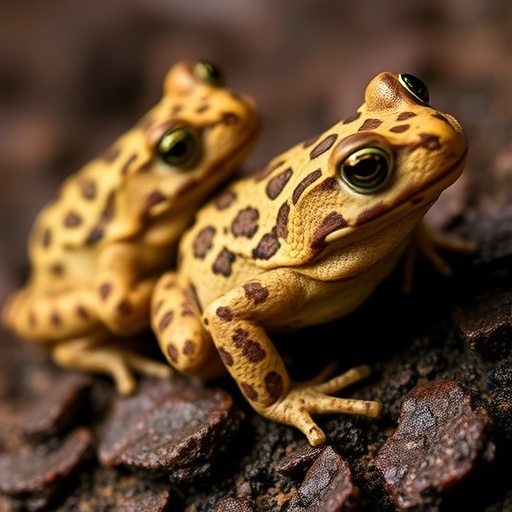
Recent research has unveiled significant insights into the physiological adaptations of the Asiatic toads, scientifically known as Bufo gargarizans, as they navigate the complexities of diverse environments across varying altitudes. This groundbreaking study, conducted by a team of researchers led by Jiao et al., is pivotal for understanding how climate and altitude influence metabolic processes in amphibians, a group increasingly vulnerable to environmental changes.
The research employs a technique known as ecometabolomics, which examines metabolic changes and responses in organisms as they adapt to their environments. This methodology allows scientists to quantify the metabolic profiles of these toads in detail, revealing intricate biochemical pathways that may govern their survival and reproductive success at different altitudes. By comparing toad populations inhabiting lowland areas with those residing in high-altitude locales, researchers have fundamentally broadened the comprehension of amphibian adaptation strategies.
Findings indicate that as the altitude increases, the biochemical profiles of the toads differentiate markedly, reflecting a complex interplay between genetics and environmental pressures. The study meticulously documents changes in metabolic functions, highlighting increased stress responses and energy expenditures in toads living at higher altitudes. This adaptation may manifest as shifts in energy metabolism, which are vital for coping with lower oxygen levels, reduced temperatures, and varying moisture conditions.
The research team noted that the toads from high-altitude regions exhibited unique metabolic signatures, including elevated levels of certain metabolites associated with stress responses. These metabolic shifts are likely crucial for survival in harsh environments, suggesting a remarkable resilience and adaptability in the face of climatic challenges. Such adaptations may present advantages in reproductive success and persistence in fluctuating climates.
Moreover, the study underscores the potential implications of habitat loss and climate change for amphibian species. As environmental conditions continue to evolve, understanding the metabolic adaptations of these toads becomes increasingly relevant. Conservation strategies must be informed by insights into how these amphibians adjust to their surroundings, providing a critical framework for safeguarding biodiversity in a rapidly changing world.
Notably, metabolic adaptations do not occur in isolation but are influenced by a myriad of ecological factors, including resource availability, interspecies competition, and predator-prey dynamics. The findings advocate for a more integrated approach to conservation, one that considers metabolic health as a vital indicator of organismal resilience in fluctuating ecosystems.
Additionally, the research highlights an underappreciated facet of amphibian biology—metabolic plasticity. The ability of Bufo gargarizans to adjust their metabolic processes in response to elevated altitudes might serve as a model for exploring similar resilience mechanisms in other amphibian species and perhaps across broader taxa. The implications of metabolic flexibility extend beyond individual species to encompass entire ecosystems where amphibians play vital roles.
The findings published in Frontiers in Zoology may also ignite further research avenues, prompting investigations into the genetic bases for metabolic adaptation. Identifying the genetic markers associated with these adaptations could pave the way for advanced conservation strategies. Such knowledge is indispensable for anticipating the responses of not only Bufo gargarizans but also other species facing analogous environmental stresses.
Engagement with the public about amphibians’ plight is another significant aspect of this research. By illuminating the biochemical narratives behind their survival, the study fosters a deeper appreciation for these often-overlooked creatures. Increased public awareness can translate into greater conservation efforts independent of geographical barriers. The outreach can cultivate a more informed and proactive community around amphibian protection.
In conclusion, the ecometabolomic research conducted by Jiao and colleagues represents a remarkable stride forward in understanding the physiological adaptations of Asiatic toads to altitudinal variation. As we confront the realities of climate change and biodiversity loss, such studies are vital for framing future conservation efforts. Their contributions deepen our understanding of ecological resilience while illustrating the intricate biochemical responses that underpin survival in a world of shifting environmental landscapes. Through continued research and advocacy, we can drive forward meaningful actions to ensure the persistence of these fascinating species.
Understanding the physiological adaptations of amphibians like Bufo gargarizans equips us with the knowledge necessary for tailoring conservation approaches that are both proactive and responsive. The commitment to advancing our scientific inquiry into these adaptations not only benefits the toads themselves but also enriches our broader understanding of ecological systems where they inhabit. As we strive towards a sustainable future, insights gleaned from studies such as this will prove invaluable in our collective efforts to protect our planet’s rich biodiversity.
The research distinctly posits that conserving the habitats of these toads must go beyond preservation. It should encompass active measures to mitigate the impacts of climate variances and anthropogenic pressures. The evolutionary narratives embedded in the metabolic changes observed in Bufo gargarizans compel us to rethink established conservation paradigms, advocating for dynamic and adaptive management strategies that reflect the complexities of ecological interdependence and resilience.
Subject of Research: Physiology and Ecometabolomics of Asiatic Toads in Response to Altitudinal Gradient
Article Title: Ecometabolomics reveal physiological adaptations of Asiatic toads (Bufo gargarizans) to different environments along an altitudinal gradient.
Article References: Jiao, M., Zhang, Y., Liu, C. et al. Ecometabolomics reveal physiological adaptations of Asiatic toads (Bufo gargarizans Cantor, 1842) to different environments along an altitudinal gradient. Front Zool 22, 21 (2025). https://doi.org/10.1186/s12983-025-00577-z
Image Credits: AI Generated
DOI: https://doi.org/10.1186/s12983-025-00577-z
Keywords: Ecometabolomics, Bufo gargarizans, Physiological adaptations, Altitude, Biodiversity, Climate change, Amphibian conservation, Metabolic profiling.
Tags: altitude effects on amphibian survivalamphibian adaptation strategiesbiochemical pathways in toadsBufo gargarizans physiological changesclimate impact on toad metabolismecometabolomics in amphibiansenergy metabolism in high altitudesenvironmental pressures on amphibiansmetabolic profiles of Asiatic toadsresearch on amphibian vulnerability to climate changestress responses in toadsToads metabolic adaptation to altitude