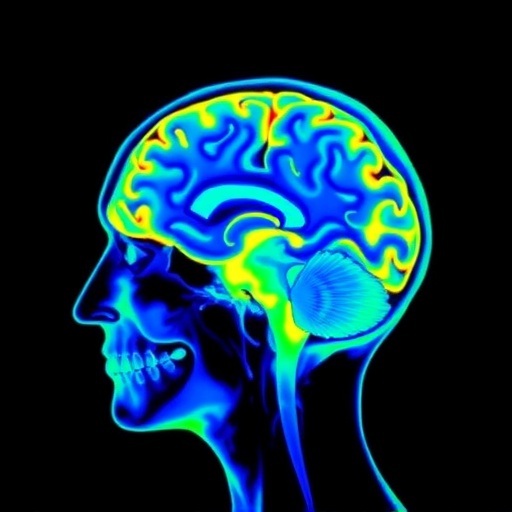
In a groundbreaking study set to redefine our understanding of Parkinson’s disease (PD), researchers have unveiled new insights into the cortical dynamics and network alterations that underlie cognitive impairments in PD patients. The study, published in the prestigious journal npj Parkinson’s Disease, leverages the synergistic capabilities of Transcranial Magnetic Stimulation combined with Electroencephalography (TMS-EEG) to probe the posterior parietal cortex—a key brain region implicated in higher-order cognitive functions. This pioneering approach illuminates the subtle yet critical changes in brain connectivity and activity that accompany mild cognitive impairment (MCI) in Parkinson’s disease, opening avenues for early diagnosis and novel therapeutic interventions.
Parkinson’s disease, long characterized primarily by its hallmark motor symptoms such as tremors and rigidity, has increasingly been recognized as a complex neurodegenerative disorder with multifaceted cognitive repercussions. Mild cognitive impairment in PD represents an intermediate stage where cognitive deficits emerge without the severity of dementia but are nonetheless debilitating. Understanding the neural substrates of MCI in PD has been challenging due to the intricate and diffuse nature of brain network disruptions. The current study breaks new ground by focusing on the posterior parietal cortex, a region critical for attention, visuospatial processing, and working memory, functions often compromised in PD-related cognitive decline.
The research team, led by Pei, G., Yang, X., and Liu, H., employed TMS-EEG, a method that combines noninvasive brain stimulation with real-time electrophysiological recording. This technique uniquely enables scientists to appraise cortical excitability and connectivity dynamics with exceptional temporal resolution. By applying magnetic pulses to the posterior parietal cortex and recording the induced electrical activity across the scalp, the researchers mapped out functional network alterations associated with PD-MCI. Their results reveal aberrant cortical responses and dysregulated connectivity patterns that distinguish Parkinson’s patients with cognitive impairment from those without and from healthy controls.
One of the salient findings of the study is the identification of disrupted long-range connections between the posterior parietal cortex and prefrontal brain regions. These disrupted pathways are crucial for executive functions and working memory, highlighting mechanistic links between network pathology and the cognitive deficits observed in PD-MCI. The researchers observed that TMS-evoked potentials showed reduced amplitude and altered latency, reflecting impaired cortical reactivity and integration. Importantly, these neurophysiological signatures correlated with patients’ performance on neuropsychological tests assessing attention and memory, underscoring their clinical relevance.
Beyond pinpointing specific network disturbances, this study provides crucial evidence that cortical dynamics in PD-MCI differ not just in terms of connectivity strength but also in temporal patterns of oscillatory activity. The team reports significant attenuation of beta and gamma rhythms—neural oscillations intimately involved in cognitive processing. Beta rhythms, often linked with motor control and cognitive maintenance, were notably diminished post-TMS, suggesting compromised cortical synchronization. Gamma oscillations, associated with information processing and neuroplasticity, also exhibited aberrant modulation, indicating the fundamental disruption of cortical communication essential to cognitive function.
The application of TMS-EEG in this context represents a pivot towards precision neurophysiology in PD research. Unlike conventional imaging techniques that capture static snapshots of brain anatomy or metabolism, TMS-EEG affords a dynamic window into how brain circuits communicate and adapt. This dynamic profiling is particularly vital in neurodegenerative diseases such as Parkinson’s, where progressive network disintegration unfolds long before clinical symptoms fully manifest. By elucidating these pathophysiological changes at the network level, the study offers promising biomarkers for early detection of cognitive decline.
Moreover, the study’s findings challenge prior assumptions that cognitive impairment in Parkinson’s is primarily driven by dopaminergic deficits isolated to subcortical structures. Instead, evidence suggests that cortical regions, traditionally considered secondary in PD pathology, play a pivotal role, especially in the emergence of MCI. The posterior parietal cortex, situated at the nexus of sensory integration and higher cognitive processing, appears to act as a hub whose dysfunction precipitates widespread cognitive disturbances. This paradigm shift has profound implications for therapeutic development, guiding strategies toward cortical modulation.
From a clinical perspective, the investigation heralds the potential to personalize treatment approaches by leveraging TMS-EEG to monitor and modulate neural circuits. Noninvasive brain stimulation modalities like repetitive TMS have shown promise in ameliorating motor symptoms in PD, but their application in cognitive symptoms has been limited by incomplete mechanistic understanding. By identifying specific cortical impairments in PD-MCI, this study lays the groundwork for tailored neuromodulation therapies aiming to restore network functionality and improve cognitive outcomes, possibly delaying progression to dementia.
The rigor of the study is further exemplified by its methodological design, which incorporated age-matched controls and controlled for medication effects, a notorious confounder in PD research. Patient selection was meticulous, focusing on those exhibiting early cognitive decline to capture initial network perturbations. The researchers complemented TMS-EEG data with comprehensive neuropsychological assessments, reinforcing the translational relevance of their findings. Such multimodal approaches are critical to triangulating the neurobiological substrates of complex syndromes like PD-MCI.
This investigation also opens new frontiers in the understanding of brain plasticity and compensatory mechanisms in neurodegeneration. The altered cortical responses may represent both pathological disruptions and adaptive attempts to maintain cognitive integrity. Future longitudinal studies inspired by this work could elucidate how these dynamic processes evolve over time and whether interventions can harness plasticity for therapeutic benefit. Additionally, integrating these insights with genetic and molecular data could unravel the multilevel architecture of PD-related cognitive decline.
The implications of this research extend beyond Parkinson’s disease, contributing to the broader neuroscience discourse on network dysfunction in neurodegeneration. Cognitive impairments across disorders such as Alzheimer’s disease, frontotemporal dementia, and multiple sclerosis share common features of cortical network disruption. The novel application of TMS-EEG to map cortical dynamics in PD sets a precedent for exploring similar mechanisms in other conditions, potentially fostering cross-disease biomarkers and interventions.
As the global burden of Parkinson’s disease continues to escalate with aging populations, the urgency to address non-motor symptoms like cognitive decline grows. This study’s revelation of precise network disruptions in PD-MCI serves as a clarion call for integrating advanced neurophysiological tools into routine clinical workflows. Early detection and targeted intervention may profoundly impact patient quality of life, healthcare costs, and disease trajectories, marking a paradigm shift in Parkinson’s care.
Looking ahead, the research group envisions expanding this approach to investigate other cortical regions and to map network evolution through longitudinal cohorts. Combining TMS-EEG with emerging neuroimaging modalities and machine learning algorithms could refine the predictive power and clinical applicability of network-based biomarkers. Collaborative efforts across neurology, bioengineering, and cognitive neuroscience will be vital to translating these insights into effective therapies.
In conclusion, the innovative TMS-EEG study spearheaded by Pei, Yang, and Liu et al. constitutes a transformative leap in our understanding of Parkinson’s disease with mild cognitive impairment. By decoupling the intricate cortical network alterations and their functional consequences, this research provides a mechanistic blueprint for future diagnostics and therapeutics aimed at preserving cognitive health in PD. This work not only advances scientific knowledge but also embodies a beacon of hope for patients and families grappling with the complexities of Parkinson’s disease.
Subject of Research: Cortical dynamics and network alterations associated with mild cognitive impairment in Parkinson’s disease, investigated via TMS-EEG targeting the posterior parietal cortex.
Article Title: Cortical dynamics and network alterations in Parkinson’s disease with mild cognitive impairment: TMS-EEG study of the posterior parietal cortex.
Article References:
Pei, G., Yang, X., Liu, H. et al. Cortical dynamics and network alterations in Parkinson’s disease with mild cognitive impairment: TMS-EEG study of the posterior parietal cortex. npj Parkinsons Dis. (2025). https://doi.org/10.1038/s41531-025-01186-7
Image Credits: AI Generated
Tags: advanced brain imaging techniques in neurodegenerationbrain connectivity changes in PDcognitive deficits in Parkinson’scortical dynamics in neurodegenerationearly diagnosis of Parkinson’s MCImild cognitive impairment in Parkinson’smotor and cognitive symptoms interactionmultidisciplinary approach in Parkinson’s researchneurophysiological insights into PDposterior parietal cortex functiontherapeutic interventions for cognitive impairmentsTMS-EEG Parkinson’s disease research