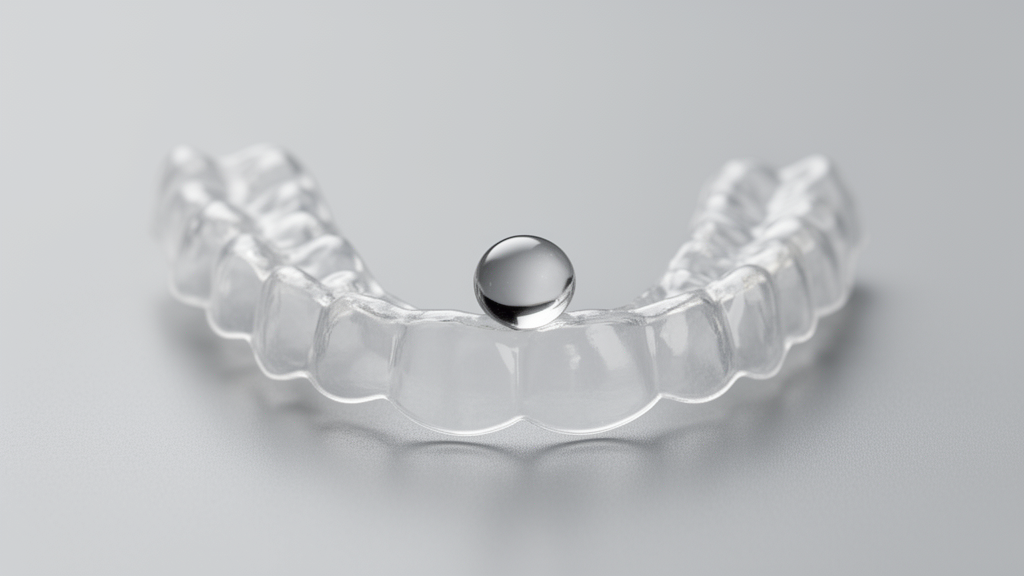
Researchers at Islamic Azad University in Isfahan, Iran, have demonstrated that applying a thin titanium-based nanoparticle coating to clear orthodontic aligners significantly reduces their water absorption while providing measurable antimicrobial activity against common oral pathogens. Published in Results in Chemistry in December 2026, this experimental laboratory study evaluated 128 polyethylene terephthalate glycol (PETG) specimens, comparing 64 uncoated controls with 64 specimens treated using reactive direct-current magnetron sputtering. The findings suggest that this surface modification could enhance the durability and hygiene of clear aligners, which are widely used for correcting mild to moderate malocclusions but are prone to degradation and microbial colonization during prolonged intraoral use.
Clear aligners have become a popular alternative to fixed orthodontic appliances due to their esthetics and improved oral hygiene, yet they suffer from inherent limitations such as high water absorption and weak mechanical properties. The study team, led by Pooya Samadi, Mehdi Rafiei, Hamid Azizi Malekabadi, and Mohammad Mirzaei, aimed to address these drawbacks by investigating the physical, chemical, and antimicrobial effects of a titanium-based nanometric coating. Unlike previous studies that focused on individual properties or different deposition techniques, this investigation integrated structural characterization with functional assessments to provide a comprehensive view of how the coating interacts with the PETG substrate and the oral environment.
The specimens were fabricated from 0.75 mm thick PETG sheets thermoformed over gypsum models. The titanium-based coatings were deposited using reactive DC magnetron sputtering at ambient temperature, with each specimen coated for five minutes on one surface and five minutes on the opposite surface. This process resulted in a total active deposition time of ten minutes per specimen. The study utilized a sample size of eight specimens per group for each of the six non-antimicrobial assessments and for each of the two antimicrobial tests, a number calculated to achieve approximately 84.5% statistical power for detecting differences between the groups.
Scanning electron microscopy (SEM) and energy-dispersive X-ray spectroscopy (EDS) confirmed the successful formation of the coating. While the uncoated controls exhibited smooth and homogeneous surfaces, the coated specimens displayed fine surface protrusions and a relatively uniform nanometric layer with a thickness of approximately 180 ± 11 nm. EDS spectra revealed characteristic carbon and oxygen peaks in both groups, but only the coated specimens showed distinct titanium Kα and Kβ peaks at approximately 4.51 and 4.93 keV, respectively. These findings support the presence of a titanium-containing surface layer, although the study did not directly evaluate coating adhesion or resistance to detachment during simulated clinical use.
Fourier-transform infrared spectroscopy (FTIR) analysis indicated that the principal chemical structure of the PETG substrate was largely preserved following the coating process. The characteristic absorption bands of PETG, including the carbonyl band at approximately 1736.58 cm⁻¹, remained intact in the coated specimens. However, detectable spectral changes were observed in the hydroxyl region, with features appearing at approximately 3336.25 and 3137.62 cm⁻¹. A band near 740 cm⁻¹ was present in both groups, meaning it could not be considered an exclusive indicator of titanium oxide bonding. X-ray diffraction (XRD) patterns showed differences in broad diffraction features, but the nanometric thickness of the coating and the contribution of the underlying PETG substrate prevented the definitive identification of specific crystalline phases such as anatase or rutile.
The coating significantly altered the surface wettability of the aligners. Uncoated specimens exhibited water contact angles ranging from 60° to 75°, with a mean of 69.13 ± 4.79°, indicating relatively hydrophilic behavior. In contrast, the coated specimens showed contact angles ranging from 95° to 120°, with a mean of 106.88 ± 8.43°, indicating a shift toward hydrophobic surface behavior. This change was statistically significant (p < 0.001) and may be attributed to the modification of surface free energy and the formation of nanoscale surface protrusions observed in the SEM images. The increased hydrophobicity is a key factor in the subsequent reduction of water uptake by the polymer material.
Volumetric water sorption was evaluated after 14 days of immersion in distilled water at 37 ± 1 °C. The uncoated group exhibited a mean water sorption of 30.38 ± 1.69 μg/mm³, while the titanium-based coated group showed a mean of 26.50 ± 1.07 μg/mm³. This represents a statistically significant reduction of approximately 12.8% in water sorption for the coated specimens (p < 0.001). Reduced water absorption is clinically important because water penetration into the polymer matrix can weaken intermolecular forces, cause dimensional changes, and lead to discoloration and reduced mechanical stability over time. The protective titanium layer and increased surface hydrophobicity likely limit this water penetration, thereby enhancing the physical stability of the aligner.
Flexural strength was assessed using a three-point bending test, with eight specimens per group. The mean flexural strength was 95.98 ± 1.71 MPa in the uncoated control group and 97.50 ± 1.29 MPa in the titanium-based coated group. Although the coated specimens exhibited a slightly higher mean value, the difference was not statistically significant (p = 0.063). The 95% confidence interval for the mean difference ranged from −0.10 to 3.15 MPa, indicating that the coating did not significantly alter the mechanical response of the aligners under the tested conditions. This finding suggests that the coating does not compromise the structural integrity of the PETG material, a crucial requirement for orthodontic appliances that must withstand occlusal forces.
Antimicrobial activity was evaluated against Streptococcus mutans and Candida albicans using the agar diffusion method. The uncoated controls showed no inhibition zones extending beyond the specimen boundaries, recorded as 10 mm. In contrast, the coated specimens produced significant inhibition zones, with mean diameters of 22.25 ± 1.04 mm for S. mutans and 14 ± 0.76 mm for C. albicans. These differences were statistically significant for both microorganisms (p < 0.001). S. mutans is strongly associated with dental caries, while C. albicans is an opportunistic fungus that can adhere to polymeric surfaces. The observed inhibitory activity suggests that the titanium-based coating may help reduce microbial accumulation on aligners, which are typically worn for more than 20 hours per day.
The study acknowledges several limitations that restrict the generalizability of its findings. The release of microplastics and nanoplastics from the aligner material, as well as the leaching or detachment of titanium-containing species from the coating, was not directly evaluated. Consequently, the long-term stability of the coating and its potential to prevent particle release during clinical use remain unknown. Furthermore, the XRD data did not permit definitive identification of the crystalline phase of the coating, and the antimicrobial mechanism was not directly investigated. The authors note that the observed activity cannot be attributed specifically to photocatalysis or reactive oxygen species generation based on the available data.
Despite these limitations, the study provides valuable insights into the potential of titanium-based nanometric coatings for improving the functional properties of clear orthodontic aligners. The simultaneous evaluation of morphological, chemical, mechanical, and antimicrobial properties offers a clearer understanding of the relationship between coating structure and biological performance. The reduction in water absorption and the presence of antimicrobial activity are encouraging in vitro findings that support the development of next-generation clear aligners with improved durability and hygiene. However, further investigations are required to establish the coating’s long-term efficacy, durability, and performance under clinically relevant conditions before these materials can be widely adopted in clinical practice.
The selection of Streptococcus mutans and Candida albicans for antimicrobial evaluation was grounded in their distinct clinical relevance to oral health. S. mutans is an acidogenic and acid-tolerant bacterium strongly associated with cariogenic biofilm formation, enamel demineralization, and the development of dental caries. In contrast, C. albicans is an opportunistic oral fungus capable of adhering to polymeric surfaces and forming microbial biofilms. Given the prolonged contact of clear aligners with the oral environment, evaluating activity against both organisms provides a preliminary assessment of the coating’s antibacterial and antifungal properties. This approach is supported by previous research investigating nanoparticle-coated clear aligners against these specific species, ensuring the experimental design addresses realistic microbial challenges encountered during orthodontic treatment.
Previous investigations have demonstrated the potential of titanium-based nanomaterials for improving orthodontic materials, though results vary based on substrate, coating composition, and deposition technique. Ha et al. developed a binder-free TiO₂–Cu composite coating on thermoformable PETG aligners using aerosol deposition, reporting improvements in antibacterial activity and wear resistance while maintaining flexibility. Pourhajibagher et al. investigated TiO₂-coated aligners prepared by an immersion-based technique, evaluating UVA-activated antimicrobial activity, surface microhardness, and optical transparency. More recently, Padmanabhan et al. applied TiO₂ coatings to PETG aligners using radiofrequency magnetron sputtering, primarily investigating surface morphology and roughness. The present study distinguishes itself by using reactive direct-current magnetron sputtering and integrating structural characterization with functional assessments of water interaction, mechanical response, and antimicrobial performance.
While the coating significantly increased water contact angle, indicating a shift toward hydrophobic behavior, the study did not directly evaluate microbial attachment or biofilm formation. Therefore, the observed antimicrobial inhibitory activity cannot be attributed to reduced microbial adhesion based on the present findings. Biofilm formation is multifactorial, influenced by surface roughness, surface charge, microbial physiology, and environmental conditions. The antimicrobial activity of titanium dioxide is often attributed to reactive oxygen species production, which can damage microbial membranes, proteins, enzymes, and genetic material. However, the present results do not provide sufficient evidence to attribute the observed activity specifically to anatase-driven photocatalysis or reactive oxygen species generation, as these mechanisms were not directly investigated. The lack of definitive crystalline phase identification from XRD data further limits the ability to assign specific photocatalytic properties to the coating.
From a clinical perspective, clear aligners are usually worn for more than 20 hours per day, meaning microbial accumulation on their surface may directly affect oral health. Reducing microbial adhesion and biofilm formation may help decrease the risk of dental caries, white spot lesions, gingival inflammation, halitosis, and mucosal infections. The reduction in water absorption and the absence of a statistically significant difference in flexural strength are encouraging in vitro findings. However, their implications for long-term durability and clinical performance remain to be established. Most previous titanium dioxide-related orthodontic studies have focused on brackets, archwires, acrylic resins, and composites rather than clear aligners. This integrated approach provides a clearer understanding of the relationship between coating structure and biological performance, supporting the development of next-generation clear aligners with improved functional and antimicrobial properties.
Subject of Research: Titanium-based nanoparticle coatings on PETG clear orthodontic aligners
Article Title: The effect of titanium-based nanoparticle coating on the physical, chemical, and antimicrobial properties of clear orthodontic aligners
Article References: Samadi, P., Rafiei, M., Malekabadi, H. A., & Mirzaei, M. (2026). The effect of titanium-based nanoparticle coating on the physical, chemical, and antimicrobial properties of clear orthodontic aligners. Results in Chemistry, 32, Article 104034. https://doi.org/10.1016/j.rechem.2026.104034
Image Credits: AI Generated
DOI: 10.1016/j.rechem.2026.104034
Keywords: orthodontics, clear aligners, titanium dioxide, nanoparticles, magnetron sputtering, antimicrobial, water absorption, PETG, dental materials, surface coating, effect, titanium-based
News Source: Bethany Barker. (November 9, 2026). Titanium Coatings Reduce Water Absorption in Clear Aligners. Scienmag.