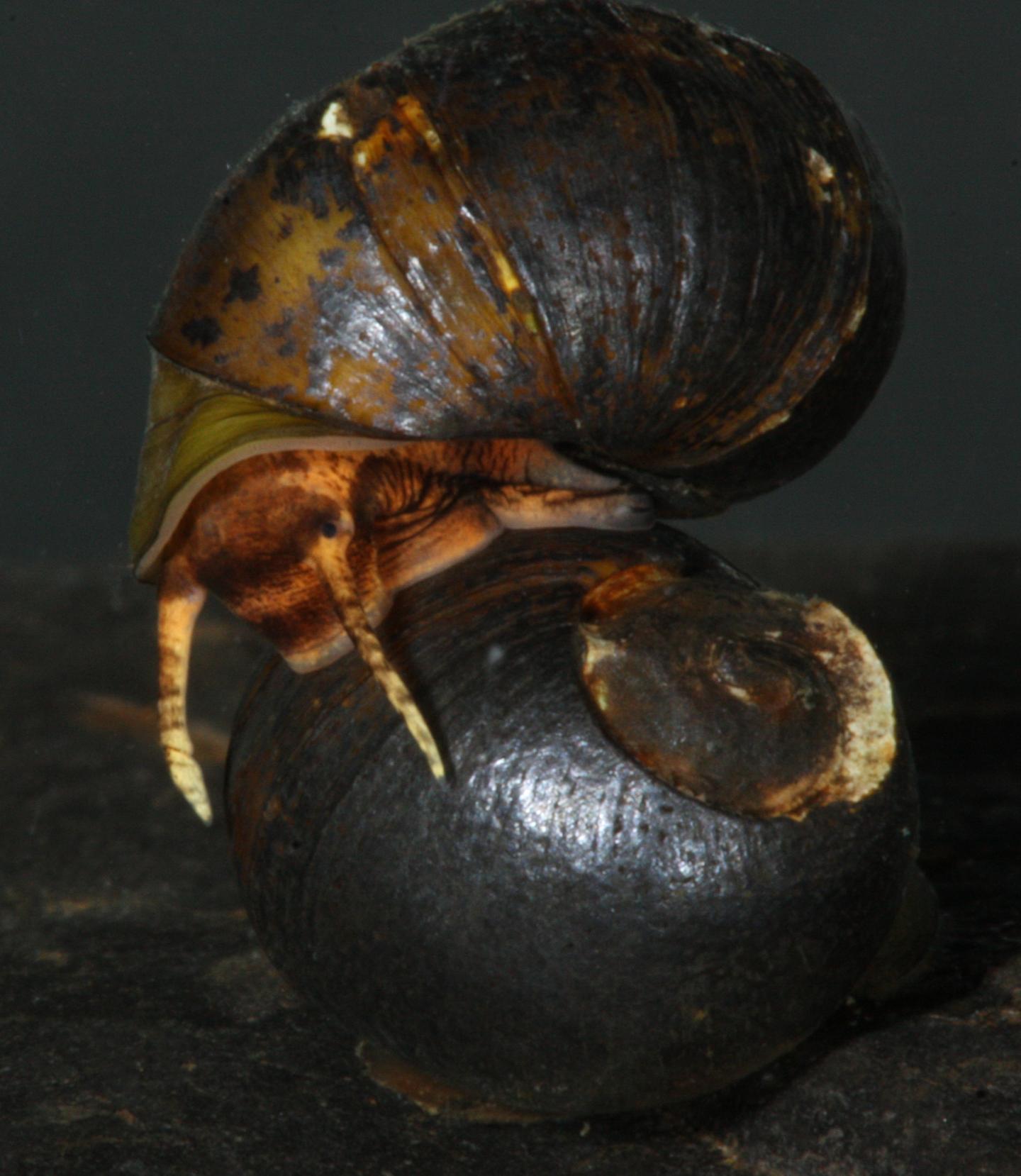
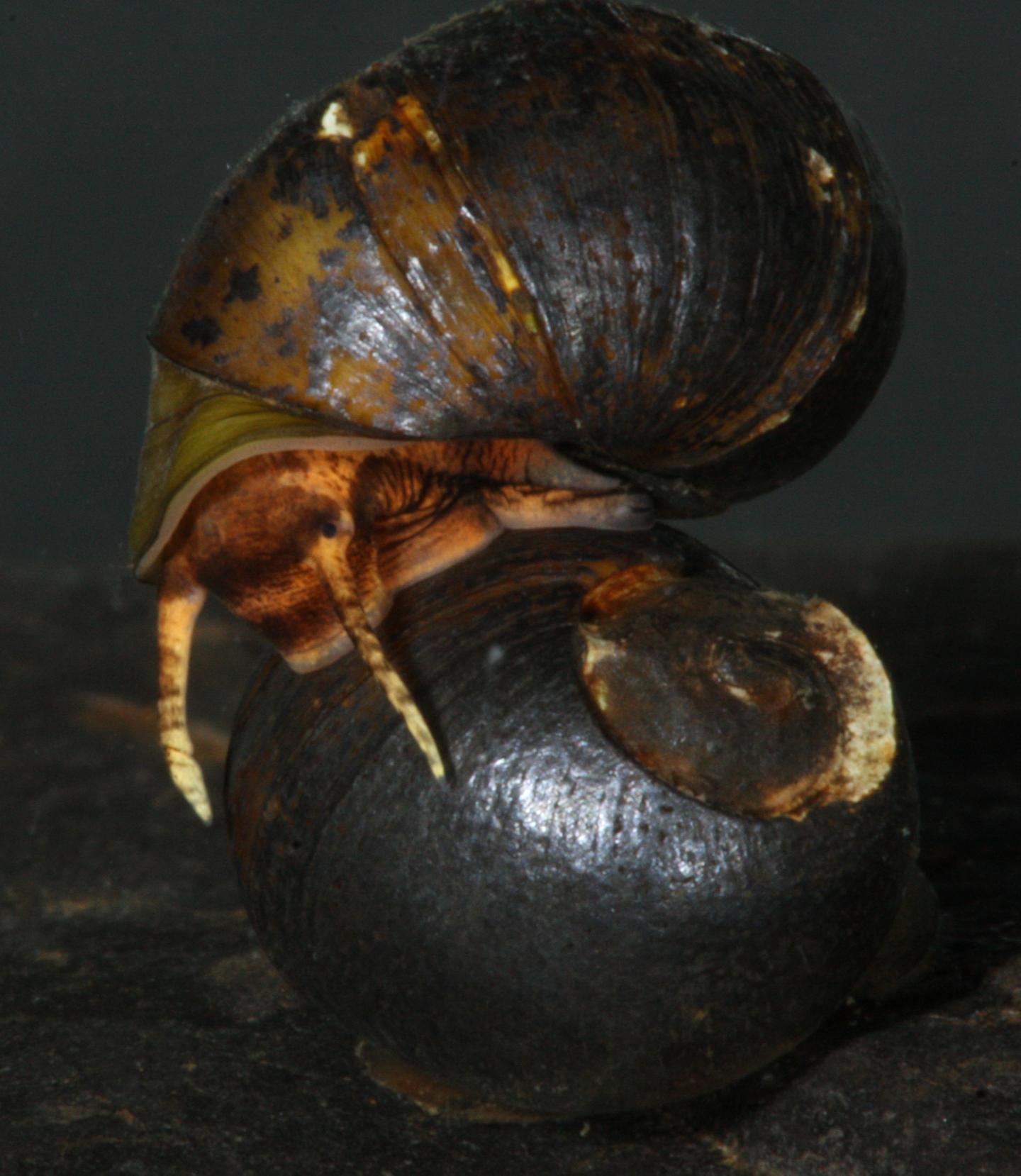
Credit: Thomas Tarpley
Alabama has some of the highest diversity of freshwater snails in the world, but many snails are at high risk of extinction.
An essential part of determining extinction risk is knowing the range of a given species and determining how much its range has contracted owing to anthropogenic impacts, but mistaken identity or misidentification can complicate conservation efforts.
The Painted Rocksnail, a small snail from the Coosa River system, has been mistakenly identified as other species for over 100 years.
In a study published in the open access journal ZooKeys, scientists Dr. Nathan Whelan, U.S. Fish and Wildlife Service, Dr. Paul Johnson and Jeff Garner, Alabama Department of Conservation and Natural Resources, and Dr. Ellen Strong, Smithsonian Institution National Museum of Natural History, tackled the identity of the Painted Rocksnail, a small federally threatened species native to the Mobile River basin in Alabama.
Freshwater snails are notoriously difficult to identify, as the shells of many species can look very similar. Keeping this in mind, the researchers began to notice that many shells identified as the Painted Rocksnail in museums around the world were misidentified specimens of the Spotted Rocksnail, another snail species found in Alabama.
After examining shells at the Academy of Natural Sciences of Philadelphia, Museum of Comparative Zoology at Harvard, National Museum of Natural History, North Carolina Museum of Natural Sciences, Florida Museum of Natural History, and Natural History Museum in London, in addition to hundreds of hours of their own sampling throughout the Mobile River basin, the authors determined that all previous reports of the Painted Rocksnail from outside the Coosa River system were mistakes.
Despite the Painted Rocksnail dwelling in well-studied rivers near large population centers, mistaken identity of the species has persisted almost since the species was described back in 1861 by Isaac Lea.
Only after careful examination of shells collected in the last 150 years and analyses of live animals were the researchers able to confidently determine that the Painted Rocksnail never occurred outside the Coosa River system.
The study has implications for the conservation of the Painted Rocksnail, as the species was historically more restricted than previously thought. Recent surveys by the authors only found the species in small stretches of the Coosa River, Choccolocco Creek, Buxahatchee Creek, and Ohatchee Creek.
In conclusion, the authors note the importance of natural history museums and the importance of studying snails in the southeastern United States.
"Without the shells stored in natural history museums we would have never been able to determine that the supposed historical range of the Painted Rocksnail was incorrect, which could have resulted in less effective conservation efforts for an animal that is very important to the health of rivers in Alabama," they say.
###
Original Source:
Whelan NV, Johnson PD, Garner JT, Strong EE (2017) On the identity of Leptoxis taeniata – a misapplied name for the threatened Painted Rocksnail (Cerithioidea, Pleuroceridae). ZooKeys 697: 21-36. https://doi.org/10.3897/zookeys.697.14060
Additional Information:
This work was funded in part by the Smithsonian Institution, National Science Foundation, U.S. Fish and Wildlife Service, Birmingham Audubon Society, Conchologists of America, Alabama Department of Conservation and Natural Resources, and American Malacological Society.
The findings and conclusions are those of the authors and do not necessarily represent the views of the U.S. Fish and Wildlife Service.
Media Contact
Nathan Whelan
[email protected]
@Pensoft
http://www.pensoft.net
Related Journal Article
http://dx.doi.org/10.3897/zookeys.697.14060