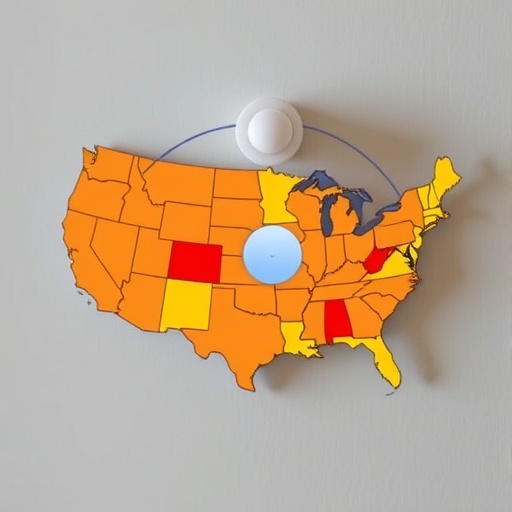
In the quest for sustainable energy management and enhanced indoor comfort, thermostat settings in American homes have emerged as a critical focal point. Recent research highlights how thermostat type, human behavior, and socio-demographic factors deeply influence the temperature preferences inside residences, which bear significant consequences for energy efficiency and social equity. As climate change intensifies the urgency to reduce energy consumption, understanding these nuanced dynamics becomes paramount to formulating effective interventions and policy frameworks.
The complexity of thermostat management revolves around not only technological capabilities but also individual behavioral patterns. Data collected reveal that average indoor temperatures during daytime in the United States hover around 70.1 °F (21.2 °C) in winter and 72.1 °F (22.3 °C) in summer, which only partially align with the recommended ranges for comfort and energy efficiency. Experts suggest that in winter, indoor temperatures should ideally range between 64 and 75 °F (17.8–23.9 °C), while in summer, a range of 75 to 80.5 °F (23.9–26.9 °C) feels comfortable without unnecessary energy expenditure. However, deviations persist due to a mélange of technological and human factors shaping thermostatic control.
Central to these considerations is the type of thermostat employed in households. The study draws a clear distinction between smart thermostats, manual adjustments, and the use of fixed temperature settings. Smart thermostats, integrated with automation and sometimes AI-driven algorithms, help optimize energy use by adapting temperature settings based on occupancy patterns and external weather conditions. Households using such devices exhibit better adherence to energy-efficient temperature ranges, operating up to 2.3 °F (1.3 °C) warmer in winter (thereby reducing heating requirements) and up to 2.2 °F (1.2 °C) cooler in summer, compared to manual or fixed settings. These figures indicate the critical role that technology plays in fine-tuning energy consumption while maintaining thermal comfort.
On the human behavior front, the frequent manual adjustment of thermostats appears less efficient. Households that rely on manual control or select a single fixed temperature for extended periods tend to maintain less optimal temperatures. This behavior not only increases energy consumption but can also cause discomfort. It reveals a gap in awareness or willingness to engage actively with thermostat management, underscoring the importance of intuitive smart technology that reduces the cognitive load on occupants while delivering efficiency gains. The friction between users’ preferences and energy-saving imperatives presents a compelling challenge for designers and policymakers aiming to foster sustainable habits.
Socio-economic and socio-demographic factors add layers of complexity. Disturbing patterns emerge around racial disparities in thermostat settings. For instance, Black households tend to set indoor temperatures up to 2.2 °F (1.2 °C) higher in winter compared to white households, and conversely, 1.4 °F (0.78 °C) lower in summer. This discrepancy could be driven by differences in housing conditions, economic constraints, or cultural preferences, affecting how energy is used and perceived as a resource. Such disparities raise concerns not only about energy efficiency but also about thermal equity—the fairness in access to comfortable, safe indoor conditions across different populations.
Exploring the underlying causes of these disparities leads to multifaceted explanations involving income levels, housing quality, and the availability or affordability of smart technologies. Low-income households may struggle with higher heating costs in winter or cooling expenses in summer and might adopt more extreme thermostat settings to cut energy bills at the expense of comfort or health. Moreover, the penetration of smart thermostats remains uneven, exacerbating existing inequalities. Efforts to democratize access to advanced thermostat technologies could therefore play a transformative role in bridging these inequities.
The potential for smart thermostats extends beyond mere temperature control. Many devices now incorporate machine learning algorithms that learn occupants’ schedules, adapt to patterns of use, and can even interact with dynamic pricing schemes offered by utility companies. This capacity enables a more granular and responsive approach to indoor climate management that balances user comfort with demand reduction on the electrical grid. Such technologies could expand to integrate with whole-home energy systems, optimizing heating, cooling, and ventilation harmoniously with renewable energy inputs.
However, technological adoption is only part of the solution. Education and awareness campaigns about the benefits of optimized thermostat settings are equally vital. Many occupants may not realize that minor adjustments can translate into notable energy savings and more sustainable living environments. Informational initiatives tailored to specific communities, especially those facing ecological and economic vulnerability, might empower residents with the knowledge to harness their thermostat systems more effectively. Bridging the gap between technology and user behavior is crucial to achieving lasting impact.
Furthermore, climate variability and regional differences across the United States complicate a one-size-fits-all approach to thermostat recommendations. Seasonal ranges must be flexible, allowing for localized adjustments based on external temperatures, humidity levels, and building characteristics. Intelligent thermostat systems capable of sensing and responding to these dynamic inputs could provide adaptive comfort while minimizing unnecessary energy use. The integration of meteorological data and smart home technology marks an exciting frontier for residential energy management.
Government policies and incentive programs aimed at promoting energy-efficient behaviors and the installation of smart thermostats could catalyze widespread change. Rebates, subsidies, or even regulatory requirements could encourage homeowners and landlords to invest in modern, automated systems. Simultaneously, standards could push manufacturers to improve the user-friendliness and interoperability of thermostat devices, making their benefits more accessible to diverse populations. Policy frameworks that recognize the intersection of technology, behavior, and equity are necessary for holistic progress.
Apart from efficiency, the health and well-being implications of indoor temperature settings deserve attention. Too low winter temperatures or excessively high summer temperatures can exacerbate respiratory and cardiovascular conditions, especially among vulnerable groups such as the elderly and children. Ensuring access to thermostats that maintain safe and comfortable indoor climates is not merely an energy challenge but a public health issue. This reality accentuates the intersectionality of thermal comfort, energy use, and social justice.
The study underlines that smart thermostat adoption represents an opportunity to substantially reduce carbon footprints associated with residential energy consumption. Heating and cooling contribute significantly to residential energy use, and improving thermostat management can mitigate greenhouse gas emissions at scale. As the United States moves toward ambitious climate goals, behavioral and technological interventions targeting thermostat settings should be prioritized within broader decarbonization strategies.
Despite the optimism surrounding smart technologies, caution is warranted to consider potential barriers. Data privacy concerns, initial costs, and usability complexities might inhibit some households from embracing smart thermostat solutions. To overcome these hurdles, manufacturers must build trust by ensuring transparent data practices, while support programs should address upfront cost barriers. Inclusive design principles that incorporate user feedback can enhance device accessibility and acceptance.
In conclusion, the intricate interplay between thermostat type, occupant behavior, and socio-demographic factors significantly shapes residential temperature settings in the United States. The findings highlight that leveraging smart thermostat automation can lead to substantial improvements in energy efficiency and indoor comfort. Concurrently, addressing the racial and economic disparities in thermostat management is essential to achieving thermal equity and sustainable energy practices. Moving forward, integrated approaches combining technology deployment, education, policy intervention, and equity considerations represent the most promising path to optimizing thermostat use in American homes.
This research marks a pivotal step in enriching our understanding of the micro-level choices influencing macro-level energy outcomes. By placing human factors alongside technological advancements, it encourages a holistic view of sustainability challenges. As the fabric of residential energy management evolves, continued investigation into behavioral patterns, technological innovations, and societal disparities will be vital to crafting inclusive, intelligent, and energy-conscious living environments.
Subject of Research: Thermostat management and the influence of technology, human behavior, and socio-demographic characteristics on residential temperature settings in US households.
Article Title: The role of thermostats and human behaviour in residential temperature settings in the USA.
Article References:
Graff, M., Nock, D. The role of thermostats and human behaviour in residential temperature settings in the USA.
Nat Energy (2026). https://doi.org/10.1038/s41560-025-01948-w
Image Credits: AI Generated
DOI: https://doi.org/10.1038/s41560-025-01948-w
Tags: behavioral patterns in thermostat usageclimate change and energy consumptionenergy efficiency in US homesimpact of thermostat types on comfortinterventions for improving thermostat efficiencyrecommendations for indoor temperature rangesseasonal indoor temperature trendssmart thermostats vs manual thermostatssocial equity in energy managementsocio-demographic factors in temperature preferencessustainable energy management strategiesthermostat settings and human behavior