• HOME
  • NEWS
  • EXPLORE
    • CAREER
      • Companies
      • Jobs
    • EVENTS
    • iGEM
      • News
      • Team
    • PHOTOS
    • VIDEO
    • WIKI
  • BLOG
  • COMMUNITY
    • FACEBOOK
    • INSTAGRAM
    • TWITTER
Monday, March 30, 2026
BIOENGINEER.ORG
No Result
View All Result
  • Login
  • HOME
  • NEWS
  • EXPLORE
    • CAREER
      • Companies
      • Jobs
        • Lecturer
        • PhD Studentship
        • Postdoc
        • Research Assistant
    • EVENTS
    • iGEM
      • News
      • Team
    • PHOTOS
    • VIDEO
    • WIKI
  • BLOG
  • COMMUNITY
    • FACEBOOK
    • INSTAGRAM
    • TWITTER
  • HOME
  • NEWS
  • EXPLORE
    • CAREER
      • Companies
      • Jobs
        • Lecturer
        • PhD Studentship
        • Postdoc
        • Research Assistant
    • EVENTS
    • iGEM
      • News
      • Team
    • PHOTOS
    • VIDEO
    • WIKI
  • BLOG
  • COMMUNITY
    • FACEBOOK
    • INSTAGRAM
    • TWITTER
No Result
View All Result
Bioengineer.org
No Result
View All Result
Home NEWS Science News Biology

The discovery of a new gene that ‘supervises’ strawberry ripening

Bioengineer by Bioengineer
March 13, 2020
in Biology
Reading Time: 3 mins read
0
IMAGE
Share on FacebookShare on TwitterShare on LinkedinShare on RedditShare on Telegram

IMAGE

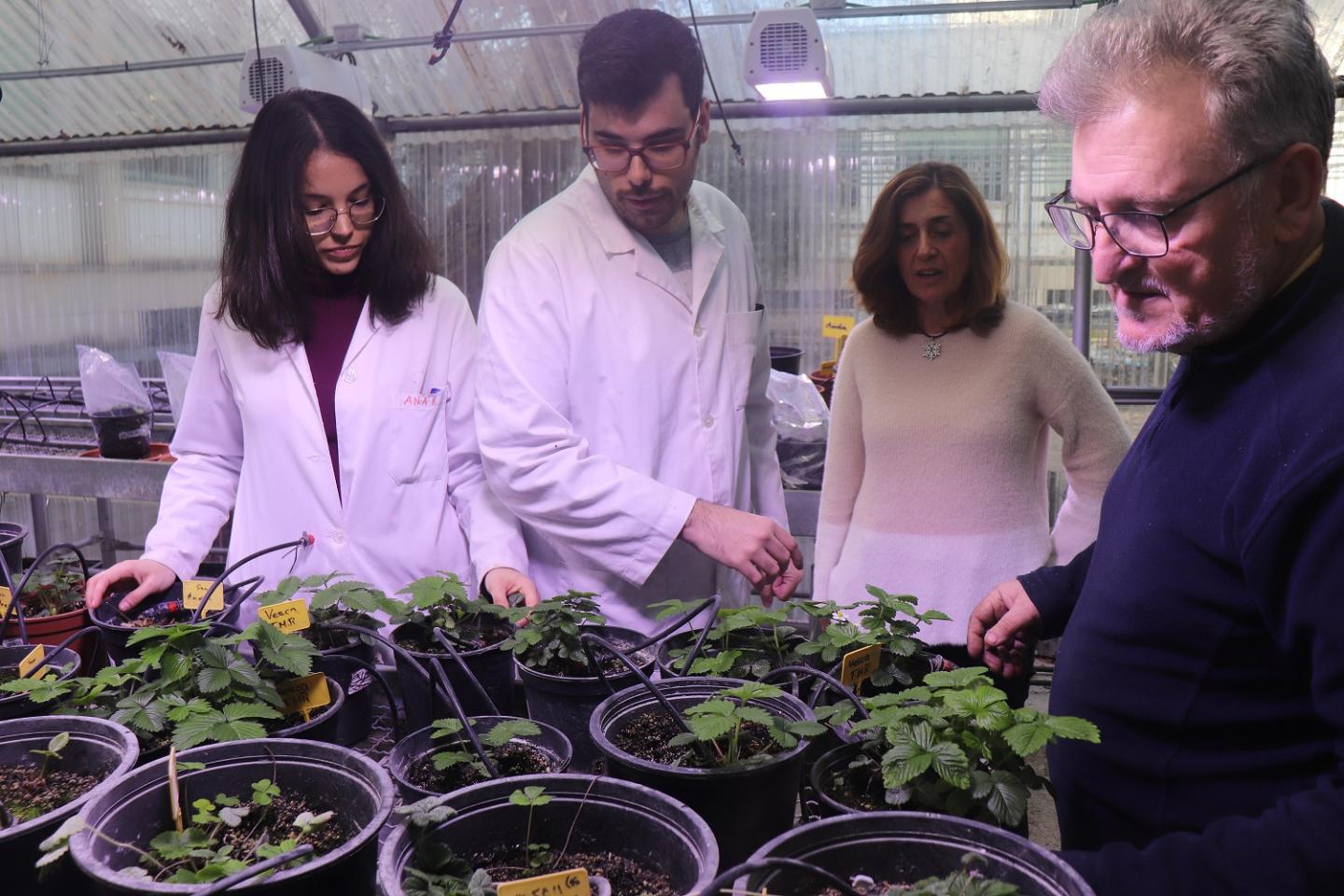
Credit: University of Cordoba


Spain boasts the highest strawberry production rate in Europe and, in order to maintain this key economic sector, is always looking to use innovation and research tools to keep being number one within the strawberry market.

This is the mission in which the Biotechnology and Plant Drug Analysis research group from the University of Cordoba plays an important role. They study strawberry fruit ripening, by analyzing the genes related to fruit quality in terms of color, firmness, aroma, taste and texture parameters, seeking to find the best product to be put on the market.

In the process of this research endeavor to improve characteristics and organoleptic properties of this berry, they have described a gene that plays a very important role in the regulation of the ripening process. This is a transcription factor (FaPRE1), which is the gene in charge of translating the genetic signal and making genes for color, aroma and other characteristics specifically express themselves.

Strawberry development is controlled by two master hormones: ABA, which determines the moment when ripening (with color, aroma and hydration changes) starts, and auxins, that are in charge of growth, meaning that these hormones are the ones that decide when strawberries reach the right size, color and taste to be put on the market. The importance of the newly described gene lies in its role as a sentinel of the ripening process since its job of regulating expression is twofold: when the moment arrives to ripen, it manages to silence development genes (auxins) and to begin the expression of ripening genes (ABA).

In this way, the newly described gene appears suddenly when ripening is going to start and it makes sure that only the ripening genes are activated (up to 600 different ones), which will make the fruit bear aromas, colors and tastes that will make it appealing to be eaten and have its seeds spread. In the end, it all comes down to self-perpetuation of the species.

This gene, described in the article published by researchers Laura Medina, Félix Martínez, Francisco Javier Molina, José A. Mercado, Enrique Moyano, Antonio Rodríguez, José Luis Caballero, Rosario Blanco and Juan Muñoz (research group leader), is considered to be atypical because it needs to work as a team in order to accomplish gene transcription. In other words, it has the possibility to enhance and silence genes when working with another basic transcription factor, that has the function of binding to DNA.

With the characterization of this gene, the group takes a step further towards achieving a map of important gene regulation. In order to complete it, they are studying a regulator gene set that will complete the map.

As far as marketing and making sure Spain continues to be the leader in the field of strawberry production are concerned, this advance with help to find specific markers that allow for identifying plants with better genetic characteristics.

###

Medina-Puche, L., Martinez Rivas, F., Molina-Hidalgo, F., Mercado, Jose., Moyano, E., Rodríguez-Franco, A., Caballero, J., Muñoz-Blanco, J., Blanco-Portales, R. (2019). An atypical HLH transcriptional regulator plays a novel and important role in strawberry ripened receptacle. BMC Plant Biology. 19. DOI: 10.1186/s12870-019-2092-4.

Media Contact
Elena Lázaro Real
[email protected]
34-957-212-252

Related Journal Article

http://dx.doi.org/10.1186/s12870-019-2092-4

Tags: AgricultureFood/Food ScienceMolecular Biology
Share12Tweet8Share2ShareShareShare2

Related Posts

Squirrels Scale Greater Heights to Access Superior Snacks

Squirrels Scale Greater Heights to Access Superior Snacks

March 30, 2026
New Zebrafish Study Sheds Light on Why Haploid Fish Embryos Often Fail to Fully Develop

New Zebrafish Study Sheds Light on Why Haploid Fish Embryos Often Fail to Fully Develop

March 30, 2026

Boron Neutron Capture Therapy: A Breakthrough in Cancer Treatment

March 29, 2026

Bacteria Integrate Polyfluoroalkyl Carboxylates into Membranes

March 29, 2026
Please login to join discussion

POPULAR NEWS

  • blank

    Revolutionary AI Model Enhances Precision in Detecting Food Contamination

    96 shares
    Share 38 Tweet 24
  • Imagine a Social Media Feed That Challenges Your Views Instead of Reinforcing Them

    1005 shares
    Share 397 Tweet 248
  • Promising Outcomes from First Clinical Trials of Gene Regulation in Epilepsy

    51 shares
    Share 20 Tweet 13
  • Advancements in EV Battery Technology to Surpass Climate Change-Induced Degradation

    45 shares
    Share 18 Tweet 11

About

We bring you the latest biotechnology news from best research centers and universities around the world. Check our website.

Follow us

Recent News

Squirrels Scale Greater Heights to Access Superior Snacks

New Zebrafish Study Sheds Light on Why Haploid Fish Embryos Often Fail to Fully Develop

Boron Neutron Capture Therapy: A Breakthrough in Cancer Treatment

Subscribe to Blog via Email

Enter your email address to subscribe to this blog and receive notifications of new posts by email.

Join 78 other subscribers
  • Contact Us

Bioengineer.org © Copyright 2023 All Rights Reserved.

Welcome Back!

Login to your account below

Forgotten Password?

Retrieve your password

Please enter your username or email address to reset your password.

Log In
No Result
View All Result
  • Homepages
    • Home Page 1
    • Home Page 2
  • News
  • National
  • Business
  • Health
  • Lifestyle
  • Science

Bioengineer.org © Copyright 2023 All Rights Reserved.