In a special issue of the journal The Anatomical Record published today, the American Association for Anatomy (AAA) is proactively addressing the complex, painful, and sometimes unethical history of the Anatomy discipline, including legacy anatomical collections, some of which have questionable ties to Nazi Germany, body snatchers in England, and slavery and segregation in the United States.
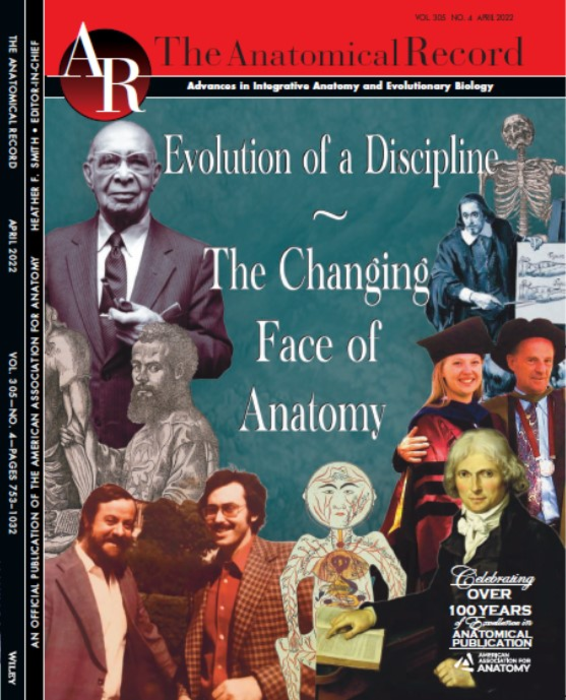
Credit: The Anatomical Record
In a special issue of the journal The Anatomical Record published today, the American Association for Anatomy (AAA) is proactively addressing the complex, painful, and sometimes unethical history of the Anatomy discipline, including legacy anatomical collections, some of which have questionable ties to Nazi Germany, body snatchers in England, and slavery and segregation in the United States.
“For the first time, we are taking a protracted look at how anatomical knowledge has been produced and how the discipline has marginalized some communities throughout the very complex and oftentimes unethical history of our discipline,” said Jason Organ, PhD, and Amber Comer, PhD, JD, associate professors at Indiana University in Indianapolis. “Only by being fully informed and transparent can we address the transgressions of the past and build a future for anatomy that does not violate our morals. We applaud the American Association for Anatomy for providing the platform for this transformative subject.”
“This Special Issue of The Anatomical Record is unique, not only among those published by our journal but also within the broader scope of the anatomical sciences. The articles in this issue discuss the history of Anatomy as a discipline, transgressions that have been committed by individuals claiming to advance the field, and how these actions have impacted society, science, and the discipline. The final section of the issue is forward-facing with recommendations for how Anatomy and scientific societies can enact positive changes going forward. As a voice for anatomical science research and researchers, we must be connected, both to our current society and to the path that we have collectively taken, and we have a responsibility to speak for that science in the larger world,” said Heather F. Smith, Ph.D., Editor-in-Chief of The Anatomical Record, Professor of Anatomy at Midwestern University
This issue is divided into two sections; the first section contains 11 manuscripts that address history and ethics in the anatomical sciences.
The second section includes nine articles that propose to shape the future of the anatomical sciences. The first eight of these address how people in the field can change the classroom environment to address historical transgressions against minoritized groups, how we can make the anatomical sciences more inclusive, and have conversations about complex scientific and medical information with audiences outside of the field.
The special issue concludes with an assessment of the AAA’s own challenges with diversity, equity, and inclusion. The article outlines several ways that AAA has attempted to address issues of limited diversity, inequities, and the marginalization of certain groups among the membership. Most importantly, it demonstrates where AAA has been effective already and makes recommendations for other societies who wish to make immediate impacts in addressing issues of diversity, equity, and inclusion.
“This issue of The Anatomical Record is a look back and a look forward at how anatomical collections are obtained and curated and how we can increase diversity and inclusion in the representation of the human anatomy,” said Valerie DeLeon, Ph.D. President of AAA. “We believe that by examining the topic and by charting recommendations for moving forward, we can in honor those in the past, present and future.”
Below is a complete list of the articles in the special issue.
- Make Time: Introductory remarks by the Editor-in-Chief
- The Anatomical Record Explores The Soul of the Anatomical Sciences in a Groundbreaking Special Issue: “Evolution of a Discipline, The Changing Face of Anatomy”
- Evolution of a Discipline – The Changing Face of Anatomy
- Racism, Structural Racism, and the American Association for Anatomy
- Bygone Theatres of Events: A History of Human Anatomy and Dissection
- The Evolution of Epistemological Methodologies in Anatomy: From Antiquity to Modern Times
- The Evolving Ethics of Anatomy: Dissecting an Unethical Past in Order to Prepare for a Future of Ethical Anatomical Practice
- Bodies and Bureaucracy: The Demise of the Body Snatchers in 19th Century Britain
- W. Montague Cobb: Near the African Diasporic Origins of Activist and Biocultural Anthropology
- The Anatomy of Antisemitism and Antisemitism in Anatomy: A Personal Reflection
- Ethical Dilemmas in Skeletal Collection Utilization: Implications of the Black Lives Matter Movement on the Anatomical and Anthropological Sciences
- A Global Perspective on Embryological and Fetal Collections: Where to From Here?
- Books, Bones and Bodies: The Relevance of the History of Anatomy in Nazi Germany for Anatomy Education Today
- You Can’t Keep a Bad Idea Down: Dark History, Death, and Potential Rebirth of Eugenics
- Colonisation, Cadavers and Color: Considering Decolonisation of Anatomy Curricula
- Textbook Typologies: Challenging the Myth of the Perfect Obstetric Pelvis
- Re-examining Our Roots: Queer History and Anatomy
- Shifting Language for Shifting Anatomy: Using Inclusive Anatomical Language to Support Transgender and Non-Binary Identities
- It Is Essential to Connect: Evaluating a Science Communication Boot Camp
- Improving Communication About Diversity, Equity, and Inclusion in Health Professions Education
- The Imperative for Scientific Societies to Change the Face of Academia: Recommendations for Immediate Action
View the issue here.
Follow The Anatomical Record on social media:
Twitter: @AnatRecord
Instagram: @AnatRecord
Facebook: @anatomical.record
LinkedIn: https://www.linkedin.com/company/79730523
Journal
The Anatomical Record
Method of Research
Commentary/editorial
Subject of Research
Human tissue samples
Article Publication Date
14-Mar-2022