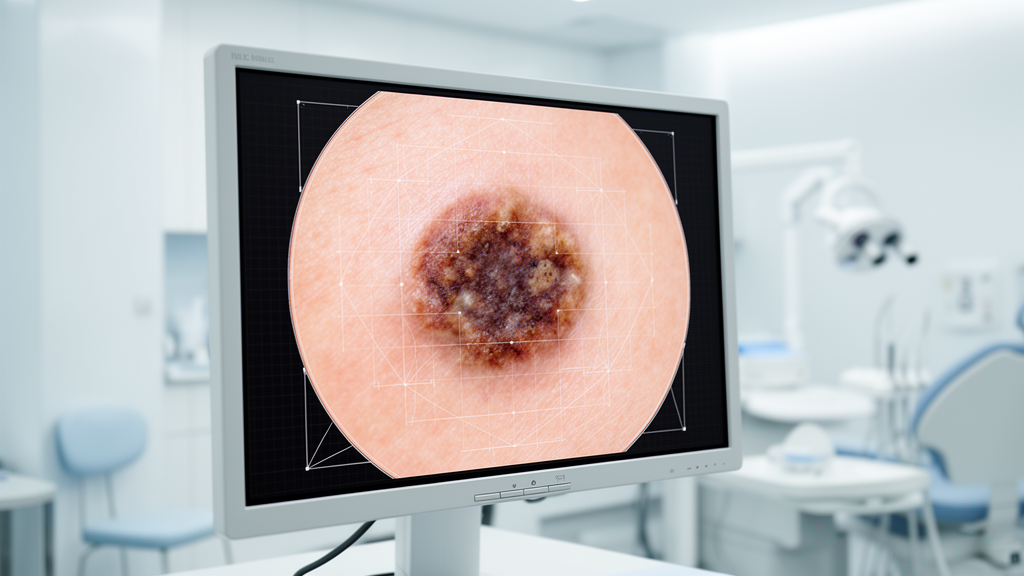
A CLIP-inspired machine learning model using text-derived class prototypes to classify dermoscopic skin lesions showed substantial performance drops on external data and remains unsuitable for clinical deployment, according to an evaluation published in the Journal of Big Data. Researchers assessed whether incorporating clinical descriptions could improve diagnostic classification while strictly controlling for data overlap and label encoding issues that frequently complicate prototype assessment in dermatological datasets.
The investigative team developed the classifier using seven fixed class descriptions encoded by a frozen Bio-ClinicalBERT text model alongside a trainable text projection layer and a Vision Transformer image encoder, with optional patient metadata. Across the investigation, the authors tested four specific model configurations that crossed text-derived prototypes against learned prototypes, both with and without the inclusion of patient metadata. Contrastive weights were chosen based on validation performance, resulting in lambda values of one for text-prototype models and zero for learned-prototype models.
To ensure rigorous evaluation without data contamination, the models were developed on lesion-grouped partitions of the HAM10000 dataset and tested against an external test collection from ISIC 2019. The external evaluation comprised 14,268 images, established after strictly removing 10,015 overlapping images shared with the development data and filtering out an additional 621 precautionary exclusions. The authors evaluated final trainable configurations across three random seeds and estimated statistical uncertainty through a lesion-clustered bootstrap procedure.
The researchers benchmarked these architectures against several distinct comparators, including MetaBlock, BiomedCLIP zero-shot and linear-probe classifiers, and a metadata-only model. When evaluating external balanced multiclass accuracy, the text-prototype configuration that incorporated metadata scored 0.388, outperforming the learned-prototype configuration with metadata, which attained 0.364. This yielded a statistically significant difference of 0.024, with a 95 percent confidence interval from 0.005 to 0.043 and a Holm-adjusted p-value of 0.032, though the authors noted this comparison conflates the prototype source with differing contrastive weights.
Within the text-prototype architecture family, integrating patient metadata failed to produce a statistically significant benefit, showing a difference of negative 0.015 with a 95 percent confidence interval spanning negative 0.043 to 0.014. The highest overall external balanced accuracy among all evaluated systems occurred in the image-only text-prototype model, which reached 0.402. By comparison, the external BiomedCLIP linear probe comparator achieved a balanced accuracy score of 0.381.
Overall diagnostic accuracy degraded considerably outside the initial training environment, with full-model balanced accuracy falling from approximately 0.63 in internal validation down to 0.39 during external testing. Furthermore, the classifier demonstrated an external melanoma recall of only 0.32, and maximum-softmax confidence scores failed to reliably detect out-of-taxonomy squamous cell carcinomas. Although text-prototype configurations outperformed their learned-prototype counterparts, the authors emphasized that matched-objective comparisons remain necessary to isolate prototype contributions, concluding that the findings do not justify clinical deployment.
Subject of Research: Text-prototype dermoscopic classification of skin lesions
Article Title: CLIP-inspired text-prototype classification of dermoscopic skin lesions: a leakage-controlled evaluation with external validation
Article References: Rajalakshmi, N. R., Ibrahim, N., Sivakumar, V., & Mithra, S. (2026). CLIP-inspired text-prototype classification of dermoscopic skin lesions: a leakage-controlled evaluation with external validation. Journal of Big Data. https://doi.org/10.1186/s40537-026-01613-3
Image Credits: AI Generated
DOI: 10.1186/s40537-026-01613-3
Keywords: dermoscopy, skin lesion classification, CLIP architecture, text prototypes, Bio-ClinicalBERT, Vision Transformer, HAM10000, ISIC 2019, external validation, data leakage, melanoma recall, BiomedCLIP, MetaBlock, patient metadata, squamous cell carcinoma, contrastive learning
News Source: Nathaniel Bowman. (November 20, 2026). Text-Prototype Skin Lesion Classifier Fails External Validation For Clinical Use. Scienmag.