• HOME
  • NEWS
  • EXPLORE
    • CAREER
      • Companies
      • Jobs
    • EVENTS
    • iGEM
      • News
      • Team
    • PHOTOS
    • VIDEO
    • WIKI
  • BLOG
  • COMMUNITY
    • FACEBOOK
    • INSTAGRAM
    • TWITTER
Sunday, October 12, 2025
BIOENGINEER.ORG
No Result
View All Result
  • Login
  • HOME
  • NEWS
  • EXPLORE
    • CAREER
      • Companies
      • Jobs
        • Lecturer
        • PhD Studentship
        • Postdoc
        • Research Assistant
    • EVENTS
    • iGEM
      • News
      • Team
    • PHOTOS
    • VIDEO
    • WIKI
  • BLOG
  • COMMUNITY
    • FACEBOOK
    • INSTAGRAM
    • TWITTER
  • HOME
  • NEWS
  • EXPLORE
    • CAREER
      • Companies
      • Jobs
        • Lecturer
        • PhD Studentship
        • Postdoc
        • Research Assistant
    • EVENTS
    • iGEM
      • News
      • Team
    • PHOTOS
    • VIDEO
    • WIKI
  • BLOG
  • COMMUNITY
    • FACEBOOK
    • INSTAGRAM
    • TWITTER
No Result
View All Result
Bioengineer.org
No Result
View All Result
Home NEWS Science News Health

Texas A&M team develops new way to grow blood vessels

Bioengineer by Bioengineer
August 17, 2018
in Health
Reading Time: 2 mins read
0
Share on FacebookShare on TwitterShare on LinkedinShare on RedditShare on Telegram
IMAGE

Credit: Texas A&M University

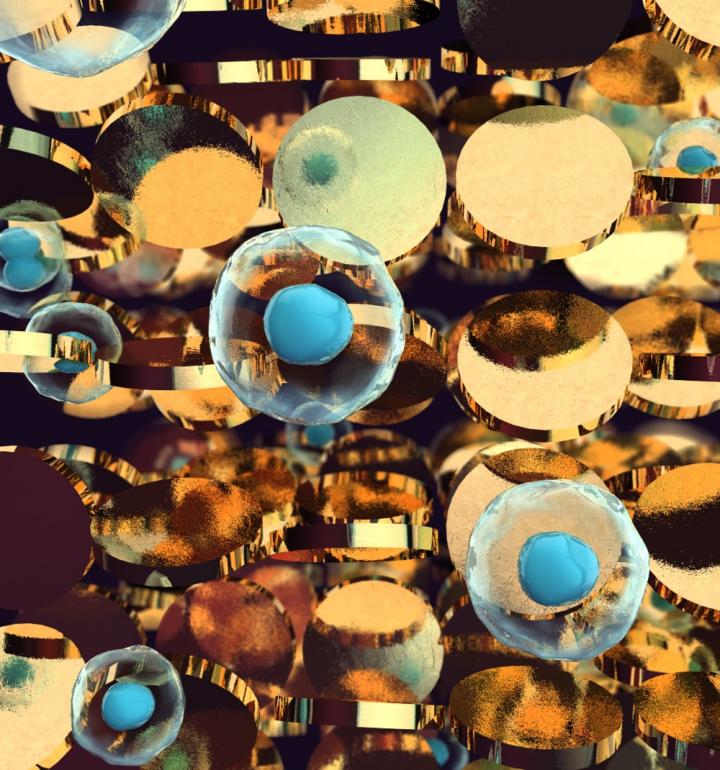
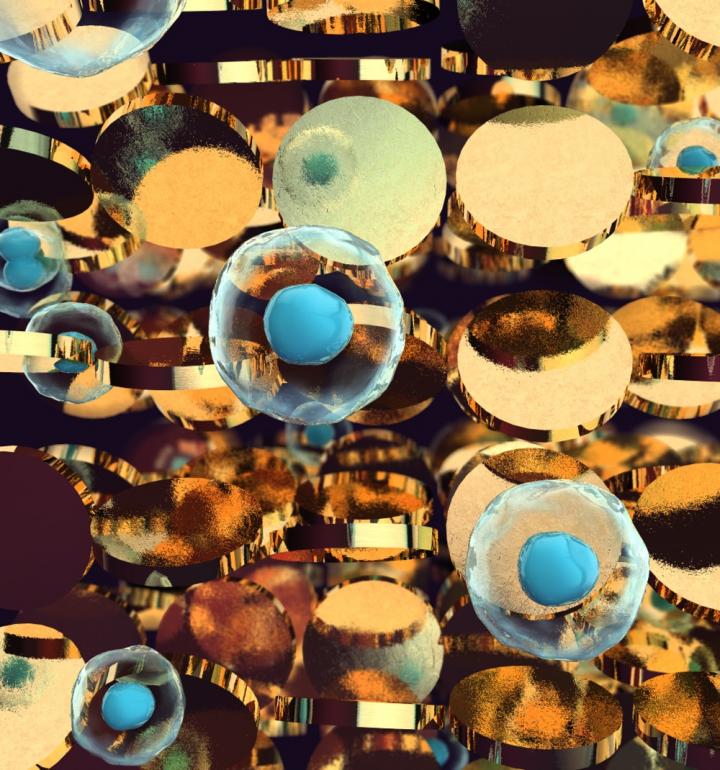
Formation of new blood vessels, a process also known as angiogenesis, is one of the major clinical challenges in wound healing and tissue implants. To address this issue, researchers from Texas A&M University have developed a clay-based platform to deliver therapeutic proteins to the body to assist with the formation of blood vessels.

The team is led by members of the Inspired Nanomaterials and Tissue Engineering Lab in the Department of Biomedical Engineering. They have developed technology that introduces a new type of two-dimensional clay, also known as nanosilicates, that delivers multiple specialized proteins called growth factors into the body to stimulate new blood vessel formation. To allow blood vessels time to form, the clay is designed to prolong the release through its high surface area and charged characteristics, according to biomedical engineering assistant professor Dr. Akhilesh K. Gaharwar.

"Clay nanoparticles work like tiny weak magnets that hold the growth factors within the polymeric hydrogels and release very slowly," Gaharwar said. "Sustained and prolonged release of physiologically relevant doses of growth factors are important to avoid problems due to high doses, such as abrupt tissue formation."

Co-investigator Dr. Kayla Bayless from the Department of Molecular and Cellular Medicine in the Texas A&M Health Science Center said the clay also keeps the growth factors organized, preventing abnormal growth and moderating activity of surrounding cells.

Gaharwar said by establishing clay nanoparticles as a platform technology for delivering the growth factors, the research will have a significant impact on designing the next generation of bioactive scaffolds and implants.

###

The research was recently published in Advanced Biosystems and is funded by the Division of Chemical, Bioengineering, Environmental and Transport Systems of the National Institute of Science, the National Institute of Biomedical Imaging and Bioengineering of the National Institutes of Health and by the National Science Foundation.

Media Contact

Aubrey Bloom
[email protected]

http://www.tamu.edu

Original Source

https://engineering.tamu.edu/news/2018/08/gaharwar-team-develop-new-way-to-grow-blood-vessels.html http://dx.doi.org/10.1002/adbi.201800092

Share14Tweet8Share2ShareShareShare2

Related Posts

Deep Learning Unveils Drug-Induced Nephrotoxicity Predictions

October 12, 2025

Novel Variant Linked to Tønne-Kalscheuer Syndrome Discovered

October 12, 2025

Exploring NHS Staff Retention Policies: Current Gaps

October 12, 2025

Ultrasound-Activated Nanovesicles Transform Metabolic Processes

October 12, 2025
Please login to join discussion

POPULAR NEWS

  • Sperm MicroRNAs: Crucial Mediators of Paternal Exercise Capacity Transmission

    1224 shares
    Share 489 Tweet 306
  • New Study Reveals the Science Behind Exercise and Weight Loss

    103 shares
    Share 41 Tweet 26
  • New Study Indicates Children’s Risk of Long COVID Could Double Following a Second Infection – The Lancet Infectious Diseases

    100 shares
    Share 40 Tweet 25
  • Revolutionizing Optimization: Deep Learning for Complex Systems

    89 shares
    Share 36 Tweet 22

About

We bring you the latest biotechnology news from best research centers and universities around the world. Check our website.

Follow us

Recent News

Immunomodulatory Effects of Lacticaseibacillus casei Exopolysaccharides

Factors Influencing GIZ Technology Adoption by Nigerian Potato Farmers

Deep Learning Unveils Drug-Induced Nephrotoxicity Predictions

Subscribe to Blog via Email

Enter your email address to subscribe to this blog and receive notifications of new posts by email.

Join 64 other subscribers
  • Contact Us

Bioengineer.org © Copyright 2023 All Rights Reserved.

Welcome Back!

Login to your account below

Forgotten Password?

Retrieve your password

Please enter your username or email address to reset your password.

Log In
No Result
View All Result
  • Homepages
    • Home Page 1
    • Home Page 2
  • News
  • National
  • Business
  • Health
  • Lifestyle
  • Science

Bioengineer.org © Copyright 2023 All Rights Reserved.