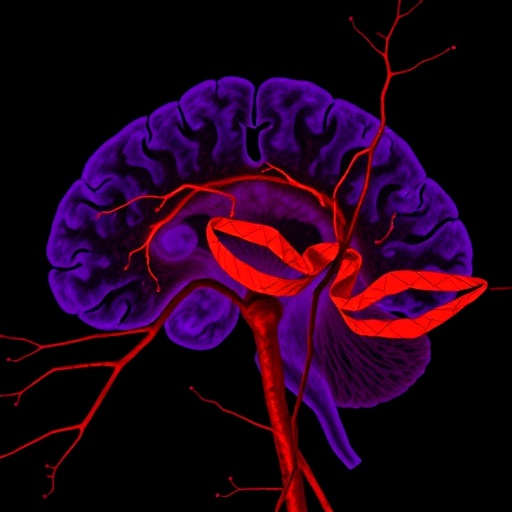
Recent groundbreaking research has illuminated the intricate role of testosterone in regulating gene expression within the paraventricular nucleus, particularly in male and female spontaneously hypertensive rats. This study, conducted by a multidisciplinary team of scientists including Paterson, Loh, and Gholami, reveals how hormonal differences can influence neurobiological processes, with potential implications for understanding sex differences in hypertension. Their work enhances our understanding of sex-specific responses to testosterone and identifies gene expressions that may play critical roles in cardiovascular health.
Hypertension remains one of the leading causes of morbidity and mortality worldwide, affecting millions and creating significant healthcare burdens. Traditionally, research has largely focused on the physiological aspects of hypertension, while the underlying genetic factors have received less attention. This new study bridges that gap by investigating how testosterone influences gene expression in a key brain region known to modulate autonomic functions, such as blood pressure regulation. The paraventricular nucleus is specifically known for its role in orchestrating the body’s response to stressors and maintaining homeostasis.
The research employed a robust methodology, enrolling both male and female spontaneously hypertensive rats to explore the hormonal influence on gene expression. This model provides a compelling platform to study hypertension while allowing researchers to effectively control for sex differences. The team utilized advanced genomic techniques to measure how testosterone impacts the expression of genes related to neuroendocrine functions, focusing specifically on the paraventricular nucleus’s responses to this steroid hormone.
Scientists have confirmed that testosterone has effects beyond reproductive organs—it also plays a pivotal role in brain function and may contribute to neuroprotective mechanisms. This study specifically emphasizes how fluctuations in testosterone levels can lead to differential gene expression profiles in male and female rats. Researchers observed that testosterone modulates various genes associated with neuropeptide signaling, which may ultimately impact cardiovascular dynamics, particularly concerning blood pressure regulation.
Interestingly, the results highlight significant sex differences in how testosterone influences the paraventricular nucleus, suggesting that males and females may experience varying degrees of neuroendocrine responses to this hormone. This finding could explain why males are often found to have higher incidences of hypertension in comparison to females. The implications of these results stress the importance of considering sex as a critical biological variable in hypertension research and treatment.
Additionally, the research indicates that the impact of testosterone on gene expression is not only restricted to hypertensive conditions but may have wider implications. For instance, alterations in the paraventricular nucleus’s gene expression could influence other neuroendocrine pathways associated with stress responses or metabolic health. Therefore, these findings may broaden the scope of understanding hypertension and related cardiometabolic disorders.
The hormones testosterone and estrogen often interact in complex ways within the body, making it crucial for future studies to explore their interplay further. By providing insight into these hormonal dynamics, researchers can begin to unravel the intricate pathways that influence cardiovascular health. The study highlights the necessity of looking beyond traditional research paradigms that often isolate one gender or hormone at a time. Instead, integrating a more holistic approach may yield a clearer picture of disease mechanisms.
Moreover, understanding the molecular mechanisms by which testosterone exerts its effects on the paraventricular nucleus could pave the way for new therapeutic strategies. By targeting specific gene expressions influenced by testosterone, it may be possible to develop interventions that could mitigate the risks associated with hypertension and its complications. The intersections of hormones, genes, and physiological responses present an exciting frontier for future inquiry aimed at transforming healthcare outcomes.
The researchers emphasize that the results obtained could potentially serve as a stepping stone for translational research initiatives. By harnessing our understanding of the mechanisms involved, it may become feasible to tailor therapies based on individual hormonal profiles, ultimately leading to personalized medicine strategies in treating hypertension. This paradigm shift in approach could revolutionize how clinicians address chronic health challenges.
In conclusion, the findings presented by Paterson and colleagues mark an important advancement in hypertension research. By elucidating the role of testosterone in gene expression within the paraventricular nucleus, this study not only advances our understanding of fundamental neurobiology but also highlights the importance of sex-specific research. As we delve deeper into the hormonal influences on health conditions, we open new avenues that could significantly impact future medical practices. This comprehensive investigation underscores the critical need for focused studies on hormonal interactions and their consequences for health, especially in populations suffering from cardiovascular diseases.
In an era of increasingly personalized medicine, understanding how sex and hormones influence health outcomes offers transformative possibilities. The urge to explore beyond gender binaries into the molecular landscapes of disease is vital. As this research illustrates, the journey of unraveling these complex relationships has only just begun, promising exciting revelations ahead for both science and medicine in their quest to improve lives.
Subject of Research: The impact of testosterone on paraventricular nucleus gene expression in male and female spontaneously hypertensive rats.
Article Title: The impact of testosterone on paraventricular nucleus gene expression in male and female spontaneously hypertensive rats.
Article References:
Paterson, A., Loh, SY., Gholami, S.K. et al. The impact of testosterone on paraventricular nucleus gene expression in male and female spontaneously hypertensive rats.
Biol Sex Differ (2026). https://doi.org/10.1186/s13293-025-00818-0
Image Credits: AI Generated
DOI: 10.1186/s13293-025-00818-0
Keywords: testosterone, paraventricular nucleus, gene expression, hypertension, spontaneously hypertensive rats, sex differences, neurobiology, cardiovascular health.
Tags: cardiovascular health and hormonesgene expressions in cardiovascular regulationgenetic factors in hypertensionhormonal influence on autonomic functionshypertension and sex differencesmultidisciplinary research in endocrinologyneurobiological processes in hypertensionparaventricular nucleus researchsex-specific responses to testosteronespontaneously hypertensive rats studystress response and blood pressuretestosterone and gene expression