In a groundbreaking study that explores new avenues for autism service accessibility, researchers have begun to shed light on the potential effectiveness of telehealth family navigation. Conducted by a team led by Zuckerman, Owens Reinitz, and Solgi, the research looks at how digital solutions can expedite the process of connecting families to early autism services. As the prevalence of autism spectrum disorder (ASD) increases globally, innovative strategies are needed to ensure that families are not only informed but also empowered to take the appropriate steps in securing necessary resources. This preliminary study aims to address the often-complex journey families face when seeking help for their children.
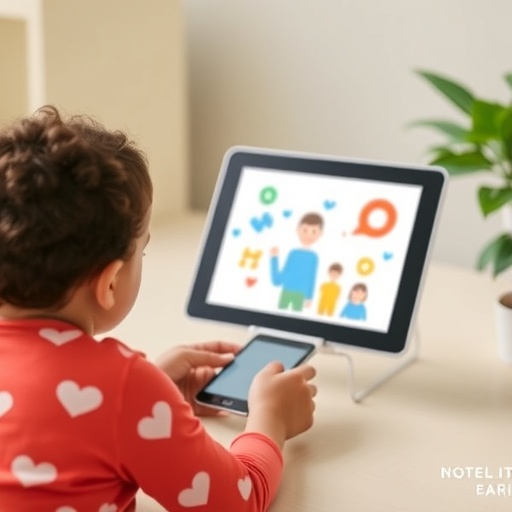
Telehealth has come to the forefront, especially in recent years, due to its ability to bridge gaps created by geographical distances and systemic barriers. The research posits that telehealth can serve as a critical lifeline for families navigating the often-overwhelming landscape of autism services. With the advent of digital technologies, families can access expert guidance and support without being hindered by traditional barriers such as transportation issues or scheduling conflicts. This flexibility is crucial, as it can lead to quicker intervention and ultimately improve outcomes for children diagnosed with ASD.
One of the primary goals of the study was to evaluate how effective telehealth family navigation is in facilitating early access to autism services. By involving healthcare navigators—trained professionals who can guide families through the myriad of services available—the researchers aimed to determine if this method significantly reduces the time taken for families to access necessary evaluations and treatments. Previous studies have indicated that timely interventions can yield better developmental outcomes for children with autism, making the stakes incredibly high for families awaiting resources.
Through meticulous data collection and analysis, the research team found promising results. Families who participated in the telehealth navigation program reported a higher satisfaction level compared to those relying solely on traditional methods. The direct engagement with navigators over a digital platform allowed families to raise questions, express concerns, and receive tailored advice in real time. This personalized approach is believed to bolster families’ confidence in accessing services and taking proactive steps for their children.
Moreover, the research highlighted the significant obstacles families often face, including long wait times and limited access to specialized care. Families reported frustration when trying to make sense of the options available to them and navigating the often-complicated insurance requirements necessary for coverage of services. The telehealth model provides a solution by streamlining information dissemination and enabling families to understand their rights and options more clearly.
As autism continues to be a focus of research, understanding the role of technology in facilitating access is paramount. The findings of this study could serve as a catalyst for wider adoption of telehealth solutions in the field. Given the ongoing advancements in digital health platforms, scalability becomes a key consideration, enabling this model to reach families in both rural and urban settings. By demonstrating that telehealth can be an effective means of support, the research underscores the importance of public health initiatives that integrate technology into routine care processes.
An essential aspect of the telehealth family navigation approach is its potential to create a supportive community for caregivers. The isolation that often accompanies the caregiving journey can be debilitating, and the study points to the need for connection among families facing similar challenges. Utilizing digital platforms not only serves to provide information but also fosters a sense of community, allowing families to share experiences, resources, and encouragement.
The researchers commend the flexibility and adaptability of telehealth interventions, particularly during times like the COVID-19 pandemic, which has underscored the necessity for remote access to healthcare services. Telehealth family navigation could well become a staple in healthcare recommendations for autism services, as the lessons learned during such unprecedented times reshape healthcare delivery models for years to come.
As the discourse around autism services continues, it is essential to critically assess investments in technology and to explore the implications of such findings. Does this model promise an equitable landscape for families seeking navigation through the complexities of autism services? Careful evaluation and continued research into its effectiveness will be crucial for validating this new approach.
In conclusion, the preliminary findings presented by Zuckerman and his colleagues constitute an exciting development in the field of autism services. While further research is indeed necessary to expand upon these findings, the prospects of telehealth family navigation in enhancing access to early autism services appear promising. As researchers continue to advocate for effective policy changes and promote accessibility, the goal remains clear: to create a more informed and supportive environment for families navigating the challenges of autism.
The study calls attention to the importance of holistic approaches that consider not just the child but the entire family system when it comes to autism services. By prioritizing the needs of families through innovative technology-driven solutions, we can forge a path that is both swift and sensitive, ultimately leading to improved outcomes for children diagnosed with autism spectrum disorder.
The promising results of this study may pave the way for future legislative and funding initiatives aimed at integrating telehealth solutions into standard healthcare practices for autism. As data continues to support the efficacy of remote navigational tools, stakeholders are now tasked with the critical responsibility of ensuring that these resources are made available to every family in need.
As we move forward, the combination of rigorous research and adaptive technologies like telehealth holds the key to revolutionizing access to autism services. Interested parties—ranging from policymakers to healthcare providers—must pay close attention to this emerging trend, as it could reshape the landscape of autism service delivery and ultimately enhance the quality of life for countless families.
Through a commitment to understanding and innovation, the future of autism services can encompass a model that dignifies and empowers families, ensuring that no one has to navigate the complexities of autism alone. The ongoing research in telehealth family navigation marks an important step toward achieving that goal.
Subject of Research: Telehealth Family Navigation for Early Autism Services Access
Article Title: Preliminary Efficacy of Telehealth Family Navigation for Early Autism Services Access
Article References:
Zuckerman, K.E., Owens Reinitz, M., Solgi, M. et al. Preliminary Efficacy of Telehealth Family Navigation for Early Autism Services Access. J Autism Dev Disord (2025). https://doi.org/10.1007/s10803-025-07189-w
Image Credits: AI Generated
DOI: https://doi.org/10.1007/s10803-025-07189-w
Keywords: Telehealth, Autism Services, Family Navigation, Early Access, Digital Solutions, Healthcare, Autism Spectrum Disorder.
Tags: digital solutions for autism accessearly intervention for autism spectrum disorderempowering families in autism treatmentfamily navigation in autism careglobal autism prevalence and servicesimproving outcomes for children with ASDinnovative strategies for autism careovercoming barriers to autism servicesremote access to autism resourcestelehealth effectiveness in autism treatmenttelehealth for autism servicestelehealth in child development